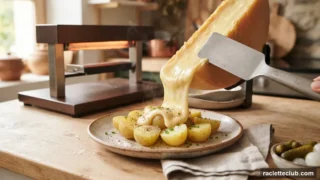
In short: to lift cheese out of a non-stick pan, your raclette spatula should be made of wood or plastic. This is not an old wives’ tale: Tefal and Lagrange say so in the manuals of their raclette grills. Metal, on the other hand, can scratch the coating. Between wood and plastic, it all comes down to care: wood is washed by hand, while nylon and silicone often go in the dishwasher.
A small spatula with big consequences: it decides whether your pans keep their non-stick coating for years or for just a few evenings. We read the appliance manuals, the utensil product pages and the consumer associations’ guides to compare the materials one by one.
What raclette grill manufacturers say
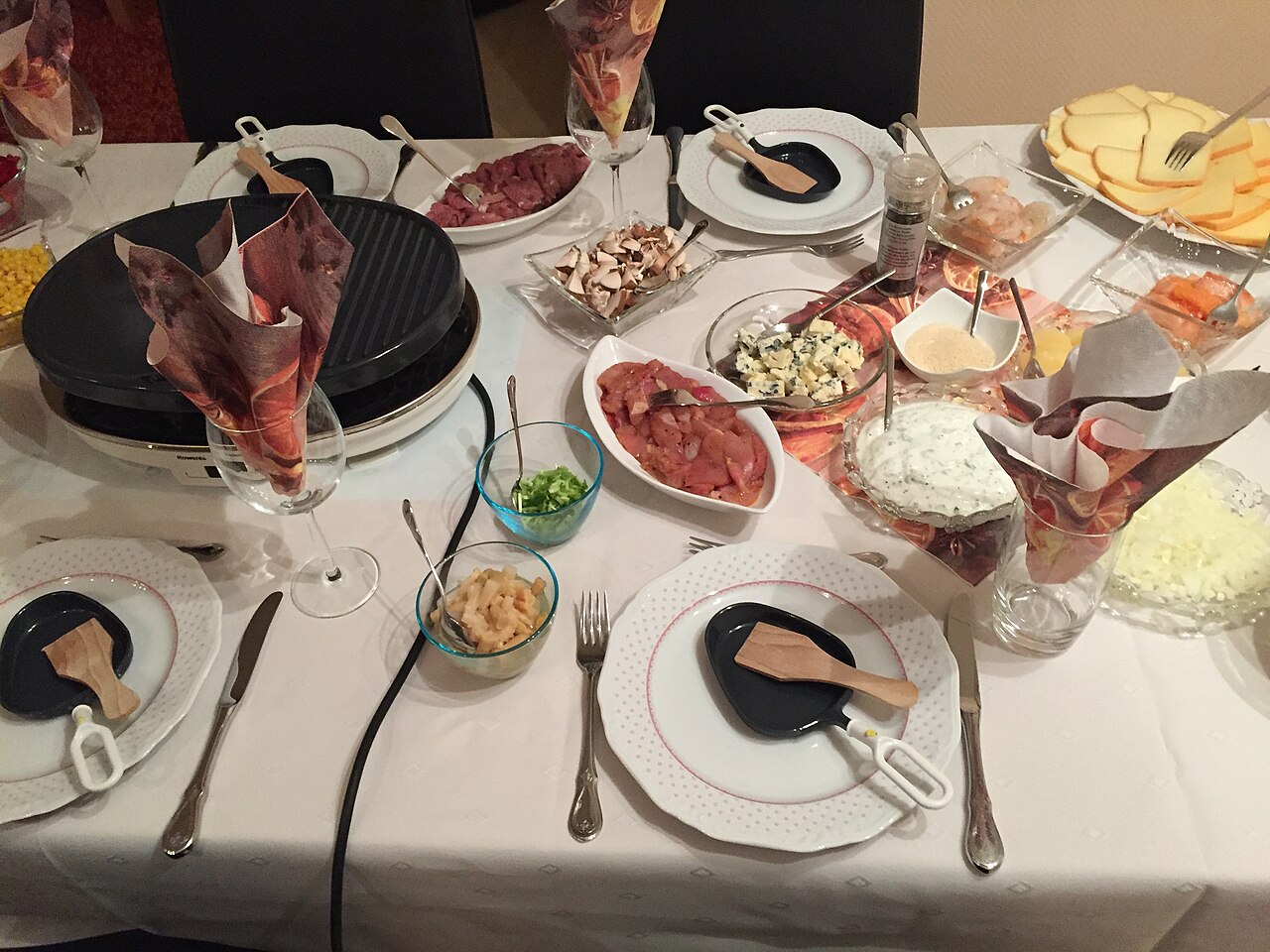
Tefal is very clear. In the manual of its Raclette-Grill-Crêpier, the brand writes that, to protect the coating of the cooking plate (depending on the model), you should “always use a plastic or wooden spatula”. For the pans, its online help page advises washing them by hand with a soft sponge and not using a metal sponge, so as not to scratch the surface.
Lagrange says the same. The manuals of its Élément and Pierre Élégance raclettes include wooden spatulas in the box, depending on the model. For the non-stick pans, the brand asks you not to rub them with metal objects or abrasive products, because of the risk of damaging the coating. It also recommends a wooden spatula for flipping crêpes on the plate.
The same message comes from Test Achats, the Belgian consumer association: in its guide to non-stick frying pans, it recommends utensils made of soft materials, wood or plastic, and points out that metal utensils can scratch the coating.
Wooden spatulas: beech, olive wood, bamboo
Beech, the great classic
Beech is the wood of the spatulas supplied with many grills and of replacement sets. The product page of the Lagrange AC509100 set of 8 spatulas, for example, lists beech spatulas measuring 13 x 3.9 cm, made in France, and the Timeleos set is beech too.
According to The Wood Database, a reference database of wood species, European beech has a Janka hardness of 1,450 lbf (about 6,460 N) and no characteristic odour: it won’t flavour the cheese. The same database notes that this wood moves a lot with humidity. Hence the importance of drying it well.
Olive wood, the hardest
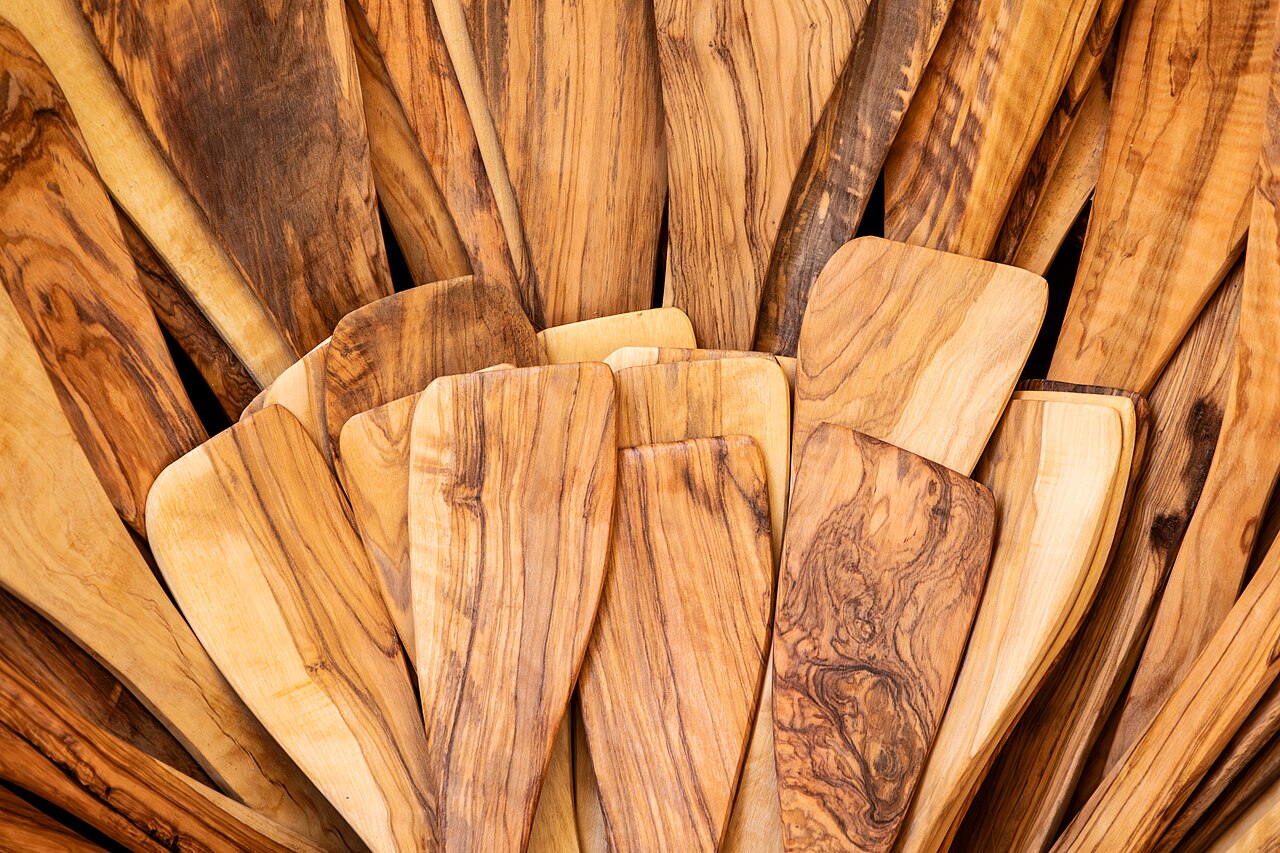
Olive wood is much harder and denser than beech: a Janka hardness of 2,710 lbf (about 12,060 N) and 980 kg/m³, against 710 kg/m³ for beech, again according to The Wood Database. Its strong grain makes it a beautiful object, often sold as Mediterranean craftwork, like these scrapers photographed in Crete. It is cared for like any wood: by hand.
Bamboo: beware of look-alikes
A spatula cut from solid bamboo is used and cared for like a wooden spatula. Be wary, however, of utensils made of “bamboo fibre” mixed with plastic. In 2021, the French consumer protection authority (DGCCRF) ruled that these products did not comply with the rules, because bamboo encourages formaldehyde or melamine to migrate into food, reports the French consumer magazine Que Choisir. So read the composition carefully: solid bamboo, yes; plastic filled with bamboo fibre, no.
Wood: pros, cons and care
Pros: it is the material Lagrange puts in its boxes and that Tefal recommends along with plastic, so there is no risk for the non-stick coating. No maximum temperature needs watching in the manuals we read.
Cons: no dishwasher. For its wooden spatulas, Lagrange recommends a quick wipe with a damp sponge and a little detergent, then drying with a dry cloth. The British magazine Which? advises keeping anything wooden out of the dishwasher and never soaking it: the wood swells and splits, and those cracks are breeding grounds for bacteria. America’s Test Kitchen put 13 wooden spoons through the dishwasher ten times: most came out bleached and as dry as driftwood.
Hygiene tip: Which? advises oiling wooden utensils regularly with food-grade mineral oil, and replacing them as soon as they show deep cracks, splinters or a persistent smell.
Plastic spatulas: nylon and silicone
Nylon, thin and stiff
Nylon makes thin, fairly stiff spatulas that slide easily under the cheese. One example is OXO: its nylon turner is described as heat-resistant up to 400 °F (about 204 °C), safe for non-stick cookware and dishwasher safe, according to the product page of the retailer Sur La Table. Above all, remember that plastic always has a temperature limit: to be safe, don’t leave it in a pan under the heating element.
Silicone, flexible and dishwasher safe
Silicone is more flexible. Tefal, for example, states that the silicone head of its Comfort spatula withstands temperatures up to 250 °C, that it is dishwasher safe and that the material does not scratch cookware. The maximum temperature varies from one model to another: check it on the manufacturer’s product page before buying.
Plastic: pros and cons
Pros: Tefal names plastic alongside wood to protect the coating, and many models are dishwasher safe, like the OXO and Tefal ones mentioned above.
Cons: a maximum temperature to respect, which differs from model to model, and the need to watch out for the “bamboo” composites mentioned above.
Metal (stainless steel): keep it for the stone
A stainless steel spatula is strong and thin, but that is exactly what manufacturers advise against on non-stick coatings. Lagrange asks you not to rub the pans with metal objects, Tefal to use only plastic or wood, and Test Achats points out that metal can scratch the coating. For Teflon frying pans, the association even recommends replacing them as soon as the coating is damaged or worn. The fork that scrapes the bottom of the pan can prove expensive.
Metal still has its place at the table. On the cooking stone of raclette-and-stone grills, Lagrange on the contrary recommends scraping the stone with a metal scraper to remove residue. And to slice the cheese, the cheese knife stays metal.
The materials compared at a glance
| Material | Non-stick pans | Heat | Dishwasher | Care |
|---|---|---|---|---|
| Wood (beech, olive, solid bamboo) | Does not scratch (Tefal, Lagrange) | No limit given in the manuals we read | No (Lagrange, Which?) | Sponge, drying, food-grade oil from time to time |
| Nylon | Does not scratch (Tefal: “plastic”) | Depends on the model, e.g. 204 °C for OXO | Often yes | Very easy |
| Silicone | Does not scratch | Depends on the model, e.g. 250 °C for Tefal | Often yes | Very easy |
| Metal (stainless steel) | Scratches the coating (Lagrange, Test Achats) | Not relevant | Depends on the model | Keep it for the cooking stone |
The best material for a raclette spatula, and why
Our verdict: wood, and beech in particular. It is the material grill manufacturers put in their boxes and name in their manuals; it doesn’t scratch the non-stick coating, doesn’t flavour the cheese and has no maximum temperature to watch. It is sold in sets of eight, enough for the whole table, like the Lagrange AC509100 set or the Timeleos set. Its only real drawback: it must be washed by hand and dried well.
Want to put everything in the dishwasher? Choose silicone or a heat-resistant nylon, and check the maximum temperature given by the manufacturer. And metal? Never in a non-stick pan, only on the cooking stone.
And all the other ideas are in our raclette accessories.
Raclette spatula: your questions
Can you scrape a raclette pan with a fork?
Not if the pan is non-stick. Lagrange asks you not to rub its pans with metal objects because of the risk of damaging the coating, and Tefal recommends a plastic or wooden spatula.
Can wooden raclette spatulas go in the dishwasher?
No. Lagrange recommends a quick wipe with a damp sponge, then drying with a cloth, and Which? advises keeping wood out of the dishwasher: it swells and splits, and the cracks harbour bacteria.
How do you care for wooden spatulas?
Wash them quickly with a sponge and a little washing-up liquid, don’t let them soak, then dry them with a cloth and in the open air. Oil them from time to time with food-grade mineral oil and replace them if they split or keep a smell.
What temperature can a silicone or nylon spatula withstand?
It depends on the model. Tefal states 250 °C for the silicone head of its Comfort spatula, and OXO 400 °F (about 204 °C) for its nylon turner. Always check the manufacturer’s product page.
Wood or silicone: which is better for non-stick pans?
Both protect the coating. Wood is the material supplied with the grills and needs no temperature watching; silicone has the advantage of being dishwasher safe.
Are bamboo spatulas safe?
A solid bamboo spatula is treated like wood. However, in 2021 the French authorities ruled that items made of plastic mixed with bamboo fibre did not comply with the rules, because they encourage formaldehyde or melamine to migrate.
What about you: wood or plastic?
Tell us in the comments which spatulas are scraping your pans, and for how many winters. For the rest of the evening, our guide to choosing your raclette grill and our All about raclette guide are waiting for you.
Sources: Tefal, Raclette-Grill-Crêpier manual, Tefal, Harmony raclette online help (cleaning the pans), Lagrange, Raclette Élément manual (type 179), Lagrange, Raclette Pierre Élégance manual, Test Achats, how to choose a non-stick frying pan (in French), Tefal, Comfort spatula (silicone), Sur La Table, OXO nylon turner, The Wood Database, European beech, The Wood Database, olive, Which?, how to clean wooden kitchen tools (09/04/2026), America’s Test Kitchen, wooden spoons in the dishwasher (14/05/2020), Que Choisir, bamboo-melamine tableware banned (23/06/2021, in French)