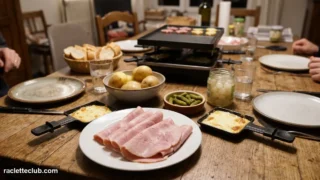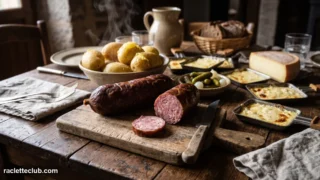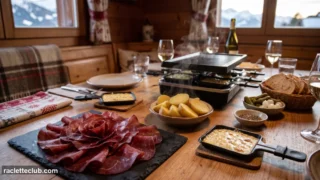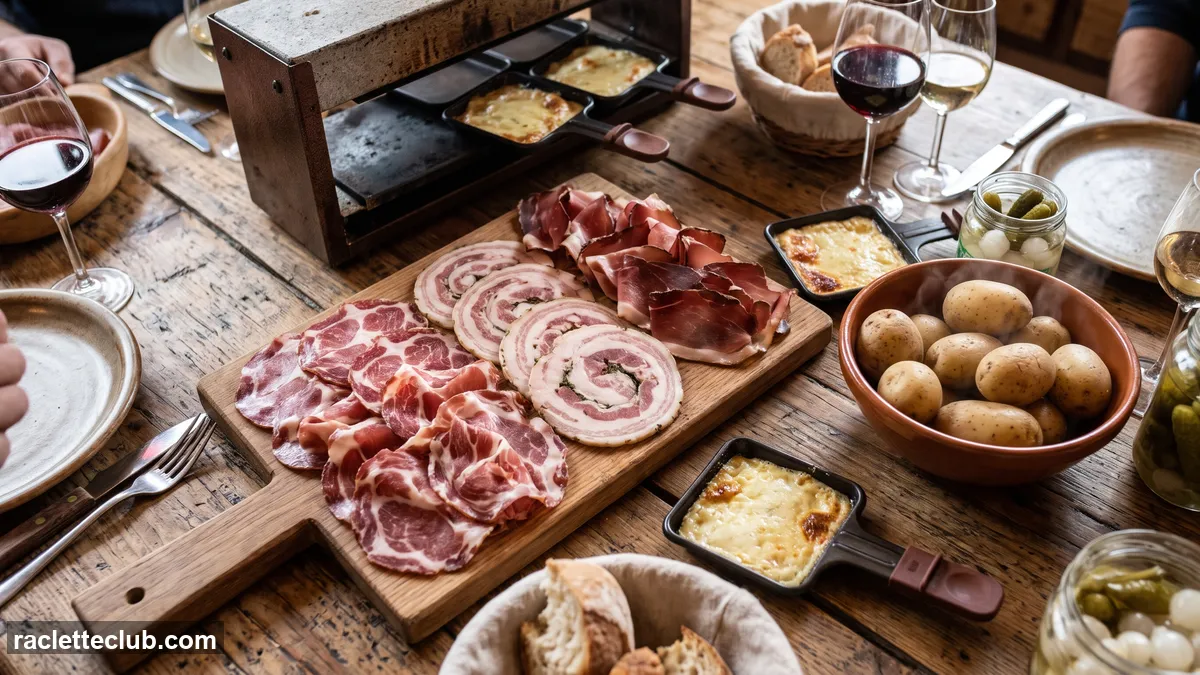
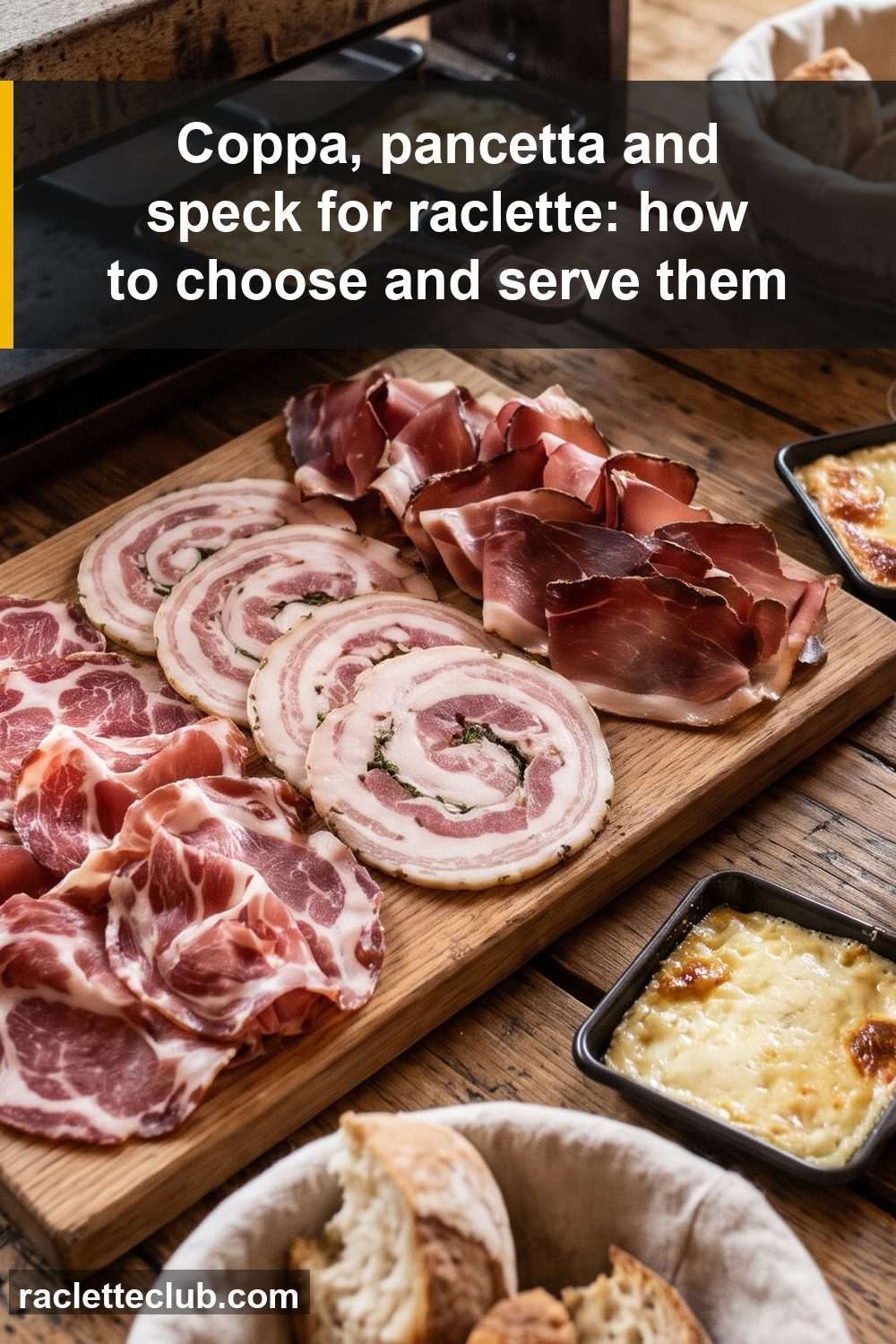
In short: coppa, pancetta and speck are the three Italian cured meats that make the biggest impression on a raclette platter. Coppa Piacentina AOP comes from the pork neck and dries for at least 6 months. Pancetta Piacentina AOP is a rolled pork belly, cured for at least 4 months. Speck Alto Adige IGP is a lightly smoked ham, cured for at least 22 weeks. Pancetta and speck have one more ace up their sleeve: they grill beautifully on the top plate.
This article contains Amazon affiliate links: if you buy through these links, Raclette Club earns a small commission at no extra cost to you. Learn more.
Coppa, pancetta and speck: three cuts, three methods
Coppa, the pork neck
Coppa is cut from the neck muscles. The best known with a protected name is Coppa Piacentina AOP, registered in 1996. According to the Italian Ministry of Agriculture’s fact sheet, the pigs are born, raised and slaughtered in Lombardy or Emilia-Romagna, and curing lasts at least 6 months after salting. The result is a pink cylinder marbled with fat, with a mild flavor thanks to limited salting and subtle spices. The EU register also protects Coppa di Parma IGP and Coppa de Corse AOP.
Pancetta, the rolled belly
Pancetta is pork belly, the Italian take on bacon. Pancetta Piacentina AOP is cut from the fatty belly, salted, then rolled, sometimes with a little lean meat, and tied. It cures for at least 4 months after salting. It weighs 4 to 8 kg and its slice, bright red striped with white, melts easily in the mouth, according to the Italian ministry. Corsica has its own as an IGP: Pancetta de l’Île de Beauté.
Speck, the smoked ham of South Tyrol
Speck Alto Adige IGP (Südtiroler Speck) follows a motto the consortium likes to repeat: a little salt, a little smoke and plenty of fresh air. It starts with lean hind legs from monitored European farms, rubbed with salt, pepper, juniper and bay leaf. Then comes a light smoking over low-resin wood, often beech, at 20 °C maximum, alternating with air-drying phases. Curing lasts at least 22 weeks, and the piece loses about a third of its weight.
| Coppa Piacentina AOP | Pancetta Piacentina AOP | Speck Alto Adige IGP | |
|---|---|---|---|
| Cut | Neck | Rolled belly | Boned hind leg |
| Pigs | Born and raised in Lombardy or Emilia-Romagna | Born and raised in Lombardy or Emilia-Romagna | Monitored European farms |
| Minimum curing | 6 months | 4 months | 22 weeks |
| Smoked | No | No | Yes, lightly |
| Flavor | Mild, marbled | Melting, sweet and salty | Spiced, subtly smoky |
Why they go with raclette
Each of these three cured meats plays its own part. Coppa, heavily marbled, brings an indulgent melt next to a mild cheese like Fontina, an Alpine neighbors’ pairing to our taste. Pancetta, grilled on the top plate, turns crispy and flavors the potato. Speck, with its smoky note, goes very well with a Raclette du Valais AOP or an Abondance. Just avoid pairing it with a smoked raclette: too much smoke kills the smoke. These are opinions, not laws.
How to choose them
- The full name: “Coppa Piacentina”, “Pancetta Piacentina” or “Speck Alto Adige” with the AOP or IGP logo. A plain “coppa” or “speck” with no origin doesn’t follow any specification.
- Rolled pancetta or thick slices: rolled and thinly sliced for the platter, thicker or diced for the grill plate and the cheese pan. That’s how we use it.
- The look of the slice: well-colored lean meat and white or pinkish fat, never yellow.
- At the deli counter: ask for very thin slices, especially for coppa and pancetta, whose fat melts better in thin slivers.
How much to plan and how to serve them
Our team’s benchmark: 100 to 150 g of cured meats in total per adult. If you’re serving all three with a cured ham, plan on about 30 g of each per person. Santé.fr advises limiting cured meats to 150 g per week: raclette remains a party meal.
- On the platter: coppa and speck in thin slices, taken out of the fridge a quarter of an hour before the meal, arranged in waves.
- On the grill plate: pancetta and speck grill in a few moments: take them off as soon as the fat turns translucent, then golden. Then lay the slice on your potato, with the cheese on top.
- In the cheese pan: a few cubes of pancetta under the cheese make a “carbonara” raclette we highly recommend.
Pregnant women: coppa, pancetta and speck are raw cured meats. France’s national health insurance (ameli.fr) asks that raw charcuterie be cooked thoroughly before eating during pregnancy, because of listeriosis. Pancetta grilled well on the top plate is therefore the right option for a pregnant guest, and the cold platter is best avoided.
Which wine to serve with coppa, pancetta and speck?
The fat in coppa and pancetta calls for acidity. A crisp white like a Chignin or a dry Riesling cleans things up between bites. Speck, smokier, likes a supple red like Pinot Noir, in our opinion. And if you want bubbles for the appetizer, a Crémant is perfect with a few slices of coppa.
In the pantry
Back to the raclette pantry. To round out the platter, see our guides to cured ham, air-dried beef and saucisson sec.
Frequently asked questions
What’s the difference between coppa and pancetta?
Coppa comes from the pork neck muscles, pancetta from the belly. With a protected name, Coppa Piacentina AOP is cured for at least 6 months and Pancetta Piacentina AOP, rolled and tied, for at least 4 months.
Is speck smoked?
Yes, lightly. Speck Alto Adige IGP is smoked over low-resin wood, at 20 °C maximum, alternating with air-drying, then cured for at least 22 weeks.
Can you grill pancetta on the raclette grill plate?
Yes, it’s actually one of our favorite uses. A few moments are enough, until the fat turns golden. Speck grills the same way.
Can a pregnant woman eat them?
They’re raw cured meats. France’s national health insurance asks that they be cooked thoroughly before eating during pregnancy, because of listeriosis. So well-grilled pancetta is fine, but not raw coppa from the platter.
Sources
- Italian Ministry of Agriculture (MASAF): Coppa Piacentina AOP (in Italian)
- Italian Ministry of Agriculture (MASAF): Pancetta Piacentina AOP (in Italian)
- Speck Alto Adige Consortium: production
- European Commission: eAmbrosia register of geographical indications
- French national health insurance: bacterial infections during pregnancy (in French)
- Santé.fr: limiting cured meats to protect your health (in French)