In short: Chartreuse is an herbal liqueur made by Carthusian monks in France’s Isère. Green is 55% ABV, yellow 43%, and both rely on 130 plants in a recipe that remains secret. After a raclette, serve a small pour, chilled or over ice, for the pleasure of it: not to “help digestion”: the available studies don’t point that way.
This article contains Amazon affiliate links: if you buy through these links, Raclette Club earns a small commission at no extra cost to you. Learn more.
Chartreuse, a monks’ liqueur (and a brand)
Let’s start with a clarification that will delight the lawyer at the table: Chartreuse is not an appellation of origin like Abricotine or Marc de Savoie. It’s a brand, registered in 1852 according to the official website, and a unique product made by a single producer: the Carthusian order. Under EU law, it’s a liqueur, meaning a sweetened, flavored spirit drink, a category for which Regulation (EU) 2019/787 sets a minimum of 15% ABV. Chartreuse is way, way above that.
The story told by the monks themselves goes back to 1605: the Duke François-Annibal d’Estrées gives the Carthusians of Paris a manuscript mixing lists of plants with clues to an elixir. The document reaches the Grande Chartreuse monastery in 1737, and the process is recorded in 1764 in a seven-page manuscript, the “Composition de l’Élixir de Chartreuse”. The green and yellow liqueurs get their names around 1840. Then came Fourvoirie, exile in Tarragona, Spain, after the 1903 expulsion, and then the Aiguenoire distillery, inaugurated in 2018 in Entre-Deux-Guiers, in the Chartreuse mountains.
How it’s made
The only known part of the recipe is the number: 130 plants, barks, roots, spices and flowers. For the rest, the official website says the formula is known to only a very small number of people. The plants are crushed at the monastery by the monks, then go through distillation (for the aromas) and several macerations (for the color and active compounds). The liqueur then ages for a long time in conical oak vats before bottling, and keeps evolving once bottled.
Good to know: Chartreuse has become harder to find at some retailers in recent years, as the monks chose to limit their output despite strong demand. A raclette with friends is well worth a bottle you had to hunt down.
Green or yellow: the taste
Green Chartreuse (55%)
This is the loudmouth of the family. The official website describes a powerful, herbal and peppery nose, a fresh palate of mint, pine sap and citrus, and a finish with a tea-like bitterness. At 55%, it’ll wake up even the guest who dozed off over their third potato. Save it for those who like bold flavors and alcohol they can feel.
Yellow Chartreuse (43%)
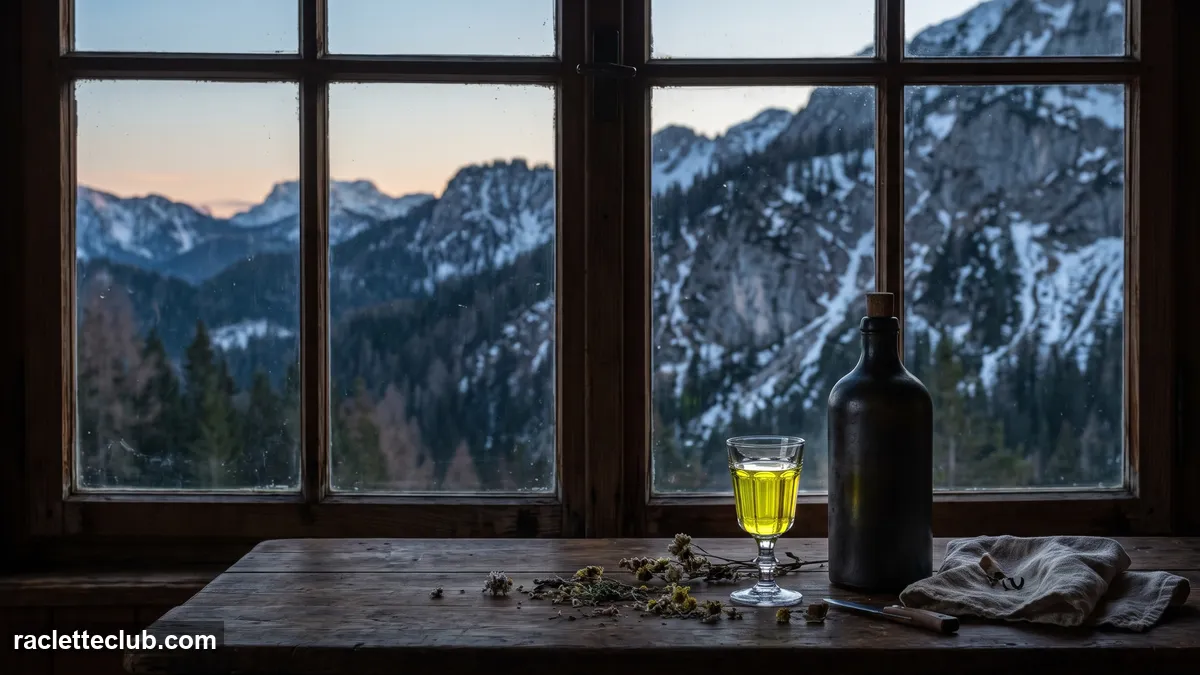
Softer and rounder, it’s for palates that want the complexity of the herbs without the thunderclap. The producer describes a fresh, spicy nose, a smooth structure, scents of turmeric, citrus and anise, then floral notes. It’s often the ideal gateway for anyone who has never tasted Chartreuse.
Why after a raclette (and what science really says)
After a meal of melted cheese, potatoes and cured meats, Chartreuse brings exactly what’s missing: minty freshness, herbal bitterness and spice. It “cleans” your mouth, a bit like a luxury breath mint. It’s also an unapologetic terroir pairing: Savoie raclette and the Isère liqueur share the same mountains.
On the other hand, forget the idea that a little glass “helps you digest”. A study published in the BMJ in 2010 served cheese fondue to 20 volunteers, with white wine or black tea, followed by a small glass of kirsch or water: stomach emptying was slower with alcohol, with no clear difference in symptoms. Another study (Franke et al., 2008) tested several digestifs, including an herbal liqueur, after a meal: no effect on how fast the stomach emptied, while a slow walk (4 km/h, about 2.5 mph, throughout the three hours of measurement) did speed it up, without relieving symptoms. The moral: Chartreuse is a pleasure, not a remedy.
To finish the meal without alcohol, our guide raclette and digestion offers herbal teas and alcohol-free tips.
How to choose your bottle
- For a table of first-timers: yellow, the more approachable one.
- For fans of alpine thrills: green, more powerful and more herbal.
- On the label: the strength (55% for green, 43% for yellow).
- Watch out: there are “Chartreuse-style” herbal liqueurs; they can be good, but they’re not Chartreuse. Check the exact name.
Serving
The producer recommends serving it as a digestif, ideally chilled, between 12 and 13 °C (about 54 to 55 °F), or over ice. Plan on a small pour: 2 to 3 cl (about 2/3 to 1 oz) is plenty at 55%, in a small cordial glass or a tulip glass that concentrates the aromas. And always a pitcher of water on the side.
Pairings after the cheese
- Dark chocolate: the bitterness of the cocoa and the herbs play off each other, especially with green.
- Coffee: an espresso, then the Chartreuse, or the other way around, depending on your household’s religion.
- Frozen dessert: a few drops of yellow over vanilla ice cream, and you’ve got dessert in ten seconds.
More raclette digestifs
To compare, head back to the complete guide to digestifs after raclette. If you love mountain herbs, don’t miss our génépi page, its cousin from the alpine pastures. For a fruit brandy, read our Williams pear brandy page or our Abricotine du Valais page. And for what to drink during the meal, head to the guide to wines for raclette.
Frequently asked questions
What’s the difference between green and yellow Chartreuse?
Green is 55% ABV and has a powerful, herbal, minty and peppery profile. Yellow is 43% ABV and is softer, with notes of spice, citrus, anise and flowers. Both rely on 130 plants, according to the producer.
Does Chartreuse help you digest raclette?
No. The available studies show that alcohol doesn’t make you digest faster: a cheese fondue trial even observed slower stomach emptying with alcohol, and a study on digestifs found no effect. A slow walk after the meal sped up emptying, without relieving symptoms.
At what temperature should you serve Chartreuse?
The producer recommends serving it chilled, between 12 and 13 °C (about 54 to 55 °F), or over ice, as a digestif.
Where is Chartreuse made?
At the Aiguenoire distillery, inaugurated in 2018 in Entre-Deux-Guiers (Isère), in the Chartreuse mountains. The plants are crushed by the monks at the Grande Chartreuse monastery.
Sources
- Chartreuse (official website): history (in French)
- Chartreuse (official website): Green Chartreuse (in French)
- Chartreuse (official website): Yellow Chartreuse (in French)
- Regulation (EU) 2019/787 on spirit drinks (EUR-Lex, in French)
- Heinrich et al., BMJ 2010: wine, black tea or schnapps with cheese fondue
- Franke et al., J Gastrointestin Liver Dis 2008: digestifs, espresso and walking after a meal
- Le Journal des entreprises: the monks limit Chartreuse production (in French)
- VinePair: the Chartreuse shortage explained
- Aleteia: the Carthusians back at Aiguenoire, Entre-Deux-Guiers (in French)
- PubMed Central: summary of Heinrich et al., BMJ 2010
Please drink responsibly.