In short: Abricotine du Valais AOP is an apricot brandy made exclusively in the Swiss canton of Valais, from apricots of the Luizet variety (at least 90%). It’s at least 40% ABV, with no added flavoring or coloring. After a Valais raclette, it’s the perfect terroir pairing: the cheese and the fruit come from the same canton. A small pour, chilled, for the pleasure of it, not for digestion.
This article contains Amazon affiliate links: if you buy through these links, Raclette Club earns a small commission at no extra cost to you. Learn more.
A Valais AOP with a strict specification
Its official name is “Abricotine” or “Eau-de-vie d’abricot du Valais”, a protected designation of origin. It was entered in the federal register of AOPs and IGPs by a decision of the Swiss Federal Office for Agriculture dated November 6, 2002, amended in 2014 and 2020. The specification leaves no room for vagueness: growing the fruit, storage, fermentation, distillation and bottling all take place exclusively within the canton of Valais.
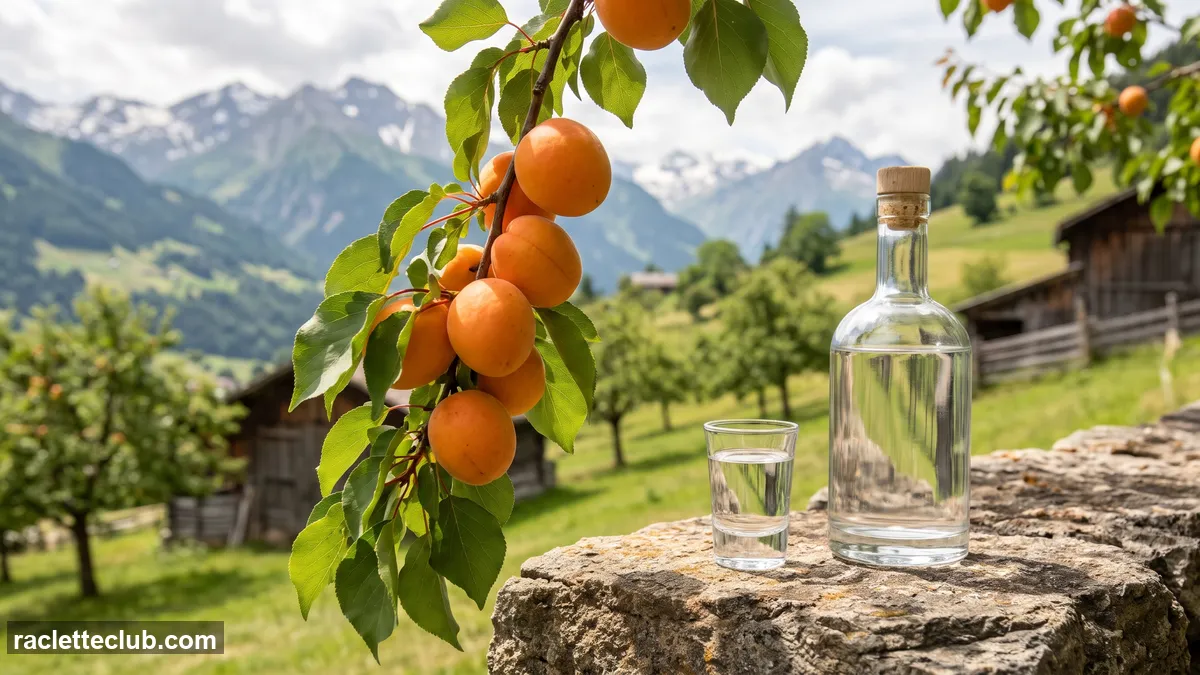
The hero of the story is the Luizet apricot. According to the Swiss AOP-IGP Association, this variety was reportedly introduced in the Valais as early as 1838, and distilling grew alongside its cultivation: first in many households for family use, then for sale. The apricot trees climb as high as 1,100 meters (about 3,600 feet). The specification requires Luizet, while tolerating other varieties from Valais orchards up to 10% per distiller per year.
How it’s made
The official text reads like a demanding distiller’s recipe:
- Perfectly ripe fruit: soft, turning liquid around the pit, healthy, with a minimum size of 35 mm. Rotten fruit, leaves and stems are removed.
- Traceability: each distiller keeps a delivery log with the quantity, the percentage of Luizet and the plot of origin.
- Mandatory pitting, before or at the end of fermentation. The AOP-IGP Association explains that this is to avoid excessive bitterness.
- Monitored fermentation, between 15 and 25 °C (59 and 77 °F).
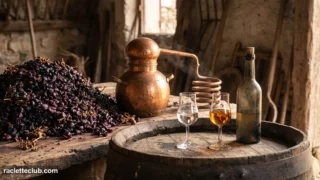
- Pot still distillation, with column stills excluded. The heads are separated and redistilled, and the heart must average at least 60% ABV.
- At least three months of resting in tank before bottling, then reduction to 40% ABV minimum with low-mineral water.
- Almost nothing added: sweetening is limited to 5 g per liter, and any flavor enhancer or coloring is prohibited.
Finally, each batch goes through a tasting test on four criteria: aroma and purity, character and fruit, flavor and purity, harmony. Batches judged unsatisfactory lose the right to the name. Certification is entrusted to a body designated by the specification (OIC or Procert Safety).
The taste
The specification puts it bluntly: a pronounced Luizet apricot flavor. It also lists what it doesn’t want: overly marked bitterness, or a grassy, hot or oxidized taste. Valais’s promotion agency finds a pronounced apricot flavor, with a slight hint of almond. In the glass, it’s a clear brandy that smells like summer in the middle of January, which, let’s face it, is exactly what you want after three rounds of raclette in the snow.
Why after a raclette (and what science says)
Raclette du Valais AOP, Fendant during the meal, Abricotine at the end: that’s the complete Valais menu, from meadow to orchard. The fruit brings a freshness that cuts through the richness of the cheese.
When it comes to digestion, though, we have to be frank. A trial published in the BMJ in 2010, run in Zurich with 20 volunteers, served cheese fondue with white wine or black tea, then a small glass of kirsch or water: with alcohol, the stomach emptied more slowly, with no clear difference in symptoms. A 2008 study of several digestifs, including a pear brandy, found no faster gastric emptying, whereas a slow walk (4 km/h, about 2.5 mph, throughout the three hours of measurement) did speed it up, without relieving symptoms. So Abricotine is an end-of-meal pleasure, not a remedy. To finish the meal without alcohol, see our guide raclette and digestion, with its herbal teas and alcohol-free tips.
How to choose your bottle
- Mandatory label terms: the label must carry “Abricotine” or “Eau-de-vie d’abricot du Valais”, the words “Appellation d’origine protégée” or “AOP”, and the AOP logo (it can be on the back label; small bottles of 1 dl, about 3.4 oz, or less are exempt).
- Watch out for look-alikes: an “apricot brandy” without the AOP designation, or an apricot liqueur, is not Abricotine. The liqueur is sweet and lower in alcohol.
- The strength: 40% ABV minimum.
Serving
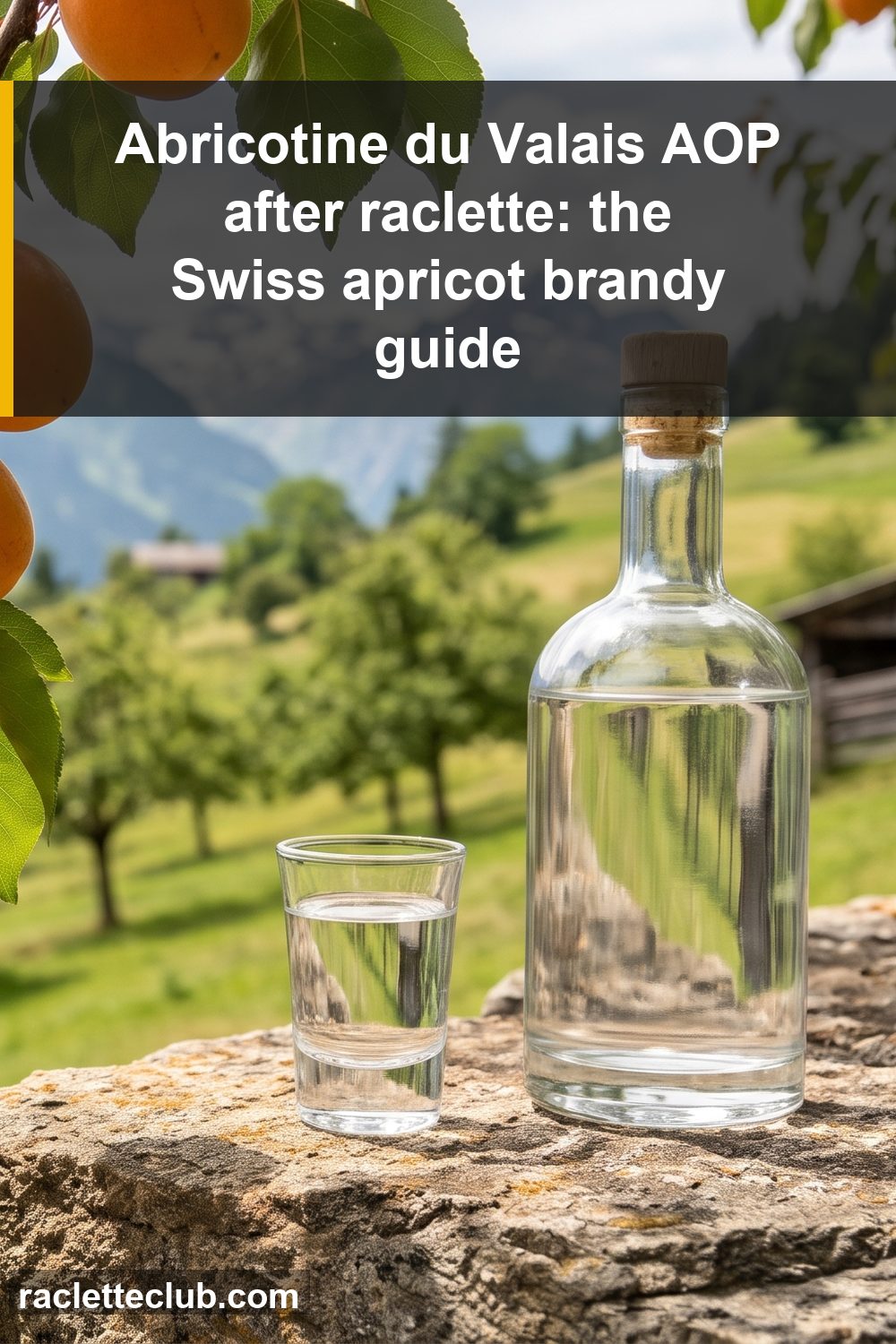
Valais/Wallis Promotion recommends a temperature of 8 to 12 °C (about 46 to 54 °F): chilled, then, but not ice-cold, or the apricot goes into hiding. A small pour of 2 to 3 cl (about 2/3 to 1 oz) is enough, in a tulip glass or a small brandy glass that concentrates the aroma. Store the bottle somewhere dry and away from light.
Pairings
- Apricot sorbet: Valais’s promotion agency mentions Abricotine in desserts, for example with a sorbet. A few drops are enough.
- Apricot tart: fresh fruit and distilled fruit, an obvious duo.
- Milk or white chocolate: the sweetness of the chocolate shows off the fruit.
- Coffee: an espresso first, Abricotine after, and the evening is wrapped up.
More raclette digestifs
To compare them all, head back to the complete guide to digestifs after raclette. The Valais’s other great AOP brandy is covered in our Williams pear brandy page. For grapes rather than fruit, read our marc and grappa page, and for mountain herbs, our génépi page. For the wines served with the meal, see the guide to wines for raclette.
Frequently asked questions
What is Abricotine?
It’s an apricot brandy protected by a Swiss designation of origin (AOP). It’s made entirely in the canton of Valais from Luizet apricots, with other varieties tolerated up to 10%, and is at least 40% ABV.
Are Abricotine and apricot liqueur the same thing?
No. Abricotine is a distilled brandy, barely sweetened (5 g per liter maximum under its specification) and with no added flavoring. A liqueur is a sweetened drink, usually lower in alcohol.
At what temperature should you serve Abricotine?
Between 8 and 12 °C (about 46 to 54 °F), according to Valais/Wallis Promotion, in a small pour and in a glass that concentrates the aromas.
Does Abricotine help you digest raclette?
No. The available studies show no faster digestion with a digestif, and a cheese fondue trial even observed slower stomach emptying with alcohol. A slow walk after the meal sped up emptying, without relieving symptoms.
Sources
- Swiss Federal Office for Agriculture (FOAG): Abricotine AOP specification (in French)
- Swiss AOP-IGP Association: Abricotine AOP (in French)
- Valais/Wallis Promotion: Valais AOP brandies (in French)
- Heinrich et al., BMJ 2010: wine, black tea or schnapps with cheese fondue
- Franke et al., J Gastrointestin Liver Dis 2008: digestifs, espresso and walking after a meal
- PubMed Central: summary of Heinrich et al., BMJ 2010
Please drink responsibly.