In short: génépi is a liqueur made from high-altitude plants (alpine wormwoods) that wraps up a raclette with a fresh bitterness and a sugary sweetness. To be sure of where it comes from, look for the words “Génépi des Alpes”, a French-Italian geographical indication with strict rules. And no, it won’t help you digest any faster: it just ends the meal on a high note.
This article contains Amazon affiliate links: if you buy through these links, Raclette Club earns a small commission at no extra cost to you. Learn more.
Génépi: where does it come from?
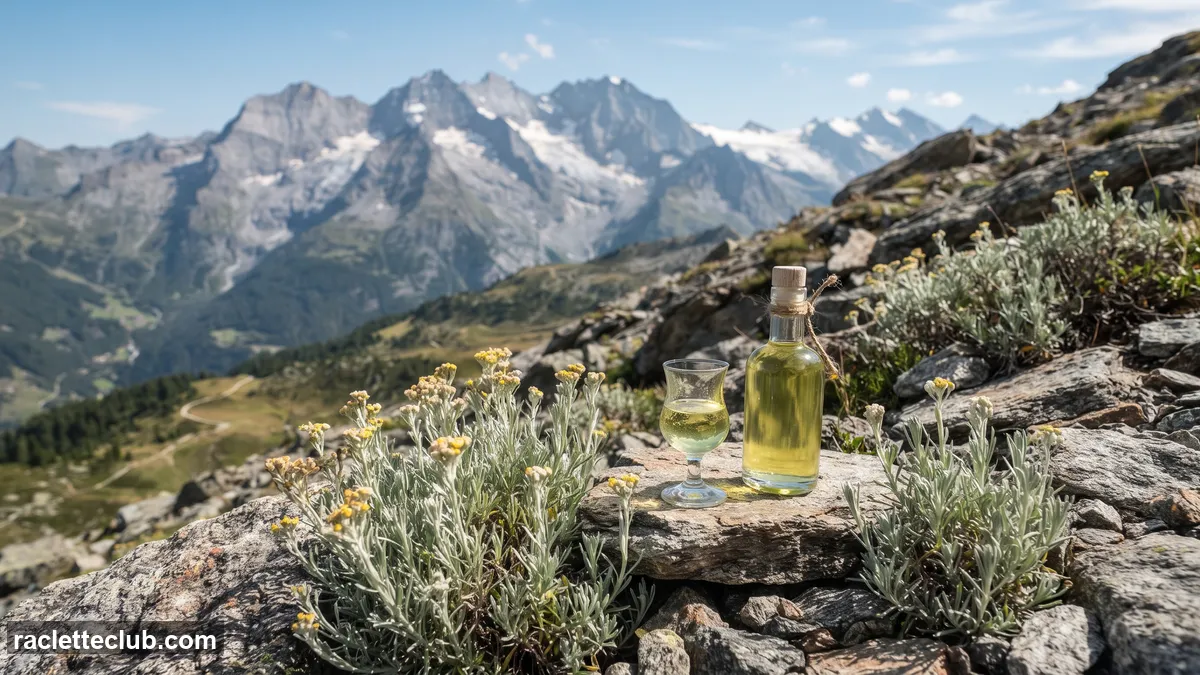
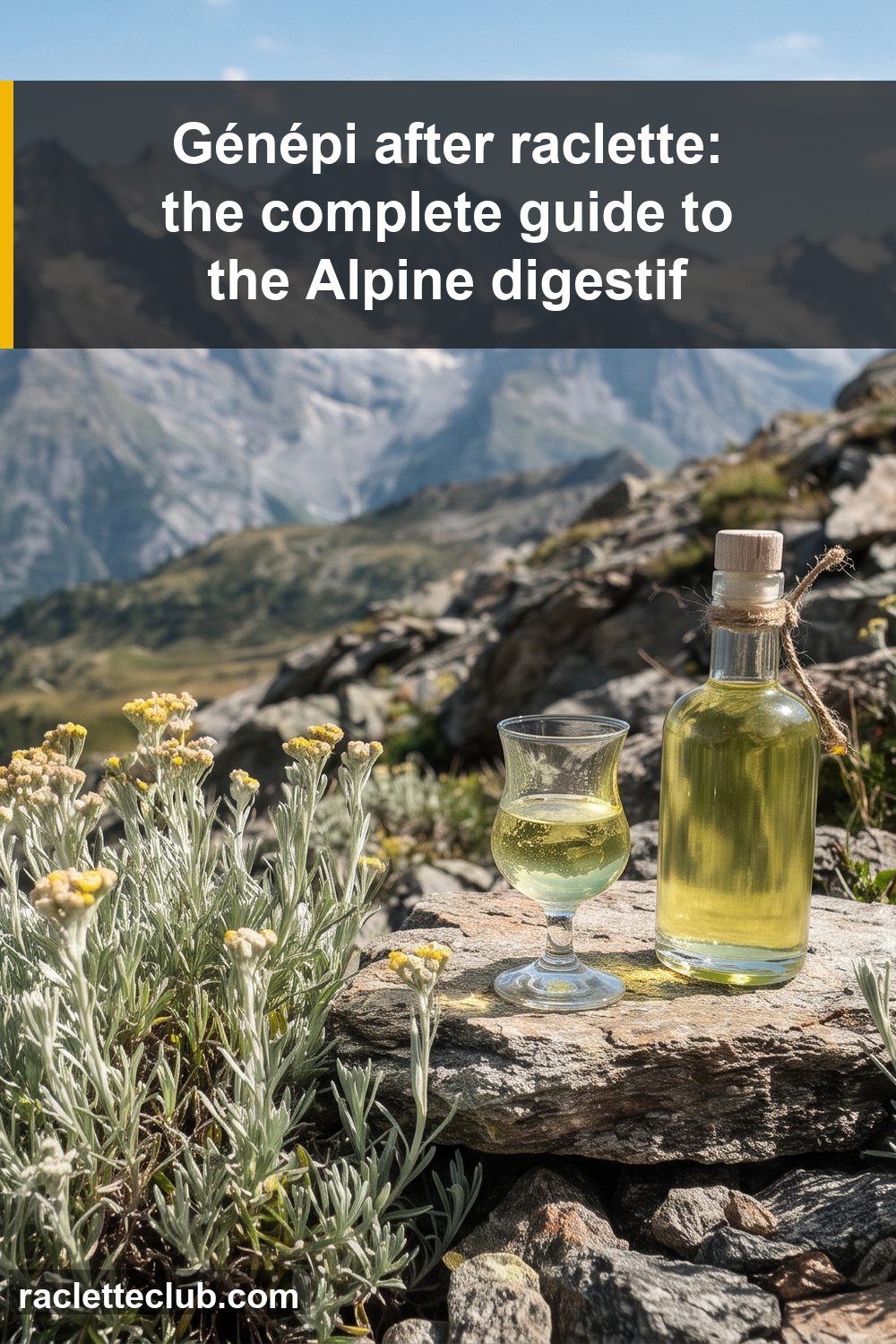
Under the name génépi, mountain folk group together several small wormwoods (Artemisia) that grow in high-altitude scree and moraines. The official specification lists four: Artemisia mutellina or umbelliformis (“white génépi”), Artemisia spicata (“black génépi”), Artemisia glacialis and Artemisia nivalis. Tiny, tough plants with only three or four months of growth, built to withstand long, harsh winters. Needless to say, they have character, and it shows up in the glass.
The same document notes that génépi, first a medicinal plant for home use, established itself as a spirit from the 19th century onward, then met the demand of winter sports tourism from the 1960s. Génépi and raclette grew up in the same chalets.
The “Génépi des Alpes” geographical indication
“Génépi des Alpes” is a geographical indication (GI) approved in France by the decree of December 15, 2014. According to INAO (France’s appellation authority), it’s the first cross-border GI involving French territory: in Italy, it’s called “Genepi delle Alpi”. Here’s what the specification says:
- The area: six French departments (Alpes-de-Haute-Provence, Hautes-Alpes, Alpes-Maritimes, Isère, Savoie, Haute-Savoie) and two Italian regions (Piedmont and Aosta Valley). The plant must be picked or grown above 1,500 meters (about 4,900 feet).
- The strength: at least 30% ABV.
- The color: from colorless to light green, by way of pale yellow.
- The recipe: at least 2 grams of dried flowering génépi sprigs per liter of liqueur, no artificial coloring, no added flavoring.
- The bottling: within the area, and in glass only.
What about the Valais? Génépi is made there too (Barnews magazine mentions producers in Sierre), but Switzerland isn’t part of the GI area, so a bottle from the Valais can’t carry the words “Génépi des Alpes”. This specification only applies to liqueurs that claim the indication: a “génépi” without these words doesn’t offer those guarantees. At the European level, Regulation (EU) 2019/787 classifies these drinks as liqueurs (15% ABV minimum) and specifies that génépi may only be flavored with flavoring foods, flavoring preparations and natural flavoring substances.
How génépi is made
The GI specification allows three ways of extracting the aromas, alone or combined:
- Maceration: the plants steep in an alcohol solution for at least 20 days (dried plants) or 15 days (fresh plants), with génépi making up at least 85% of the plant weight.
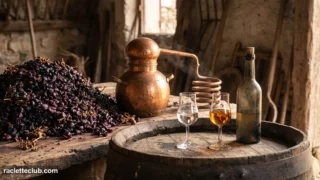
- Suspension: the plants hang above the alcohol in a sealed container for at least 90 days, to capture the most volatile aromas.
- Distillation of macerated plants, with at least 50% génépi.
Sugar, water and neutral spirit are then added. A list of complementary plants is allowed (angelica, hyssop, lemon balm, thyme…). The exact recipes remain each liqueur maker’s secret.
A word for hikers dreaming of making their own génépi at home: in Savoie, the prefecture limits picking to 120 sprigs per person per day, with a fine of up to €750. During a 2023 inspection, more than 8,500 excess sprigs were seized. The mountain is not a supermarket aisle.
The taste
INAO sums up Génépi des Alpes in two words: sweet and bitter. The sugar rounds it out, the bitterness gives it backbone, and the nose heads toward floral and herbal notes. A good génépi stays fresh and clean, not syrupy. If you feel like you’re drinking candy, the liqueur maker was heavy-handed with the sugar.
Why after a raclette (and what science says)
Génépi has a reputation as a “digestif”: the specification itself notes that it was once credited with digestive and tonic properties. But a reputation isn’t proof. In 2008, a small German study (ten healthy men) compared a meal followed by water, brandy, herbal liqueur, pear brandy, aquavit or espresso: none of these drinks sped up stomach emptying or relieved the feeling of heaviness. Only a slow walk (4 km/h, about 2.5 mph, throughout the three hours of measurement) sped up emptying, without relieving that heaviness any further.
In 2010, Zurich researchers even showed, with a fondue, that alcohol taken during and after the meal tended to slow digestion down, though without increasing symptoms. The honest conclusion: génépi doesn’t help the cheese “go down”. What it brings is a change of flavor, a bitter freshness after all that richness, and a lovely end-of-evening ritual. That’s already a lot.
How to choose your génépi
- Look for “Génépi des Alpes” on the label: it guarantees a high-altitude plant, production and bottling within the area, and no artificial flavoring or coloring.
- Check the color: the GI ranges from colorless to light green. A very intense neon green should make you curious; the ingredient list will tell you the rest.
- Go for a less sugary style: after a rich raclette, a dry, herbal génépi works better than a very sweet one.
Serving génépi
The pour: a small glass, not a water glass. The Zurich study used 2 cl (about 2/3 oz) of schnapps, which is a good measure. The temperature: chilled, straight from the fridge, or on an ice cube if you like; the cold tames the sugar and brings the bitterness forward. The glass: a small cordial glass or a mini stemmed glass, which holds on to the aromas.
Pairings
Génépi loves dark chocolate (bitterness answering bitterness), desserts made with red berries or pear, and coffee. Just steer clear of very sweet desserts: sugar against sugar, nobody wins.
More raclette digestifs
Back to the complete guide to digestifs after raclette. If you prefer fruit brandy, read our page on Williams pear brandy or our page on kirsch. For another alpine herbal liqueur, check out Chartreuse. And to finish without alcohol, our herbal teas are in the guide raclette and digestion.
Frequently asked questions
Does génépi help you digest raclette?
No, not in the physiological sense. A 2008 study found no effect of alcoholic digestifs on stomach emptying, and a 2010 study on fondue even observed slower digestion with alcohol. What génépi mainly brings is a feeling of bitter freshness after all that richness.
What does “Génépi des Alpes” on the label mean?
It’s a French-Italian geographical indication approved in 2014: plants picked or grown above 1,500 meters (about 4,900 feet) in six French departments, Piedmont and the Aosta Valley, at least 30% ABV, at least 2 grams of dried plants per liter, no artificial flavoring or coloring, bottled within the area.
Can you pick génépi to make your own?
In Savoie, picking is limited to 120 sprigs per person per day, with a fine of up to €750. The Savoie prefecture says that most neighboring departments also regulate this picking: check before you set out.
How should you serve génépi?
In a small pour (about 2 cl, or 2/3 oz), chilled or on an ice cube, in a small cordial glass. It goes well with dark chocolate and coffee.
Sources
- Specification for the “Génépi des Alpes” GI (BO Agri, December 25, 2014, in French)
- INAO: Génépi des Alpes product page (in French)
- Regulation (EU) 2019/787 on spirit drinks, Annex I (category 33, liqueur; in French)
- Savoie Prefecture: reminder on génépi picking (August 2023, in French)
- Franke et al., 2008, J Gastrointestin Liver Dis: digestifs, espresso and walking after a meal
- Heinrich et al., 2010, BMJ: wine, black tea or schnapps with fondue
- Savoie Prefecture: brochure on picking regulations
- Barnews: génépi and the herbs of the Valais
- PubMed Central: summary of Heinrich et al., BMJ 2010
Please drink responsibly.