In short: Quebec has no raclette appellation, but several creameries make real scraping cheeses, from mild pasteurized to full-flavored raw milk. Fritz Kaiser, a pioneer who came from Switzerland, made it a specialty starting in the 1980s.
Page checked on 11/02/2026 against the official websites of producers and trade bodies. Do you make this cheese? Write to us to be listed in the directory.
Fact sheet: Raclette du Québec
| Country | Canada |
|---|---|
| Region | Quebec (Montérégie, Eastern Townships, Centre-du-Québec, Lanaudière, Saguenay) |
| Appellation | no protected appellation; some raclettes are certified organic and farmhouse cheese (La Station de Compton) |
| Milk | cow, pasteurized for most (Fritz Kaiser, Champêtre), raw for the Religieuse from the Presbytère, unpasteurized organic (farmhouse cheese) for the Raclette de Compton |
| Texture | semi-firm (uncooked pressed), washed rind |
| Aging | about 2 months for the Fritz Kaiser Regular Raclette, 60 to 90 days for the Raclette de Compton, 3 to 6 months for the Religieuse |
| Size | 3 kg wheels (Fritz Kaiser), 3.5 kg (La Station), 6 kg (Religieuse), wedges and slices |
| Flavor | mild (Champêtre, Fritz Regular) to fruity and robust (Religieuse, Strong Raclette) |
| Melt | 4/5: semi-firm washed-rind cheeses that melt smoothly, the pasteurized versions are very consistent |
Its story
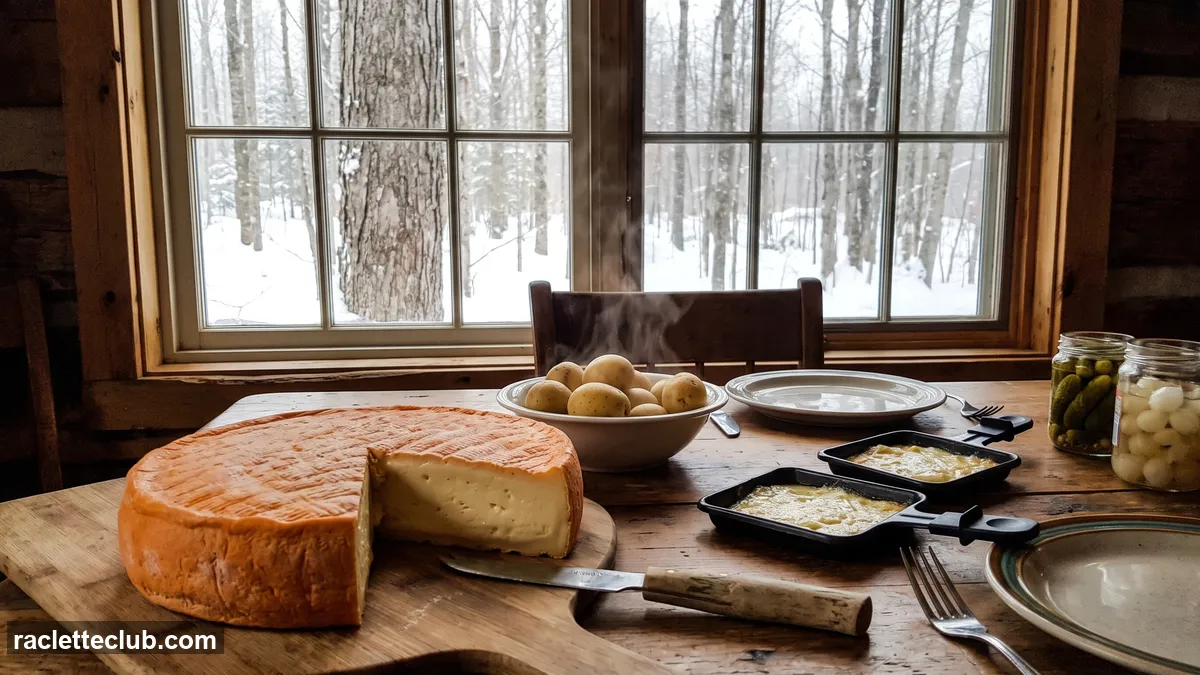
In 1981, in Noyan, in the Montérégie, Fritz Kaiser, a Swiss-born cheesemaker, founded his creamery. Trained in a Zurich dairy, he first wanted to make yogurt, then brie, but the permit was refused: he fell back on raclette, and Quebec got the better end of the deal. In an old interview reposted on his website, he even describes himself as the only active producer of raclette-type cheese in the province, an earlier Swiss-born producer based in Saint-Cyrille having stopped. Today his raclette comes in medium, strong, pepper, chili and beer-washed versions. Other creameries followed. La Station de Compton, an organic dairy farm in the Eastern Townships, offers its plain and pepper Raclette de Compton. The Fromagerie du Presbytère, in Sainte-Élizabeth-de-Warwick, ages the raw-milk Religieuse, whose name pays tribute, according to the creamery, to the crispy rind Swiss fans love. Add the Raclette des Appalaches from Rang 9 and La Raclette Champêtre from Repentigny: Quebec winters now have plenty to melt, even if they can’t melt the snow.
Video: © La Famille du lait, video about the Fromagerie La Station embedded from the videos page of the official website, watch on YouTube
Flavor and melt: what happens in the raclette pan
Quebec raclettes are semi-firm washed-rind cheeses, like their Swiss cousins, but most are made with pasteurized milk. The result: a milder flavor and a very even melt. Fritz Kaiser’s Regular Raclette, aged nearly eight weeks, offers, according to the producer, milk and butter aromas and a pronounced hazelnut taste. La Raclette Champêtre is presented as less assertive than most Swiss raclette cheeses, ideal for cautious palates. For more character, the Raclette de Compton, organic and aged 60 to 90 days, develops, according to La Station, butter and hazelnut flavors. The Religieuse, made with raw milk and aged up to six months, goes up a notch with notes of fresh mushroom and tangy cream. Under the grill, they all melt without any fuss. The beer-washed or pepper versions add some kick, handy when the table conversation runs out of steam.
On the nose and palate: milk, butter and hazelnut for Fritz Kaiser; butter and hazelnut for the Raclette de Compton; fresh mushroom and tangy cream for the Religieuse, according to the producers
How to serve it
The Quebec Cheese Route recommends planning 100 to 150 g of cheese per person, up to 200 g for big appetites. Cut slices 3 to 4 mm thick and let them come to room temperature for half an hour. For variety, mix a mild raclette, a raw-milk raclette and a pepper or beer version: everyone builds their own raclette pan. Fritz Kaiser’s 3 kg wheels also suit a half-wheel raclette machine. Blanch firm vegetables like broccoli or cauliflower for a few minutes before the evening. As for drinks, a Quebec Frontenac gris or an oaked Okanagan Chardonnay pairs well with the more aged cheeses, and an amber beer does the job with the beer-washed version.
Pairings
- Wines: Quebec Frontenac gris, Okanagan Valley Chardonnay, dry white from the Montérégie, amber craft beer
- At the table: baby potatoes, smoked ham, gherkins and pickled onions, sauteed mushrooms, country bread
Our recipes with this cheese
- Traditional raclette, the basic recipe
- The homemade raclette burger
- Barbecue raclette
How much should you plan? Our guide to raclette cheese quantities per person does the math, and our comparison of the best raclette cheeses stacks it up against the others.
Raclette du Québec producers: the directory
Four families of producers, from the giant to the small mountain pasture. Contact details taken from their official websites; logos are displayed from those sites, with credit.
The biggest producers
The largest volumes: industrial producers and big cooperatives.

La Fromagerie Champêtre inc.
Repentigny, Canada
Lanaudière creamery that produces La Raclette Champêtre, a semi-firm washed-rind pasteurized-milk cheese sold in grocery stores.
- Address: 415, rue des Industries, Repentigny (Québec) J5Z 4Y8, Canada
- Phone: +1 450 654 1308
- Website: fromageriechampetre.com
- Contact: form
- Social: Facebook · LinkedIn
Logo: © La Fromagerie Champêtre inc., displayed from its official website.
The best known
The brands you come across in stores.

Fromagerie Fritz Kaiser
Noyan, Canada
Pioneer of Quebec raclette since 1981, with six raclettes: regular, medium, strong, pepper, chili and beer-washed.
- Address: 459, chemin de la 4e Concession, Noyan (Québec) J0J 1B0, Canada
- Phone: +1 450 294 2207
- Email: info@fkaiser.com
- Website: fkaiser.com
- Social: Facebook · Instagram
- Award: American Cheese Society 2010: 2nd place for the Regular Raclette; Canadian Cheese Grand Prix 2004: 1st place for the beer-washed Raclette (https://www.fkaiser.com/nos-distinctions/)
Logo: © Fromagerie Fritz Kaiser, displayed from its official website.
The most renowned
Medal winners, award winners or renowned agers, with sourced distinctions.
Fromagerie du Presbytère
Sainte-Élizabeth-de-Warwick, Canada
Farmhouse creamery that ages the Religieuse, a raw-milk raclette in a 6 kg wheel aged 3 to 6 months.
- Address: 222, rue Principale, Sainte-Élizabeth-de-Warwick (Québec) J0A 1M0, Canada
- Phone: +1 819 358 6555
- Website: fromageriedupresbytere.com
- Award: La Religieuse: Caseus d’Or 2019, Caseus Bronze 2017 and 1st and 2nd place at the Royal Agricultural Winter Fair, according to the producer’s page (https://www.fromageriedupresbytere.com/nos-fromages)

Fromagerie La Station de Compton
Compton, Canada
Organic dairy farm in the Eastern Townships that makes the plain and pepper Raclette de Compton, a farmhouse cheese aged 60 to 90 days in a 3.5 kg wheel.
- Address: 440, chemin de Hatley, Compton (Québec) J0B 1L0, Canada
- Phone: +1 819 835 5301
- Website: fromagerielastation.com
- Social: Facebook · Instagram · TikTok
- Award: Canadian Cheese Grand Prix 2009: champion of the flavored cheese category, as shown on the Raclette de Compton page (https://fromagerielastation.com/fromagerie/raclette-de-compton/)
Logo: © Fromagerie La Station de Compton, displayed from its official website.
Small local producers
Farms, mountain pastures and village creameries.

Fromagerie Rang 9
Plessisville, Canada
Family creamery in the Appalachians whose first cheese, the Raclette des Appalaches, is aged over two months on pine boards.
- Address: 766, 9e rang Est, Plessisville (Québec) G6L 2Y2, Canada
- Phone: +1 819 362 7472
- Website: fromagerierang9.com
- Contact: form
- Social: Facebook
Logo: © Fromagerie Rang 9, displayed from its official website.

Fromagerie Blackburn
Jonquière (Saguenay), Canada
Saguenay creamery that makes the Mont-Jacob, a washed-rind cheese aged 30 days that the Quebec Cheese Route ranks among the Quebec classics for raclette.
- Address: 4353, chemin Saint-Benoît, Jonquière (Québec) G7X 7V5, Canada
- Phone: +1 418 547 4153
- Email: info@fromagerieblackburn.com
- Website: fromagerieblackburn.com
- Social: Facebook · Instagram
Logo: © Fromagerie Blackburn, displayed from its official website.
Where to buy it
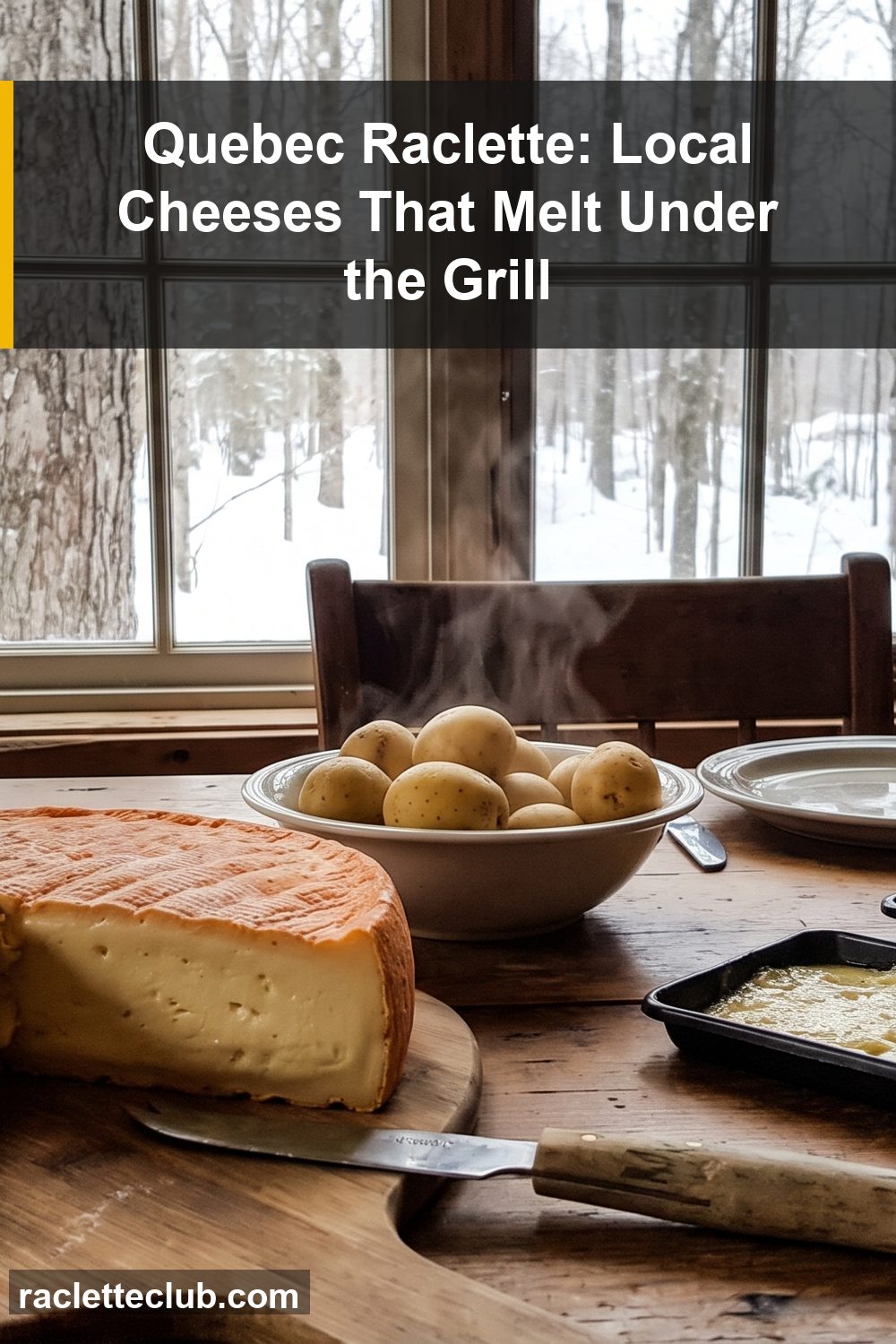
Quebec raclettes can be found at specialty cheesemongers, in creamery shops and, for La Raclette Champêtre, in grocery stores. Fritz Kaiser sells whole wheels, 200 g or 750 g wedges, blocks and slices, and even rents raclette ovens at its shop in Noyan. There is no raclette label in Quebec: go by the creamery’s name on the label, the raw-milk or pasteurized-milk mention and, where applicable, the organic or farmhouse cheese certifications. The Fromages du Québec directory helps you find points of sale.
More addresses in our guide to where to buy good raclette cheese.
Follow on social media
- Fromagerie Fritz Kaiser (account linked from fkaiser.com) (Instagram)
- Fromagerie La Station (account linked from the official website) (Instagram)
Vote for the best raclette cheese
One vote per person, no sign-up needed. The ranking is visible with “View ranking”.
Frequently Asked Questions
Is there a raw-milk raclette in Quebec?
Yes. The Religieuse from the Fromagerie du Presbytère is made with raw cow’s milk, and La Station’s Raclette de Compton with unpasteurized organic milk, according to the producers. Most other Quebec raclettes are made with pasteurized milk.
How much raclette should you plan per person?
The Quebec Cheese Route recommends 100 to 150 g per person, and up to 200 g for big appetites.
Who made the first Quebec raclette?
Fritz Kaiser, a Swiss-born cheesemaker based in Noyan since 1981, presents himself as a pioneer of Canadian raclette. In an old interview, however, he mentions a Swiss-born producer, based in Saint-Cyrille, who made it before him.
Read also: all raclette cheeses, the secrets of a successful raclette and what is raclette?
Sources
- Fritz Kaiser: founded 1981, contact: fkaiser.com
- Fritz Kaiser: address: fkaiser.com/contact
- Fritz Kaiser: six raclettes: fkaiser.com/fromages
- Regular Raclette: 8 weeks, pasteurized milk, 3 kg wheel, sizes: fkaiser.com/fromages/raclette-reguliere
- Fritz Kaiser awards: fkaiser.com/nos-distinctions
- Fritz Kaiser as the only active raclette producer in Quebec, after a Saint-Cyrille producer stopped (old article): fkaiser.com/en/fritz-kaiser-is-the-only-producer-of-raclette
- List of Quebec raclettes and quantities per person: routedesfromages.com/inspirations/guide-de-la-parfaite-racle
- La Raclette Champêtre: pasteurized milk, mild flavor: fromageriechampetre.com/produits/la-raclette-champetre
- Champêtre: contact: fromageriechampetre.com
- Raclette de Compton: organic, unpasteurized milk, 60 to 90 days, 3.5 kg, 2009 award: fromagerielastation.com/fromagerie/raclette-de-compton
- La Station: contact and videos: fromagerielastation.com
- La Religieuse: raw milk, 6 kg, 3 to 6 months, Caseus: fromageriedupresbytere.com/nos-fromages
- Presbytère: contact: fromageriedupresbytere.com
- Raclette des Appalaches: fromagerierang9.com/fromages/raclette-des-appalaches
- Rang 9: contact: fromagerierang9.com
- Mont-Jacob: washed rind, 30 days: fromagerieblackburn.com/fromages/le-mont-jacob
- Blackburn: contact: fromagerieblackburn.com