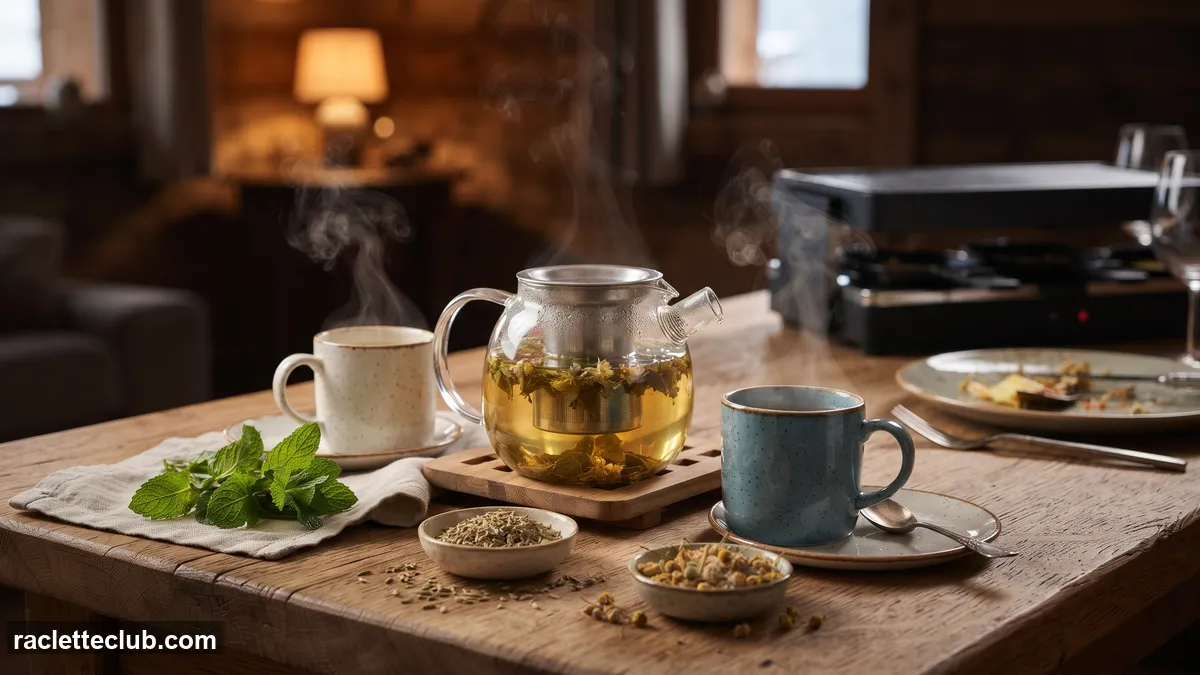
In short: a hot herbal tea after raclette is a lovely grandmother’s ritual, and some plants (peppermint, fennel, aniseed, caraway, chamomile, lemon balm, ginger) have a traditional use recognised by the European Medicines Agency for minor digestive discomfort, such as bloating. Traditional use does not mean efficacy proven by clinical trials. And a Swiss study found that the stomach empties faster after a fondue washed down with tea than after one washed down with wine and kirsch. No miracle, then, but a genuinely good habit.
This article contains Amazon affiliate links: if you buy through these links, Raclette Club earns a small commission at no extra cost to you. Learn more.
Why grandma reached for the teapot
A raclette means melted cheese, potatoes, cured meats, and often a second (and third) round in the little pans. In short, a meal rich in fat. Public health advice is clear on this point: the UK’s NHS lists rich, fatty or spicy meals among the classic causes of indigestion, and advises against eating within 3 to 4 hours of going to bed.
So the tea arrives at just the right moment: it’s hot, it’s alcohol-free, it replaces that last glass of wine, and it gives everyone a pause before bedtime. That’s already quite a lot. For the rest, let’s go plant by plant and look at what is really established.
What the European Medicines Agency says, plant by plant
The herbal committee of the European Medicines Agency (EMA, the HMPC committee) publishes monographs on medicinal plants. For most digestive teas, it concludes there is “traditional use”: the effect is judged plausible and the plant has been used safely for at least 30 years, but clinical trials are insufficient. That’s honest, and it’s exactly what we’re telling you here.
| Plant | Traditional use accepted by the EMA | EMA precautions |
|---|---|---|
| Peppermint (leaf) | Minor digestive complaints, such as indigestion and wind | From age 4. Can worsen heartburn and reflux. Caution with gallstones |
| Chamomile (flower) | Minor stomach and gut complaints, such as bloating and mild spasms | Mainly for adults and over-12s. Not if you’re allergic to the daisy family (daisy, mugwort…) |
| Lemon balm (leaf) | Minor digestive complaints, bloating, wind; also mild stress and sleep | Adults and over-12s |
| Sweet fennel (fruit) | Minor spasmodic digestive complaints, bloating, wind | From age 4. Not recommended during pregnancy and breastfeeding, as a precaution |
| Aniseed (fruit) | Mild indigestion, bloating, wind | Adults and over-12s, for no more than 2 weeks. Not if you’re allergic to the carrot family (fennel, celery, coriander…) |
| Caraway (fruit) | Bloating and wind | Adults and over-12s. Not if you’re allergic to the carrot family, mugwort or birch |
| Ginger (rhizome) | Minor spasmodic digestive complaints with bloating | For ginger-based medicines: not under 18, nor during pregnancy or breastfeeding |
For all these plants, the EMA gives the same instruction: if symptoms last more than one to two weeks depending on the plant, or get worse, see a doctor or pharmacist. These monographs cover herbal medicines, not the teabag from your supermarket, but they are the same plants.
And what about the studies?
The NCCIH, the US institute that assesses complementary medicine, is even more cautious. For chamomile, it judges the evidence weak for digestive complaints, while considering it probably safe in the amounts found in a cup of tea. For mint, it notes there is very little research on the leaf tea; it’s peppermint oil, in capsules, that shows results in irritable bowel syndrome, and it can cause heartburn. For ginger, it mentions the traditional use against indigestion, with no modern evidence on digestion.
The most entertaining result comes from Switzerland. In 2010, a team in Zurich served cheese fondue to 20 volunteers, with white wine or black tea, then a small glass of kirsch or water. The result, published in the BMJ: the stomach emptied markedly faster with tea or water than with wine or kirsch. But the volunteers reported no more digestive discomfort one way than the other. The moral: tea works no miracles, but the “little glass to help it go down” doesn’t speed up digestion either.
Our after-raclette tea (editor’s opinion)
- The classic: peppermint, unless you’re prone to heartburn.
- The gentle one: chamomile and lemon balm, perfect before heading to bed.
- The mountain blend: fennel, aniseed and caraway mixed together, that aniseed flavour reminiscent of Alpine liqueurs, without the alcohol.
- The zingy one: a few slices of fresh ginger in hot water with a twist of lemon zest.
- The simple one: a light black tea, as in the Swiss study.
- Lemon verbena: a great classic on French tables, chosen here for its lemony taste; we found no European assessment recognising any digestive effect.
Allow a teaspoon of dried herb per cup, water just off the boil, and 5 to 10 minutes’ brewing with a lid on to keep the aromas in. One big teapot for the whole table saves trips back and forth to the kitchen.
When tea isn’t enough
Feeling heavy for an evening after a big meal is perfectly ordinary. Heartburn almost every day, severe pain, difficulty swallowing, repeated vomiting, unexplained weight loss or blood in your poo are not a job for herbal tea: the NHS advises seeing a doctor. If you’re on medication, ask your pharmacist before taking a course of herbs: the NCCIH, for example, flags possible interactions between chamomile and certain medicines.
In the pantry
All grandma’s tips are gathered in our grandmother’s remedies. Read also the seeds and spices that help digestion and the habits that actually hold up after a big meal. For the full picture, our raclette and digestion guide and the pantry.
On the blog, our article on the herbs that help digestion also covers gentian, rosemary and fresh herbs.
Frequently asked questions
Which herbal tea should I drink after raclette?
Peppermint, chamomile, lemon balm, fennel, aniseed, caraway and ginger have a traditional use recognised by the European Medicines Agency for minor digestive complaints. None has efficacy proven by robust trials. Choose the one you enjoy.
Is mint good for digestion?
Peppermint is traditionally used for indigestion and wind, but according to the EMA it can worsen heartburn and reflux. If you suffer from those, go for chamomile or lemon balm instead.
Does tea help you digest fondue or raclette?
A study published in the BMJ in 2010 found that the stomach empties faster after a fondue served with black tea than after one served with wine and kirsch. The volunteers had no more digestive discomfort in one case than in the other.
Are herbal teas suitable for children and pregnant women?
Not all of them. The EMA advises against fennel during pregnancy and breastfeeding, and restricts aniseed, caraway, lemon balm and most uses of chamomile to over-12s. Ask a doctor or pharmacist for advice.
Sources
- EMA, monograph Menthae piperitae folium (peppermint)
- EMA, monograph Matricariae flos (chamomile)
- EMA, monograph Melissae folium (lemon balm)
- EMA, monograph Foeniculi dulcis fructus (sweet fennel)
- EMA, monograph Anisi fructus (aniseed)
- EMA, monograph Carvi fructus (caraway)
- EMA, monograph Zingiberis rhizoma (ginger)
- NCCIH, Peppermint Oil
- NCCIH, Chamomile
- NCCIH, Ginger
- Heinrich et al., BMJ 2010, cheese fondue with white wine or black tea
- NHS, Indigestion