In short: no, nothing proves that cold water makes cheese “set” in your stomach; no, a little glass of kirsch doesn’t help you digest faster, and a study published in the BMJ actually shows the opposite; and no, bicarbonate of soda after a big meal isn’t a good idea, according to the US poison control centre. What is true: a very fatty meal is digested more slowly, and it really is the quantity that makes the difference. Here are seven of grandma’s beliefs, with what the sources say about them.
Myth no. 1: “Cold water makes the cheese set in your stomach”
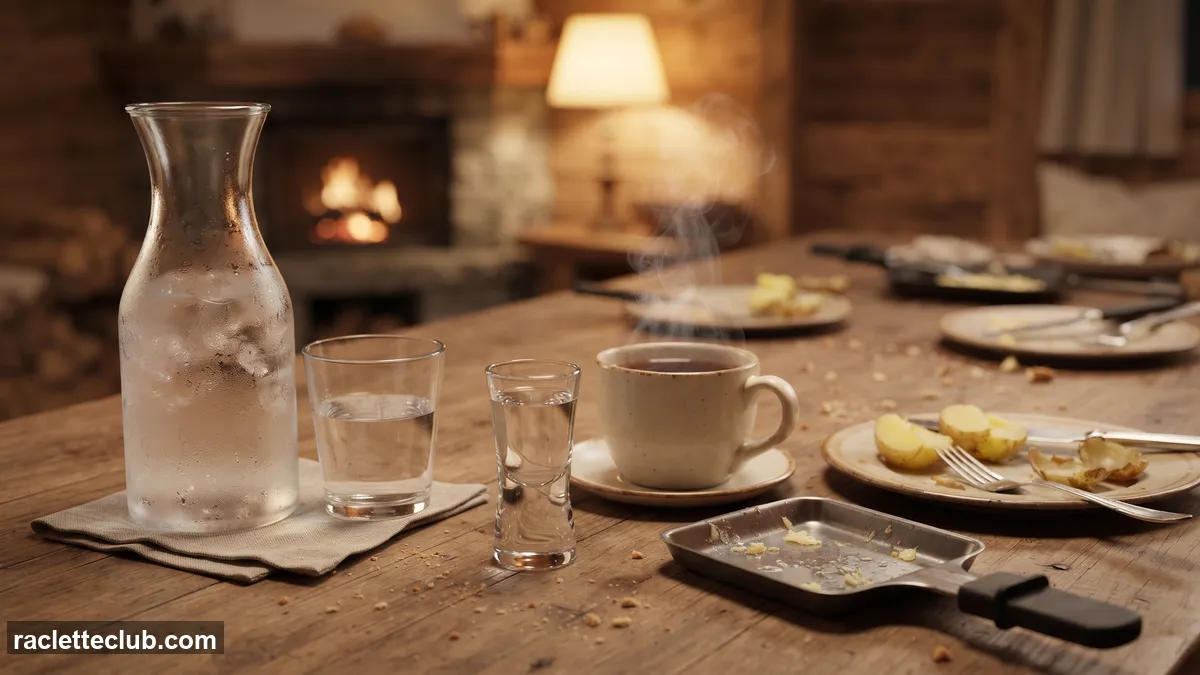
This is the most famous one, passed down from generation to generation in Switzerland as in Savoie. Verdict: we found no study that demonstrates it. Your stomach is at body temperature, whatever the temperature of your glass. The only serious study on the subject, published in the BMJ in 2010 with a cheese fondue, compared hot tea with white wine: it was alcohol being tested, not the temperature of the drink. So drink your water at whatever temperature you like.
Myth no. 2: “A little glass of kirsch helps you digest”
It’s the other way round. In the BMJ trial, 20 volunteers ate a fondue with white wine or black tea, then a small glass of kirsch or water. The stomach emptied markedly more slowly with the wine and kirsch than with the tea and water. The volunteers did not, however, report more digestive discomfort. So a digestif is a pleasure, not a medicine. If you do have one, the French public health agency Santé publique France recommends no more than 2 drinks a day, not every day, and none during pregnancy.
Myth no. 3: “White wine helps you digest cheese”
Dry white wine is the classic raclette pairing because its acidity balances the richness of the cheese on the palate. That’s a matter of taste. As for digestion, the same study shows that alcohol tends to slow down stomach emptying. A glass or two for pleasure, with a jug of water alongside, is the right compromise.
Myth no. 4: “A glass of water with bicarbonate of soda after the meal”
An old store-cupboard remedy for heartburn, bicarbonate of soda releases gas in the stomach. The US poison control centre, Poison Control, reports cases of stomach rupture after a very large meal or a lot of alcohol, which is exactly the scenario of a raclette evening. It also contains a lot of sodium. The centre advises against using it for stomach aches without medical advice. Keep it for baking.
Myth no. 5: “Activated charcoal sorts everything out”
Charcoal exists as a medicine for bloating, but the evidence for its efficacy remains limited. Above all, it reduces the absorption of other medicines taken at the same time: the official leaflet of a French charcoal medicine asks you to take it apart from other treatments, ideally more than 2 hours apart. If you’re on medication, ask your pharmacist.
Myth no. 6: “Herbal capsules are natural, so they’re risk-free”
Artichoke has a traditional use recognised by the European Medicines Agency for feelings of heaviness and bloating, but with contraindications (certain liver or bile duct conditions, allergy to the daisy family). Desmodium, often sold “for the liver”, was the subject of an opinion from the French agency Afssa (now Anses) in 2007, which recommended avoiding it as a food supplement for lack of sufficient data on its risks. Natural doesn’t mean harmless.
Myth no. 7: “Melted cheese is digested like anything else”
Here, grandma was right to worry. Fats slow down stomach emptying, which prolongs that over-full feeling: this is well documented in the scientific literature. Raclette cheese, cured meats and buttered potatoes make for a very rich meal. The only real defence is quantity. Our raclette and digestion guide gives per-person amounts, and our grandma’s habits that actually hold up do the rest.
What we keep from grandma’s wisdom (editor’s opinion)
- A hot herbal tea rather than one last glass.
- Gherkins, pickled onions and a green salad on the table: their acidity balances the richness on the palate, a matter of taste.
- A raclette that starts early, and a short walk afterwards.
- A fresh, light pudding: our dessert ideas.
In the pantry
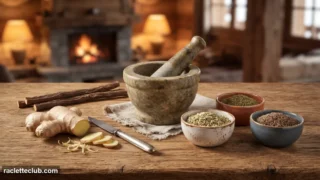
All our grandmother’s remedies are gathered in one place, along with the digestive seeds and spices. As for digestifs, the digestifs aisle presents them without any health promises. And for everything else, the pantry.
Frequently asked questions
Is it true that cold water makes cheese set in your stomach?
We found no study that demonstrates it. The trial published in the BMJ in 2010 on fondue tested alcohol against tea, not the temperature of the drink.
Does kirsch help you digest raclette?
No. In the BMJ trial, the stomach emptied more slowly with white wine and kirsch than with tea and water, with no clear difference in symptoms.
Can you take bicarbonate of soda after raclette?
Best avoided. The US poison control centre, Poison Control, reports stomach ruptures after a very large meal or a lot of alcohol, and advises against using it for stomach aches without medical advice.
Sources
- Heinrich et al., BMJ 2010, cheese fondue with white wine or black tea
- Santé publique France, reducing the risks of drinking alcohol
- Poison Control, My child got into the baking soda: risks and treatment
- Base de données publique des médicaments, Acticarbine (activated charcoal)
- EMA, monograph Cynarae folium (artichoke)
- Afssa (Anses), 2007 opinion on desmodium
- Fats and gastric emptying, scientific review (PMC)