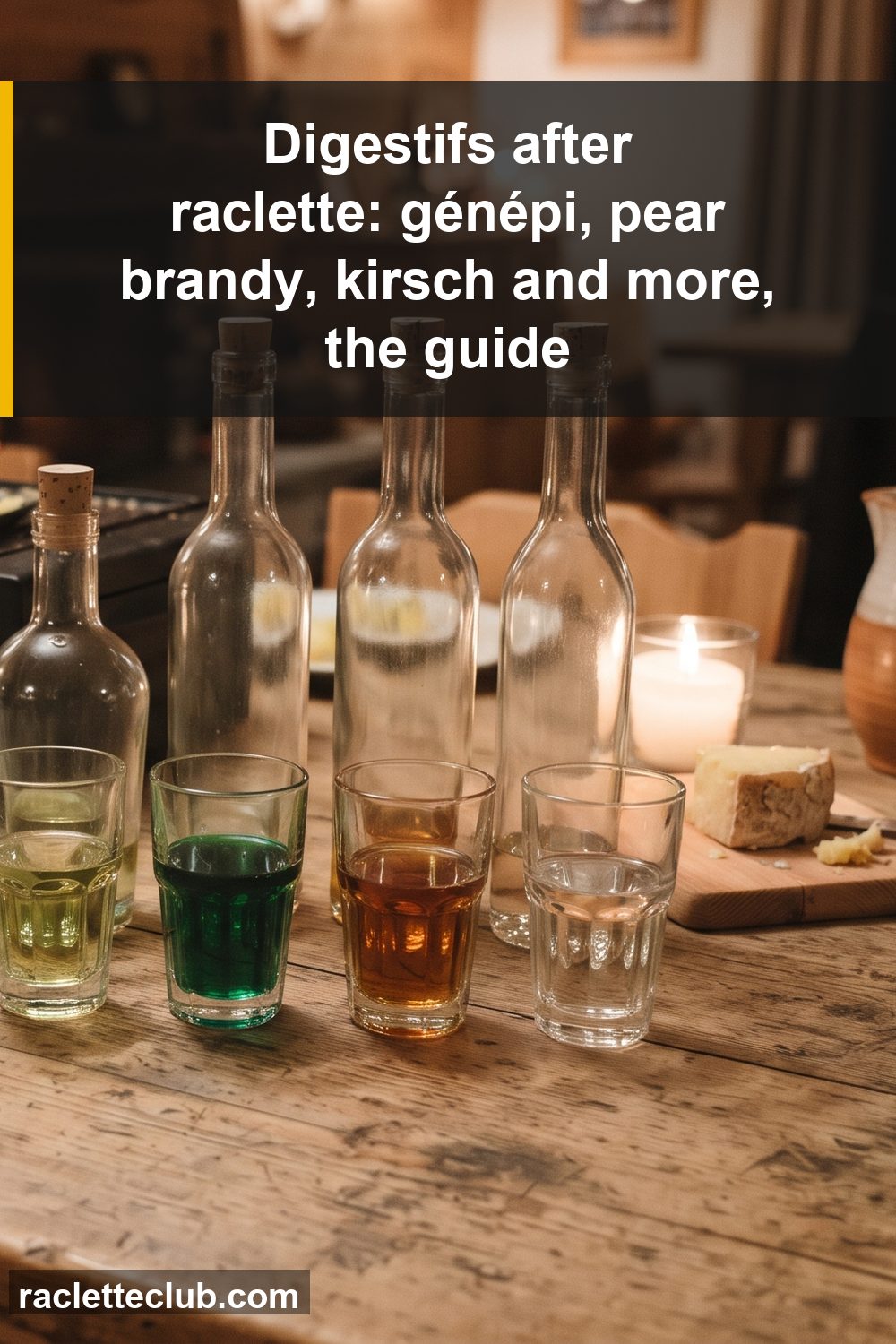
In short: after a raclette, the great classics are génépi, Williams pear brandy, kirsch, Chartreuse, marc (or grappa) and abricotine. Pick an herbal liqueur if you like a fresh, bitter edge, or a fruit brandy if you prefer something clean and sharp. And let’s be honest: none of them will help you digest any faster. A slow walk, on the other hand, speeds up stomach emptying.
This article contains Amazon affiliate links: if you buy through these links, Raclette Club earns a small commission at no extra cost to you. Learn more.
The little after-raclette drink: tradition and truth
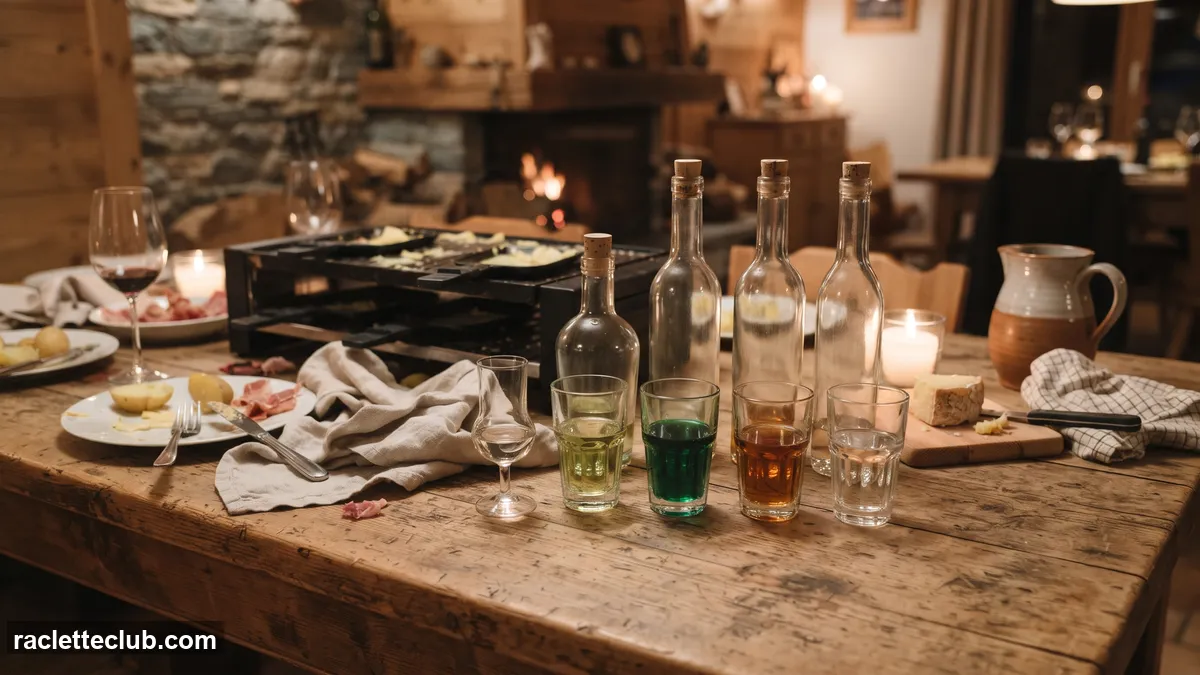
In the Alps, a raclette rarely ends with the last scrap of cheese. First comes coffee, then the bottle that comes out of the cupboard, often without a label, always with a story. The “petit verre”, the little after-dinner glass, is as much a part of the ritual as the scraper. And it comes with a ready-made excuse: supposedly, it helps you digest.
This is where the sommelier has to put down the corkscrew and put on a lab coat. In 2008, a German study gave ten healthy men a hearty meal followed by water, brandy, herbal liqueur, Williams pear brandy, aquavit or espresso. None of the digestifs sped up stomach emptying compared with water, and the feeling of fullness didn’t budge. The only thing that sped up emptying: a slow walk (4 km/h, about 2.5 mph, throughout the three hours of measurement), with no effect on that feeling of fullness.
In 2010, researchers at University Hospital Zurich took the test to the closest thing to our turf: fondue. With wine and a shot of schnapps, the stomach emptied more slowly than with black tea, though it didn’t cause more heaviness or heartburn. The moral: a digestif digests nothing. It’s an end-of-meal pleasure, a change of flavor after all that richness, and an excuse to make the evening last. Which is already an excellent reason, as long as you stick to one small glass.
Génépi, the liqueur of the peaks
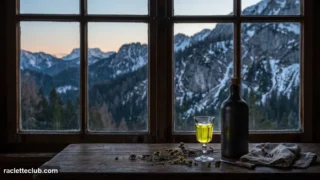
Génépi is a liqueur made from small high-mountain wormwood plants (Artemisia). Its benchmark designation, “Génépi des Alpes”, is a French-Italian geographical indication approved in 2014: plants picked or grown above 1,500 meters (about 4,900 feet), at least 30% ABV, no artificial flavoring or coloring. The taste? Sweet and bitter at the same time, floral and herbal. Served chilled, it’s the most “ski chalet” digestif there is.
Read our page génépi after raclette.
Williams pear brandy, the fruit in concentrated form
A brandy made exclusively from the Williams pear variety (EU rules reserve the name “Williams” for this case). In Switzerland’s Valais, “Eau-de-vie de poire du Valais AOP” goes further: everything happens within the canton, at least 40% ABV, no coloring and no flavor enhancers. In our opinion, it’s the most fragrant brandy in this lineup, the one that can win over guests who “don’t like strong spirits”. Williamine, by the way, is a brand name belonging to the Morand distillery.
Read our page Williams pear brandy.
Kirsch, cherry in its purest form
A cherry brandy distilled with the pits, hence its almond note. Two designations lead the way: Zuger Kirsch / Rigi Kirsch AOP in central Switzerland (at least 40% ABV) and Kirsch de Fougerolles AOC in France’s Haute-Saône (at least 45% ABV, with no sweetening whatsoever). Dry and sharp, it rinses the palate like nothing else. It’s also the quiet ingredient in many Swiss fondues, and the hero of the famous “coup du milieu”, the mid-meal shot.
Read our page kirsch after raclette.
Chartreuse, green or yellow
The liqueur of the Carthusian monks, made, according to the official website, with 130 plants, barks, roots and spices. Green Chartreuse is 55% ABV and has character to spare; yellow, at 43% ABV, is rounder and gentler. The brand’s website recommends serving it chilled, between 12 and 13 °C (about 54 to 55 °F), or over ice. After a raclette, a small glass of yellow Chartreuse is a bit like génépi in a three-piece suit.
Read our page Chartreuse after raclette.
Marc and grappa, the soul of the wine press
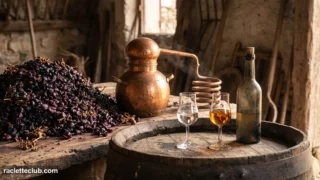
Marc is distilled from what’s left after the grapes are pressed. In Savoie, “Marc de Savoie” is a geographical indication officially recognized in 1950 according to INAO (France’s appellation authority), made from the pomace of Savoie appellation wines, clear or amber depending on whether or not it spends time in wood. On the other side of the Alps, the name “grappa” is a geographical indication reserved for Italian pomace brandy. Rustic when young, rounder with age, it’s the winemaker’s digestif.
Read our page marc and grappa.
Abricotine, Valais sunshine in a bottle
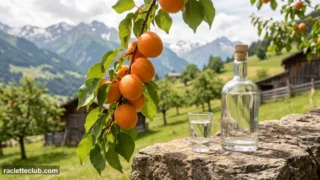
Abricotine AOP, or Valais apricot brandy, has been on the Swiss federal AOP register since a 2002 decision. It’s made mainly from the Luizet apricot (no more than 10% other varieties), entirely in the Valais, and is at least 40% ABV. The fruit is pitted to avoid bitterness; Valais/Wallis Promotion describes a pronounced apricot flavor with a slight almond note. A Valais raclette that ends with abricotine is a full round trip through the canton.
Read our page abricotine.
Also worth a try
Vieille prune (aged plum brandy)
A plum brandy aged in oak casks, where it gains roundness. It’s notably the specialty of Souillac, in the Lot, where the Louis Roque distillery claims a century-old recipe blending several fruit varieties. Notes of ripe fruit and vanilla: a gentle option for anyone who finds kirsch intimidating.
Calvados
Normandy’s signature AOC: a brandy made from cider and perry, aged at least two years in oak casks according to INAO. Young, it smells of apple; older, it heads toward cooked fruit, spice and wood. Not from the Alps, but perfectly at home after a cheese-heavy meal.
Gentian
Gentian brandy is distilled from the roots of yellow gentian, a mountain plant. Swissinfo describes it as bitter and more or less earthy, and notes that fewer than ten distilleries still make it in Switzerland, in the Jura and the Pre-Alps. You either love it or hate it.
The alcohol-free option
Driving, not in the mood, or simply think the cheese was happiness enough? A hot herbal tea (lemon verbena, mint, lemon balm…) is a lovely way to close a raclette, and a stroll won’t do any harm: in the 2008 study, it was the slow walk that sped up stomach emptying (three hours at 4 km/h, about 2.5 mph, mind you, and with no effect on the feeling of fullness). All our ideas are in our guide raclette and digestion.
The summary table
| Digestif | Origin | Taste | Who it’s for |
|---|---|---|---|
| Génépi | French and Italian Alps (Génépi des Alpes GI) | Sweet and bitter, floral, herbal | Fans of mountain herbs |
| Williams pear brandy | Valais (AOP) and elsewhere | Intense ripe pear, dry | Those who want fruit above all |
| Kirsch | Zug and Rigi (AOP), Fougerolles (AOC) | Cherry, pit, almond, very dry | Purists who like it clean |
| Chartreuse | Isère (Carthusian monks) | Herbs, spices; green is powerful, yellow gentler | The curious, fans of complex liqueurs |
| Marc and grappa | Savoie (GI), Italy (Grappa GI) | Grape, rustic when young, round when aged | Wine lovers |
| Abricotine | Valais (AOP) | Pronounced apricot, almond note | Fruit fans who want some sunshine |
| Vieille prune | Souillac (Lot) | Ripe fruit, vanilla, oak | Those who like roundness |
| Calvados | Normandy (AOC) | Apple, cooked fruit, wood | Fans of aged brandies |
| Gentian | Switzerland (Jura, Pre-Alps) and elsewhere | Bitter, earthy | Adventurers of bitterness |
Serving a digestif after raclette
- The pour: one small glass, around 2 cl (about 2/3 oz), like the schnapps in the Zurich study. Sip it, don’t knock it back.
- The temperature: Valais/Wallis Promotion recommends 8 to 12 °C (about 46 to 54 °F) for Valais brandies; Chartreuse is served between 12 and 13 °C (about 54 to 55 °F) or over ice, according to its producer. Génépi likes to be served chilled.
- The glass: a small tulip glass for fruit brandies, which concentrates the aromas; a small cordial glass for génépi and Chartreuse.
- The timing: after dessert, with or after coffee. And if you feel like it, follow it with a little walk outside.
- The health benchmark: Santé publique France (the French public health agency) recommends no more than 2 standard drinks a day and 10 a week, with alcohol-free days. The digestif counts toward the evening’s total.
And before the digestif, there’s the wine: find our pairings in the complete guide to wines for raclette.
Frequently asked questions
What is the best digestif after a raclette?
There’s no single winner. Génépi and Chartreuse suit fans of bitterness and herbs; Williams pear brandy, kirsch and abricotine suit those who prefer fruit and a clean finish. To stay true to the terroir, a digestif from the Valais or Savoie is the natural choice.
Does a digestif really help digestion?
No. A 2008 study found no effect of alcoholic digestifs on stomach emptying, and a 2010 Zurich study on fondue observed slower digestion with alcohol. A slow walk after the meal, however, did speed up gastric emptying, without relieving symptoms.
How much digestif should you serve?
A small glass of about 2 cl (about 2/3 oz) is enough. Santé publique France recommends no more than 2 standard drinks a day and 10 a week: the digestif adds to the wine you had during the evening.
What can you offer guests who don’t drink alcohol?
A hot herbal tea (lemon verbena, mint, lemon balm) and a short stroll after the meal. Our ideas are gathered in our raclette and digestion guide.
Sources
- Franke et al., 2008, J Gastrointestin Liver Dis: digestifs, espresso and walking after a meal
- Heinrich et al., 2010, BMJ: wine, black tea or schnapps with fondue
- Regulation (EU) 2019/787 on spirit drinks, Annex I (in French)
- Specification for the “Génépi des Alpes” GI (2014, in French)
- Swiss Federal Office for Agriculture (FOAG): Eau-de-vie de poire du Valais AOP specification (in French)
- FOAG: Zuger Kirsch / Rigi Kirsch AOP specification (in French)
- Specification for the Kirsch de Fougerolles AOC (2015, in French)
- Chartreuse: Green Chartreuse product page (official website)
- Chartreuse: Yellow Chartreuse product page (official website)
- INAO: Marc de Savoie product page (in French)
- Rivista di Agraria: Grappa, a geographical indication (in Italian)
- Swiss AOP-IGP Association: Abricotine AOP
- Valais/Wallis Promotion: Valais AOP brandies (in French)
- Maison Louis Roque: Vieille Prune de Souillac
- INAO: Calvados product page (in French)
- Swissinfo: gentian, the yellow fairy of the Swiss Jura (in French)
- Santé publique France: reducing the risks of drinking alcohol (in French)
- PubMed Central: summary of Heinrich et al., BMJ 2010
Please drink responsibly.