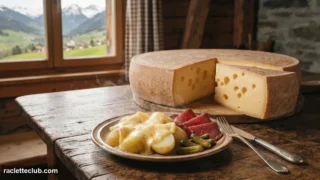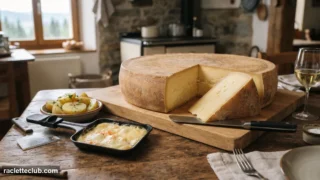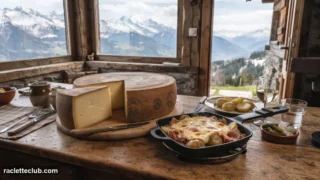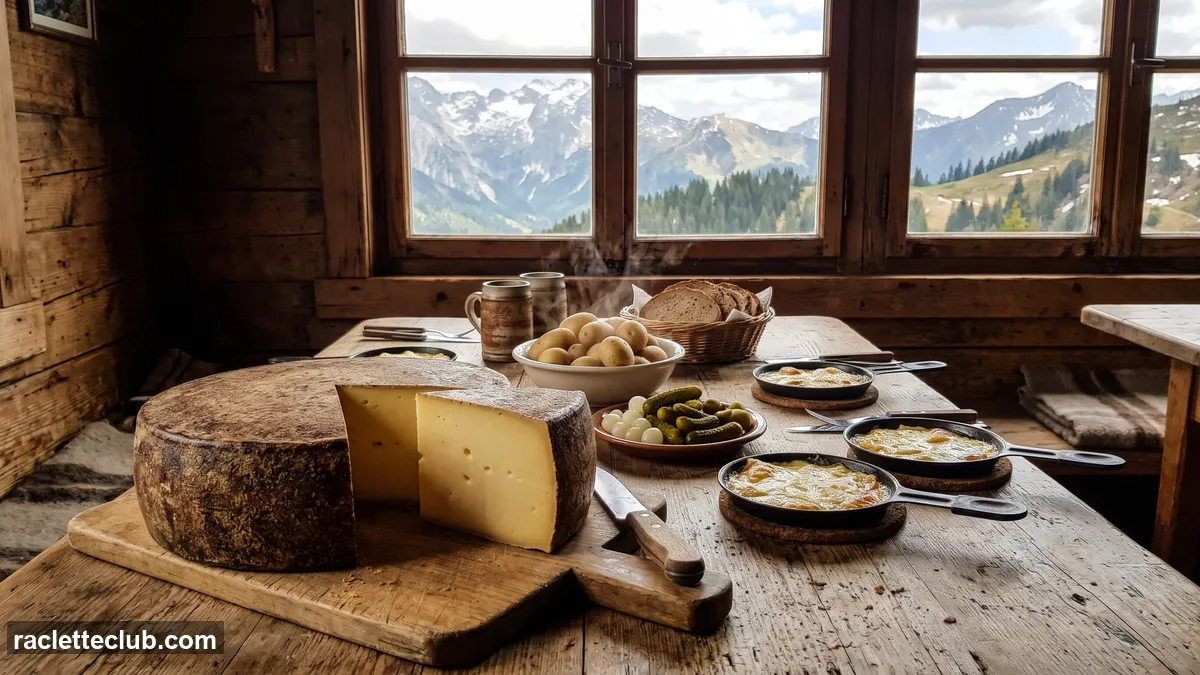
In short: Austria and Germany have no protected raclette, but their Alpine regions make real cheeses meant to melt under the grill, often from hay milk. From the industrial Ländle Raclette to the artisan wheels of the Bregenzerwald and the Allgäu, there is plenty to fill a raclette grill without ever crossing the Swiss border.
Page checked on 11/02/2026 against the official websites of producers and trade bodies. Do you make this cheese? Write to us to be listed in the directory.
Identity card: Raclette cheeses from Austria and Germany
| Country | Austria and Germany |
|---|---|
| Region | Vorarlberg (Bregenzerwald), Salzburg, Styria; Allgäu (Bavaria) |
| Designation | no protected designation for raclette in either country; the term raclette is not protected there (ZDFheute); the neighboring Vorarlberger Bergkäse, however, is a PDO (Austrian Ministry of Agriculture) |
| Milk | cow, pasteurized at the industrial producers (Schärdinger, Ländle), thermized or raw in the sennereien (village dairies), often hay milk with no silage |
| Paste | uncooked pressed, washed rind (red cultures) |
| Aging | from a few weeks (Schärdinger) to 6 months (Walder Käskuche); 2 to 3 months for the Bregenzerwald Sennkäse |
| Format | wheels of about 6 kg (Bregenzerwald Sennkäse), half wheels of 3.2 kg (Schärdinger), bars and slices |
| Flavor | mild to fruity, bold for the long-aged versions |
| Melt | 4/5: smooth, even melt; the industrial slices are sized for the raclette pan, while the sennerei wheels are a little more temperamental but more aromatic |
Its story
Raclette was born in the Valais, and nobody in Vienna or Munich claims otherwise. But Vorarlberg and the Allgäu share the same brown cows, the same meadows and the same passion for mountain cheeses with Switzerland. The tradition of the sennereien, those cooperative village cheese dairies, is an old one there: the Sennerei Bremenried, in the Allgäu, claims 125 years of history. Their great classic is still Bergkäse, the local aged cheese. The raclette-dinner craze, which has taken over German tables at Christmas and New Year’s Eve, pushed dairies to offer their own wheels and slices. The result ranges from the bar-format Ländle Raclette from Vorarlberg Milch, a cooperative of more than 500 farmers, to the Raclettekäse from Alpenkäse Bregenzerwald, by way of the sliced Allgäuer Raclette. There is no shared set of specifications: the word raclette is not protected in these countries. So it is the label, the milk and the sennerei that make the difference, not the name.
Video: © Vorarlberg Milch (Ländle Raclette-Käse), watch on YouTube
Flavor and melt: what happens in the raclette pan
There are two families to tell apart. On one side, the industrial raclettes made with pasteurized milk, such as the Schärdinger Raclette made in Styria or the Ländle Raclette from Vorarlberg: even texture, milky and buttery taste, predictable melt, perfect for a dinner for twelve where you want no surprises. The Schärdinger, aged several weeks with red cultures, is presented by its maker as bold. On the other side, the sennerei wheels made with hay milk, often thermized or raw. The Bregenzerwald Sennkäse, recommended by the KäseStrasse for raclette, offers, according to the producer, a slightly spicy and nutty note with a creamy paste. The Raclette from the Walder Käskuche, aged about 6 months, is described as more aromatic. When melted, these mountain cheeses tend to release a little more fat than the industrial versions, a sign of a rich paste. Nothing serious: a piece of rye bread solves the problem better than a paper towel.
On the nose and palate: milky and buttery when young, spicier and nuttier with age, a grassy note on the hay-milk cheeses
How to serve it
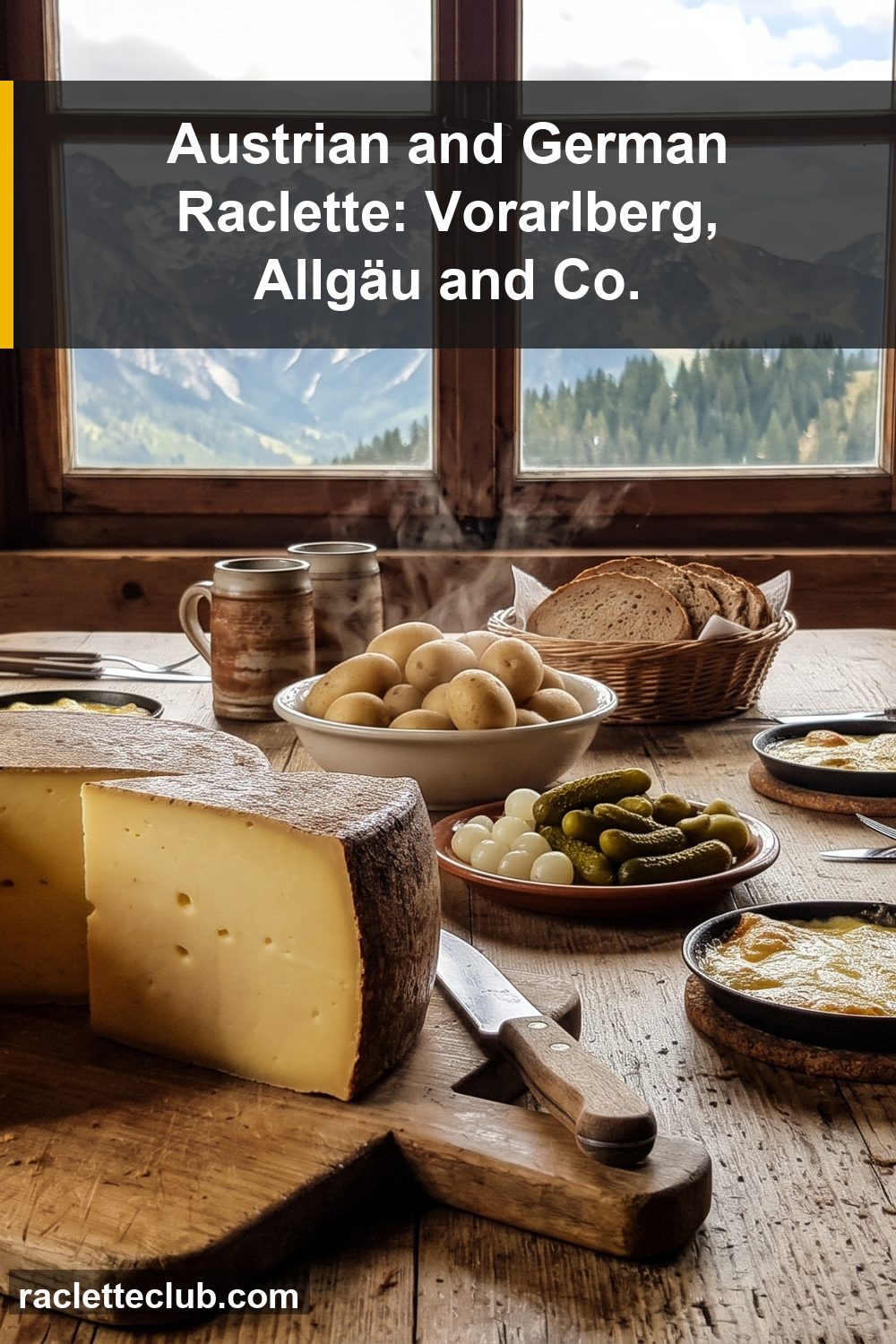
Plan on 200 g per person, 250 g for hungry mountain folk. The pre-cut slices are sized for the raclette pan: take them out twenty minutes ahead, otherwise they stick together like teenagers at a concert. For a sennerei wheel, cut slices 3 to 5 mm thick and keep the rind, unless it is very thick. A 3 kg half wheel under a half-wheel raclette melter suits six to eight guests well. Serve with new potatoes, Vorarlberg Speck, pickles and sweet-and-sour onions. To drink, a Grüner Veltliner or a dry Riesling lightens the whole thing, and a light Zweigelt will please red wine lovers.
Pairings
- Wines: Grüner Veltliner (Austria), dry Riesling, light Zweigelt, Müller-Thurgau from Lake Constance
- At the table: new potatoes, Vorarlberg Speck, pickles and sweet-and-sour onions, rye bread, Käsespätzle the next day
Our recipes with this cheese
- Traditional raclette, the basic recipe
- Barbecue raclette
- Homemade raclette burger
How much should you plan for? Our guide to raclette cheese quantities per person does the math, and our comparison of the best raclette cheeses pits it against the others.
Producers of Austrian and German raclette cheeses: the directory
Four families of producers, from the giant to the small mountain pasture. Contact details taken from their official websites; the logos are shown from those sites, with credit.
The biggest producers
The largest volumes: industrial producers and big cooperatives.

Vorarlberg Milch eGen (marque Ländle)
Feldkirch, Autriche
Cooperative of more than 500 Vorarlberg farmers that makes Ländle Raclette, as a bar, in slices, with pepper or with chili.
- Address: Nofler Straße 62, 6800 Feldkirch, Autriche
- Phone: +43 5522 721300
- Email: office@vmilch.at
- Website: vmilch.com
- Contact: form
- Social: Instagram · YouTube
- Award: 9 medals at the 2024 World Cheese Awards in Viseu (Portugal), but none for raclette (https://www.vmilch.com/world-cheese-awards-2024-25)
Logo: © Vorarlberg Milch eGen (marque Ländle), shown from its official website.

Berglandmilch eGen (marque Schärdinger)
Wels, Autriche
Austria’s leading dairy group, it sells Schärdinger Raclette as a 3.2 kg half wheel and in slices, made with pasteurized milk, aged with red cultures and produced in Voitsberg (Styria).
- Address: Schubertstraße 30, 4600 Wels, Autriche
- Phone: +43 7476 77311-0
- Email: office@schaerdinger.at
- Website: schaerdinger.at
- Contact: form
- Social: Facebook · Instagram · YouTube · TikTok
Logo: © Berglandmilch eGen (marque Schärdinger), shown from its official website.

Allgäu Milch Käse eG
Kimratshofen, Allemagne
Farmers’ cooperative in the Allgäu that markets the Bergbauern Raclettekäse and the sliced Allgäuer Raclette Käse.
- Address: Landstraße 41, 87452 Kimratshofen, Allemagne
- Phone: +49 8373 98010
- Email: info@allmikaes.de
- Website: allmikaes.de
- Social: Facebook · Instagram
Logo: © Allgäu Milch Käse eG, shown from its official website.
The best known
The brands you come across in stores.
Baldauf Käse (Gebr. Baldauf GmbH & Co. KG)
Lindenberg im Allgäu, Allemagne
Family-run Allgäu cheese dairy using hay milk that sells the sliced Allgäuer Raclette vom Senn, in classic and organic versions.
- Address: Goßholz 5, 88161 Lindenberg, Allemagne
- Phone: +49 8381 89020
- Email: info@baldauf-kaese.de
- Website: baldauf-kaese.de
- Social: Instagram · YouTube
Logo: © Baldauf Käse (Gebr. Baldauf GmbH & Co. KG), shown from its official website.

KäseStrasse Bregenzerwald (Bregenzerwälder Käsekeller)
Lingenau, Autriche
Network of sennereien and mountain pastures in the Bregenzerwald, it sells the raw-milk Sennkäse (wheel of approximately 6 kg, 2 to 3 months) recommended for raclette.
- Address: Zeihenbühl 423, 6951 Lingenau, Autriche
- Phone: +43 5513 42870-41
- Email: info@kaesestrasse.at
- Website: kaesestrasse.at
- Contact: form
- Social: Facebook · Instagram · YouTube
Logo: © KäseStrasse Bregenzerwald (Bregenzerwälder Käsekeller), shown from its official website.

Das Bregenzerwälder Käsehaus
Andelsbuch, Autriche
Affineur with shops in Andelsbuch, Feldkirch and Sulzberg, who recommends its Sennkäse and its herb-flavored Bergkräuterrebell for raclette.
- Address: Hof 144, 6866 Andelsbuch, Autriche
- Phone: +43 5512 26346
- Email: andelsbuch@kaesehaus.at
- Website: kaesehaus.at
Logo: © Das Bregenzerwälder Käsehaus, shown from its official website.
The most renowned
Medal winners, award winners or renowned affineurs, with a sourced distinction.
Pinzgau Milch Produktions GmbH
Maishofen, Autriche
Dairy in the Pinzgau (Salzburg) whose Raclettekäse Almsenner was named among the best Austrian dairy products in 2026.
- Address: Saalfeldnerstraße 2, 5751 Maishofen, Autriche
- Phone: +43 6542 68266
- Email: office@pinzgaumilch.at
- Website: pinzgaumilch.at
- Contact: form
- Award: Gold medal for its Almsenner-range Raclettekäse at the 27th Goldenes Kasermandl, Wieselburg (Salzburg24, May 28, 2026)
Small local producers
Farms, mountain pastures and village cheese dairies.
Alpenkäse Bregenzerwald Sennerei eGen
Bezau, Autriche
Cooperative hay-milk sennerei in the Bregenzerwald that makes, in Bezau, a 45% Raclettekäse and a Sennerkäse recommended for raclette.
- Address: Ach 586, 6870 Bezau, Autriche
- Phone: +43 5514 30020
- Email: office@alpenkaese.at
- Website: alpenkaese.at
- Social: Facebook · Instagram

Walder Käskuche (Schaukäserei Allgäu)
Wald (Ostallgäu), Allemagne
Show dairy in the Allgäu that sells its Raclette aged about 6 months, cut to order or sliced, and offers a sales truck with a raclette stand for parties.
- Address: Nesselwanger Str. 44, 87616 Wald, Allemagne
- Phone: +49 8302 200
- Email: info@berghof-babel.de
- Website: walder-kaeskuche.de
Logo: © Walder Käskuche (Schaukäserei Allgäu), shown from its official website.
Where to buy it
In Austria, Ländle and Schärdinger slices are sold in supermarkets, and the Bregenzerwald sennereien sell their wheels in their village shops. The Bregenzerwälder Käsekeller in Lingenau and the Bregenzerwälder Käsehaus in Andelsbuch ship within Austria and to Germany. In the Allgäu, Baldauf, the Walder Käskuche and the Allgäu Milch Käse cooperative offer their raclettes online or in large supermarkets. For a cheese with character, look on the label for the words Heumilch (hay milk, a traditional specialty guaranteed), Rohmilch (raw milk) or the name of a specific sennerei. Without those clues, you are probably buying a decent industrial raclette, but one without a story to tell.
More addresses in our guide on where to buy good raclette cheese.
Video: © KäseStrasse Bregenzerwald, watch on YouTube
Vote for the best raclette cheese
One vote per person, no sign-up. The ranking is visible with “View the ranking.”
Frequently asked questions
Is there an Austrian or German PDO raclette?
No. The term raclette is not protected in these countries. The protected designations in the region cover other cheeses, such as Vorarlberger Bergkäse.
What is hay milk (Heumilch)?
Milk from cows fed on grass and hay, with no silage. It is recognized as a Traditional Specialty Guaranteed in the European Union and widely used in the Bregenzerwald and the Allgäu.
Are Austrian raclettes made with raw milk?
Not all of them. Schärdinger and Ländle Raclette are made with pasteurized milk, according to their makers. The sennereien often use thermized or raw milk: check the label.
Read also: all raclette cheeses, the secrets of a successful raclette and what is raclette?
Sources
- Ländle Raclette, Vorarlberg Milch contact: vmilch.com
- Vorarlberg Milch cheese range: vmilch.com/cheese-specialitities
- Vorarlberg Milch’s 2024 World Cheese Awards medals: vmilch.com/world-cheese-awards-2024-25
- Ländle Raclette slices: pasteurized milk, 50% fat: gurkerl.at/en-AT/20163-laendle-raclette-slices
- Schärdinger Raclette 3.2 kg: pasteurized milk, red cultures, Voitsberg: schaerdinger.at/produkte/raclette-32-kg
- Berglandmilch / Schärdinger contact: schaerdinger.at/kontakt
- Allgäu Milch Käse: Bergbauern Raclettekäse and Allgäuer Raclette: allmikaes.de
- Allgäu Milch Käse: legal notice: allmikaes.de/impressum
- Baldauf: Allgäuer Raclette vom Senn: baldauf-kaese.de/online-shop
- Baldauf: legal notice: baldauf-kaese.de/impressum
- Sennkäse for raclette, raw milk, about 6 kg, 2 to 3 months: kaesestrasse.at/shop/schnittkaese/sennkaese
- KäseStrasse Bregenzerwald contact: kaesestrasse.at/kontakt
- Bregenzerwälder Käsehaus: shops and contacts: kaesehaus.at
- Bregenzerwälder Käsehaus: cheeses recommended for raclette: kaesehaus.at/?s=raclette
- Alpenkäse Bregenzerwald: 45% Raclettekäse: alpenkaese.at/produkte/schnittk%C3%A4se
- Alpenkäse Bregenzerwald: contact: alpenkaese.at
- Alpenkäse Bregenzerwald Sennerkäse recommended for raclette: heumilch.com/en/produkt/alpenkaese-bregenzerwald-sennerkaese
- Walder Käskuche: 6-month Raclette: walder-kaeskuche.de/shop.html
- Walder Käskuche: sales truck and raclette stand: walder-kaeskuche.de/verkaufswagen.html
- Sennerei Bremenried, 125 years: sennerei-bremenried.de
- Ländle Raclette: pasteurized milk, about 3 months, pepper and chili versions: vmilch.com/cheese-specialitities/laendle-raclette
- Berglandmilch, Austria’s largest dairy: berglandmilch.at
- Walder Käskuche: legal notice: walder-kaeskuche.de/impressum.html
- Gold at the 2026 Goldenes Kasermandl for the Pinzgau Milch Raclettekäse: salzburg24.at/news/salzburg/pinzgau/viermal-gold-fuer-pinzga
- Pinzgau Milch: legal notice: pinzgaumilch.at/impressum
- The word raclette is not protected in Germany: zdfheute.de/ratgeber/raclette-grill-kaese-zu-weihnachten-ges
- Vorarlberger Bergkäse PDO: bmluk.gv.at/themen/lebensmittel/trad-lebensmittel/kaese/vora