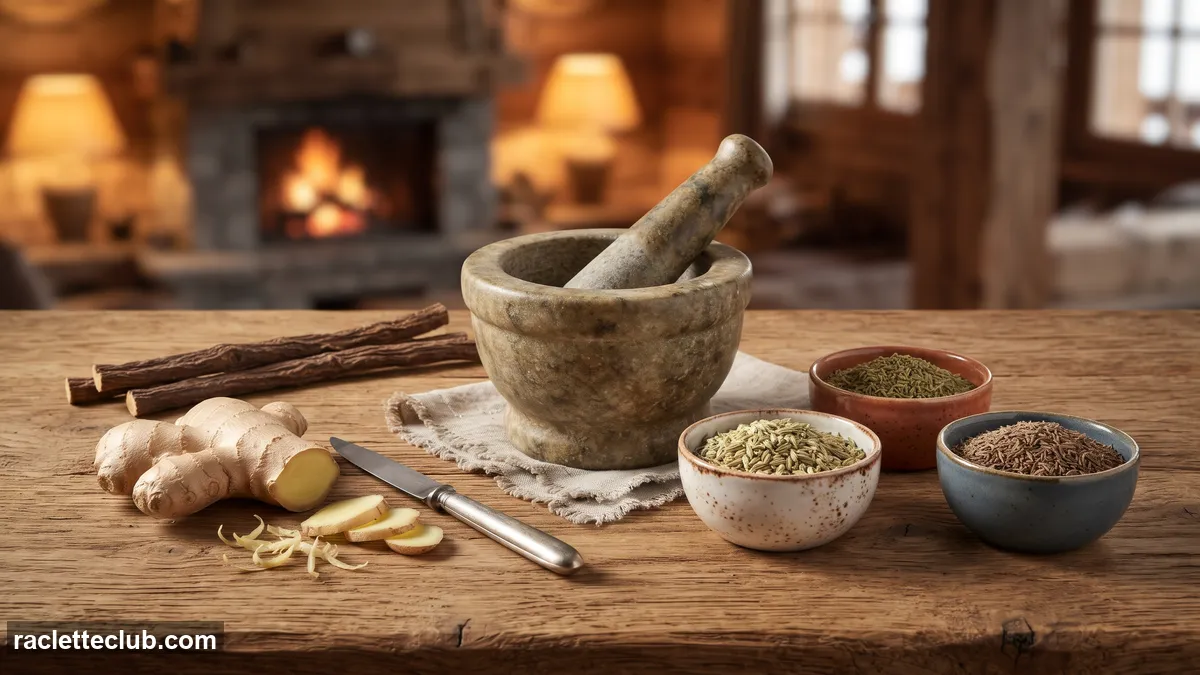
In short: the seeds of the carrot family (fennel, aniseed, caraway) and ginger are our grandmothers’ “digestive” spices. The European Medicines Agency recognises a traditional use for them against bloating and wind, with no efficacy demonstrated by robust trials. In the kitchen, they bring lovely flavour to a raclette: caraway on the potatoes, fennel at the end of the meal, ginger in a tea. Liquorice, on the other hand, is best enjoyed in moderation: France’s food safety agency ANSES warns of the risk of high blood pressure with heavy consumption.
This article contains Amazon affiliate links: if you buy through these links, Raclette Club earns a small commission at no extra cost to you. Learn more.
The little seeds in the cupboard
Open the spice cupboard of a grandmother from Alsace, Switzerland or Bavaria and there’s a good chance you’ll find caraway, which goes into bread, cheese or sauerkraut. Elsewhere, it’s fennel or aniseed that gets nibbled at the end of a meal. All these seeds come from the same plant family, the umbellifers (or Apiaceae), like carrot, celery, coriander and dill.
That family link matters: the European Medicines Agency (EMA) points out that people allergic to any of these plants should not take aniseed or caraway preparations. If you’re allergic to celery, for example, skip the seeds.
What we know, spice by spice
Caraway
The EMA accepts a traditional use of caraway fruit to relieve bloating and wind, in adults and adolescents over 12. It advises against caraway if you’re allergic to the carrot family, mugwort or birch. If symptoms last more than two weeks, see a doctor.
Sweet fennel
Traditional use accepted by the EMA for minor spasmodic digestive complaints, bloating and wind. Not under age 4, for lack of sufficient data, and not during pregnancy or breastfeeding, as a precaution.
Aniseed
Traditional use for mild indigestion, bloating and wind, in adults and adolescents over 12, for two weeks at most.
Ginger
The EMA recognises a traditional use of ginger for minor spasmodic digestive complaints with bloating. For ginger-based medicines, it advises against use under 18, during pregnancy and breastfeeding. The US NCCIH notes that ginger itself can cause heartburn or abdominal discomfort in some people.
Liquorice
This is the false friend of the bunch. Liquorice root has an old reputation as a digestive, but in 2025 ANSES warned about overconsumption: eaten in large amounts and repeatedly, liquorice can lower potassium and raise blood pressure. People with high blood pressure, pregnant or breastfeeding women and children are the most affected. A liquorice stick now and then, yes; a daily course of liquorice tea “to help digestion”, no.
How to slip them into a raclette evening (editor’s opinion)
- Caraway on the potatoes: a pinch in the cooking water or over buttered potatoes. A classic pairing with Munster or mountain cheeses.
- A little end-of-meal dish: plain fennel seeds, or lightly dry-toasted in a pan, to nibble with coffee.
- Three-seed tea: fennel, aniseed and caraway in equal parts, a teaspoon per cup, lightly crushed to release the aroma.
- Fresh ginger: a few slices in hot water, with lemon and a little honey.
- Homemade pickles: gherkins and pickled onions with mustard and fennel seeds, served with the raclette for some acidity.
- Caraway or cumin bread: for a change from country bread with the cured meats.
A pestle and mortar is all you need to crush the seeds at the last minute: the aroma is much sharper than with a ready-ground powder.
What seeds don’t do
They don’t “burn off” the fat from the cheese, they won’t make you lose weight and they don’t replace medical advice. For each of these plants, the EMA reminds you to see a doctor if complaints last more than one to two weeks or get worse. And if you’re on medication, ask your pharmacist before taking herbs in any quantity.
In the pantry
Find all our grandmother’s remedies, especially the teas and herbal teas for digestion and the myths about digesting raclette. On the cheese side, the pantry awaits.
On the blog, our article on condiments and digestion looks at mustard, gherkins, raw sauerkraut and pepper.
Frequently asked questions
Which spice helps you digest raclette?
Caraway, fennel, aniseed and ginger have a traditional use recognised by the European Medicines Agency against bloating and wind. It’s not proven efficacy, but they bring lovely flavour to a raclette meal.
Can you chew fennel seeds after a meal?
Yes, it’s a widespread tradition. The EMA does, however, advise against fennel preparations under age 4 and during pregnancy or breastfeeding, and against all carrot-family preparations if you’re allergic to that plant family.
Is liquorice good for digestion?
It has an old reputation as a digestive, but ANSES warns against heavy, repeated consumption, which can raise blood pressure. Enjoy it occasionally and in moderation.
Sources
- EMA, monograph Carvi fructus (caraway)
- EMA, monograph Foeniculi dulcis fructus (sweet fennel)
- EMA, monograph Anisi fructus (aniseed)
- EMA, monograph Zingiberis rhizoma (ginger)
- NCCIH, Ginger
- ANSES, Réglisse : attention à la surconsommation pour éviter les risques d’hypertension
- Ordre national des pharmaciens, Réglisse : à consommer occasionnellement et avec modération