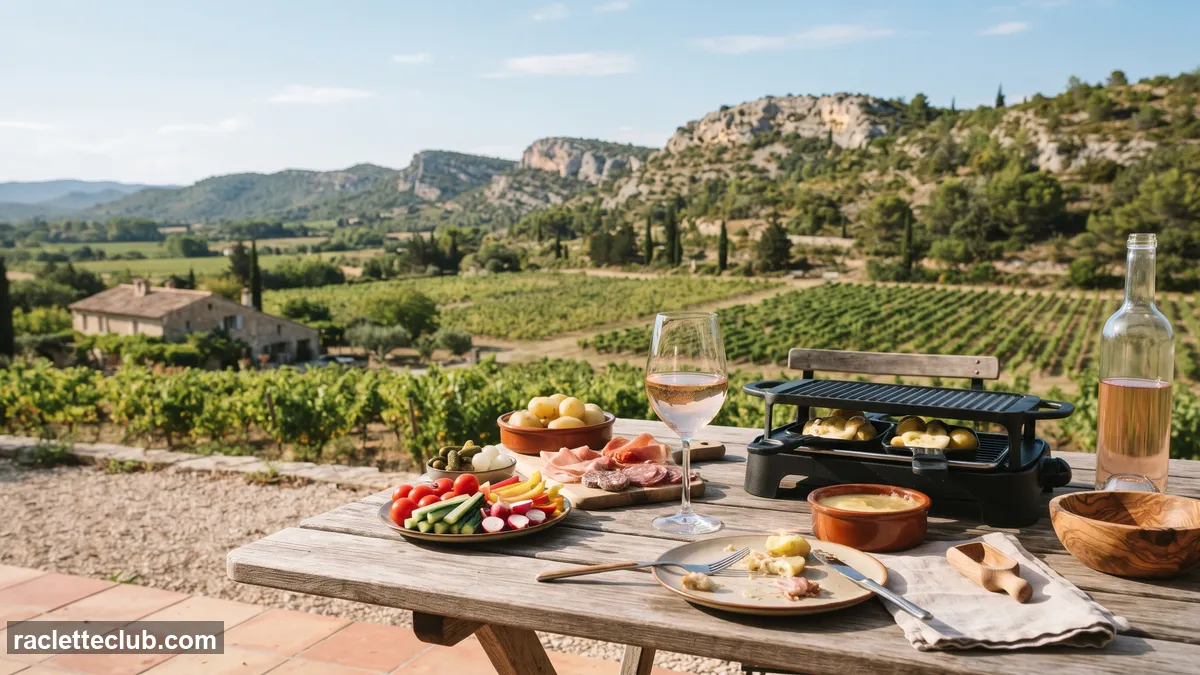
In short: Provence rosé isn’t the traditional raclette pairing, but a well-chilled Côtes de Provence, Coteaux d’Aix or Coteaux Varois works very well with the aperitif and the cured meats. To stand up to the cheese, go for rosés with a bit more body, like a Bandol rosé. Buy the most recent vintage: the 2025, praised by the trade body for its freshness and balance.
This article contains Amazon affiliate links: if you buy through these links, Raclette Club earns a small commission at no extra cost to you. Learn more.
A Provence rosé with raclette? The Valais purist chokes on his Fendant. And yet there’s always someone at the table who “only drinks rosé”. Good news: with the right pick, the rosé of the South doesn’t embarrass the mountains. Here’s how to choose one without turning your chalet into a Saint-Tropez terrace.
Why a Provence rosé with raclette
Provence is the only major wine region to have specialized in appellation rosé: according to the Provence Wine Council (CIVP), rosé accounts for 90% of its production. The rosés are pale, made by direct pressing or a short cold maceration, from grapes often harvested at night, around 15 °C (59 °F), to preserve freshness. The trade body describes a palate that is “round, lively and taut all at once”.
With raclette, that freshness and the lack of tannins are real assets: the wine rinses your palate between bites of melted cheese, without the roughness a full-bodied red would bring. The fruit (citrus, exotic fruit, strawberry, raspberry, according to the Vins de Provence literature) makes a lovely counterpoint to the cured meats and cornichons.
Its limit: a very pale, very light rosé can fade away next to a well-aged, smoked or peppercorn raw-milk raclette. In that case, choose a rosé with a bit more structure (Coteaux Varois, Bandol), or keep the rosé for the aperitif and then move on to a Fendant or an Apremont. Provence rosé is the fun friend at the party; don’t ask it to carry the piano.
The best appellations to look for
The Provence wine region, as defined by its trade body, brings together three AOPs covering about 28,000 hectares (about 69,000 acres), between the foothills of the Alps and the Mediterranean.
Côtes de Provence (and its sub-areas)
The largest, with more than 20,000 hectares (about 49,000 acres) according to its press kit. It has additional geographical names that appear on the label: Sainte-Victoire, Fréjus, La Londe, Pierrefeu and Notre-Dame des Anges. These terms designate more specific terroirs; they’re a good starting point for finding a rosé with a bit more character.
Coteaux d’Aix-en-Provence
Recognized in 1985, the appellation spans 49 municipalities in the Bouches-du-Rhône and the Var. According to INAO (France’s appellation authority), rosé makes up 83% of its production, based notably on Grenache, Counoise, Mourvèdre and Syrah. The rosés are pale, with a supple attack and a velvety, fresh texture.
Coteaux Varois en Provence
In the heart of the Var, on limestone hills between 350 and 500 meters (about 1,150 to 1,640 feet) above sea level, with harsh winters. INAO describes rosés with aromas of red fruit, garrigue and spice, and a fine balance between freshness and structure. It’s probably the most “mountain-minded” appellation of the three, and a great option for raclette.
Bandol rosé, the sturdiest
Bandol isn’t one of the three AOPs grouped under the Provence Wine Council, but it also makes rosés in Provence. Mourvèdre gives them more structure and longevity; the Guide Hachette suggests drinking them within 1 to 3 years. The appellation rules require at least 20% Mourvèdre in the plantings for rosés. For a raclette, it’s in our opinion the Provence rosé best able to stand up to the cheese.
The best vintages: drink the most recent
Provence rosé is drunk young, as the Guide Hachette points out for Côtes de Provence (Bandol rosé and the rare “rosés de garde”, or age-worthy rosés, aside). The Provence wine competition even has a “rosé de garde” category reserved for older vintages. For a raclette, simply pick the latest vintage available. The “When to drink” column is our advice.
| Vintage | Quality / profile | When to drink |
|---|---|---|
| 2026 | First pickings from early August on the coast. A wet winter, then a very hot, dry spring and summer; the CIVP announces a promising vintage, with no tasting assessment at this stage. | On release |
| 2025 | Harvest from August 12 in the early-ripening areas, with grape health rated excellent. At the 2026 competition, the CIVP praised rosés that are balanced on the palate, fresh, with delicate aromas. | Now: the vintage to buy |
| 2024 | Late frost in the hinterland and hail between May and June, but healthy vines. At the 2025 competition, the vintage was judged “particularly balanced”, fresh, precise and refined. | Now, without waiting |
| 2023 | Exceptional winter drought, May and June rains, disease pressure and intense July heat. No opinion on the wines’ profile, for lack of a reliable tasting assessment. | Too old for most rosés, in our opinion; Bandol possibly |
| 2022 | A year of drought and heat waves; according to the trade body, balanced, expressive and refreshing rosés thanks to careful work on acidity. | Only age-worthy rosés and Bandol |
Serving Provence rosé
- Temperature: between 8 and 10 °C (about 46 to 50 °F), the range given in the Vins de Provence literature (the Guide Hachette goes up to 10-12 °C, about 50-54 °F, for Côtes de Provence). Careful: next to the raclette grill, the bottle warms up fast, so keep it in a bucket with water and ice.
- Glass: a medium-size white wine glass, filled a third of the way. No decanter.
- Order: serve it with the aperitif and the first rounds of raclette, before a livelier white or a light red if you’re offering one.
- How much: in our opinion, about half a bottle per wine-drinking adult over the evening.
More raclette wines
Back to the complete guide to wines for raclette. On the rosé side, compare with Swiss Œil-de-Perdrix, more mountain in spirit, and with dry Loire rosés, often livelier. And if you want bubbles, see our page on crémants.
Frequently asked questions
Can you drink Provence rosé with raclette?
Yes. Its freshness and lack of tannins suit melted cheese and cured meats. Choose a rosé with a bit of structure, like a Coteaux Varois or a Bandol rosé, if your raclette is smoked, peppercorn or well aged.
Which Provence rosé appellation should you choose for raclette?
All three of the trade body’s AOPs work: Côtes de Provence (and its sub-areas such as Sainte-Victoire), Coteaux d’Aix-en-Provence and Coteaux Varois en Provence. Bandol rosé, thanks to Mourvèdre, has more structure and holds up better against the cheese.
Which Provence rosé vintage should you buy?
The most recent, currently the 2025: the trade body describes it as precise and balanced, with fresh rosés and delicate aromas. Provence rosé is drunk young, with exceptions such as Bandol rosé or age-worthy cuvées.
At what temperature should you serve Provence rosé?
Between 8 and 10 °C (about 46 to 50 °F) according to the Vins de Provence. During a raclette, keep the bottle in a bucket of water and ice, because the heat from the grill warms it up quickly.
Sources
- CIVP: 2026 Provence wine competition (2025 vintage; in French)
- CIVP: 2025 harvest (in French)
- CIVP: 2025 Provence wine competition (2024 vintage, sub-areas; in French)
- CIVP: 2024 harvest (in French)
- CIVP: 2023 Provence wine competition (2022 vintage; in French)
- INAO: Coteaux d’Aix-en-Provence rosé (in French)
- INAO: Coteaux Varois en Provence rosé (in French)
- Guide Hachette des vins: Bandol AOC (in French)
- Vins de Provence: vineyard map (serving temperatures; in French)
- CIVP: 2026 harvest
- CIVP: 2023 harvest
- AOC Bandol specification (decree of June 20, 2022)
- Guide Hachette des Vins: AOC Côtes de Provence
- AOC Côtes de Provence press kit (2023)