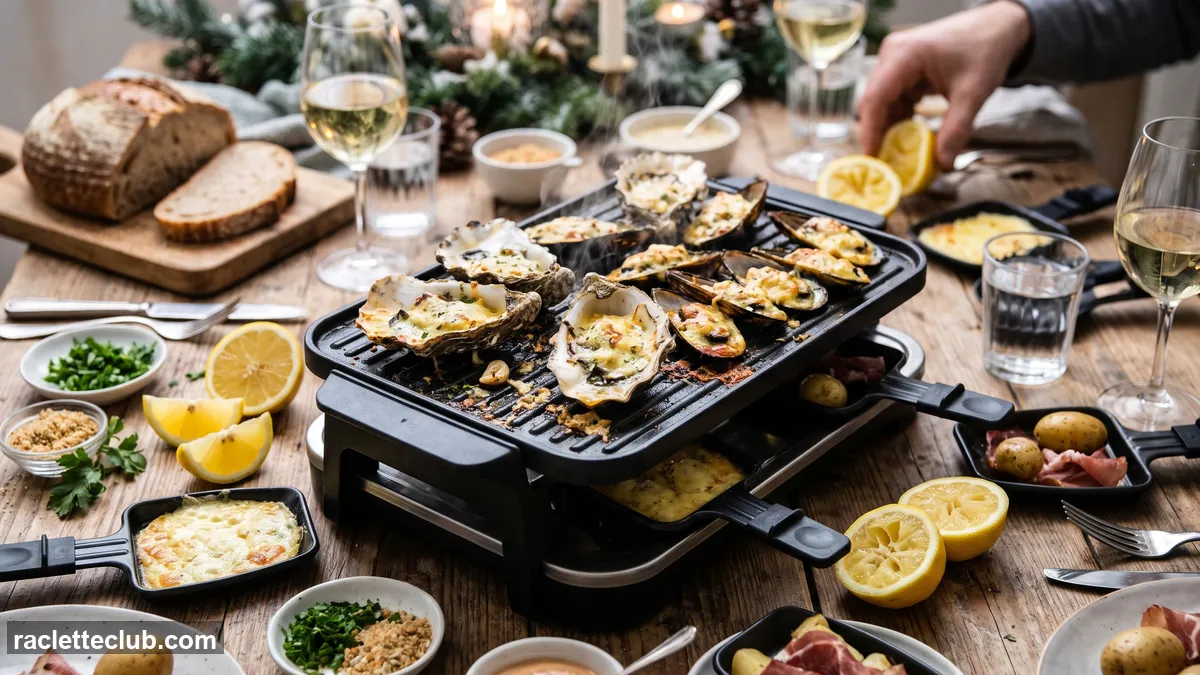
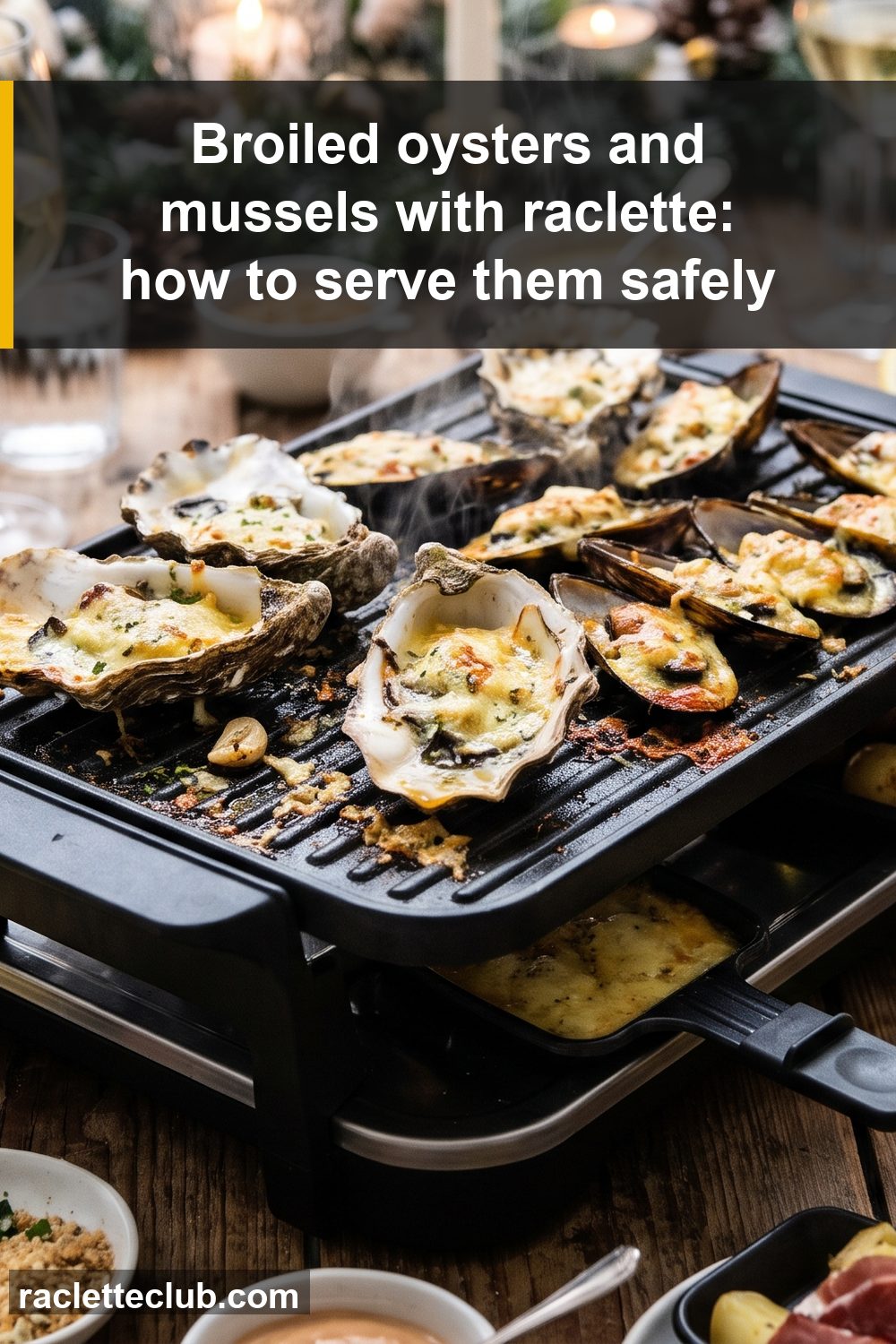
In short: oysters and mussels broiled with cheese are the seaside version of raclette. Shellfish must be alive when you buy them, with their health tag, and kept flat and cool. Mussels get cooked in a pot first: throw out any that stay closed. Oysters get broiled in the little pan, but a quick blast under the heat isn’t the same as proper cooking: for vulnerable people and pregnant women, only thoroughly cooked shellfish.
This article contains Amazon affiliate links: if you buy through these links, Raclette Club earns a small commission at no extra cost to you. Learn more.
Oysters and mussels: what you need to know
Shellfish are sold alive. That’s the law in France: they must be alive at the time of sale and respond “to tapping”, meaning they close when you tap them, as the consumer protection office of the Var department points out. Every package or basket of oysters carries a health tag with the packing date and the producer’s name, the words “alive at the time of purchase” or a use-by date, the farming country and the production method, explains France’s consumer protection agency DGCCRF on Santé.fr.
And the old rule about eating oysters only in months with an “R”? “The legend of the R months is over,” says the DGCCRF: fast transport means you can eat them all year round. In summer, during spawning, oysters are fattier, full of milky spawn. So-called triploid oysters, which are sterile, don’t have any and keep a consistent texture all year; ANSES has confirmed they are safe for consumers. As for mussels, the bouchot mussels from the Bay of Mont-Saint-Michel were the first shellfish to earn a protected designation of origin (AOP), according to INAO. Grown on wooden stakes planted in the tidal flats, they have yellow to orange flesh, and their season usually opens in July and runs until February.
| ID card | Oysters | Mussels |
|---|---|---|
| When buying | Alive, health tag on the basket | Alive, closed or closing when touched |
| Designation | For example Label Rouge for Marennes-Oléron oysters (fines de claire vertes, pousse en claire) | AOP Moules de bouchot de la baie du Mont-Saint-Michel |
| Season | All year; milky in summer, except triploids | AOP: usually July to February |
| Storage | Flat, between 5 and 15 °C, 4 to 5 days | Kept cool, cook them quickly (see below) |
| Flavor | Briny, more or less meaty | Creamy, slightly sweet flesh (INAO) |
Why broil shellfish at a raclette
Because brininess and melted cheese play off each other surprisingly well, as long as you get the balance right. A cooked mussel on its half shell, a little cheese, two minutes under the heating element: it’s an appetizer bite that makes an impression. To our taste, you need a cheese that melts well without being too strong: a Raclette de Savoie, a Raclette du Valais AOP or a Vacherin Fribourgeois for fans of creaminess. Avoid very strong or very smoky cheeses, which turn the oyster into a mere vehicle. And go easy on it: you still want to taste the sea.
How to choose oysters and mussels
- Alive, always: don’t buy an oyster that’s “gaping” (DGCCRF). The FDA advises leaving shellfish that don’t close when tapped at the store, and throwing away any with cracked or broken shells.
- The health tag: it guarantees shellfish from monitored areas. ANSES recommends eating shellfish from an authorized, monitored production area, like those sold in stores.
- The lemon test: a drop on the opened oyster, and it should shrink back a little. If it doesn’t move, it’s dead (DGCCRF).
- Mussels: for the season, the Bay of Mont-Saint-Michel AOP benchmark is simple: July to February. Out of season, other origins take over: the label shows the area or country.
How much and how to serve them
Quantity: as broiled bites, on top of a classic raclette, plan on 4 to 6 oysters or a small handful of mussels (150 to 200 g in the shell) per person. That’s a rule of thumb from our team, for a starter, not for a seafood platter.
- Storing oysters: flat, never upside down, between 5 and 15 °C away from light, 4 to 5 days. Open them just before preparing them (DGCCRF).
- Mussels go in the pot first: rinse them, steam them open with the lid on and a splash of white wine. The FDA is clear: the shells open during cooking, and you throw out any that stay closed. Only then: half shell, cheese, heat.
- Broiled oysters: open them, loosen the meat, place it in the little pan or on its shell with a bit of cheese, and leave it under the heat until everything is piping hot and the flesh is firm. The FDA recommends 63 °C internal temperature for most seafood. A quick pass doesn’t count as full cooking.
- The norovirus risk: most group outbreaks of norovirus food poisoning in France are linked to contaminated shellfish, especially oysters eaten raw, according to ANSES. When the origin is unknown, ANSES prefers prolonged cooking. Wash your hands well before cooking.
- Vulnerable people: Santé.fr lists raw shellfish among the foods to avoid during pregnancy. The FDA also advises children, older adults and people with weakened immune systems against raw or undercooked seafood. For them: thoroughly cooked mussels, and forget the barely warmed oyster.
- Two hours maximum out of the fridge for shellfish, as for all seafood (FDA).
Which wine to serve with them
Shellfish love dry, crisp, briny whites, and the cheese doesn’t change the rule, in our opinion. A light Apremont goes just as well with mussels as with raclette. A Fendant from the Valais (Chasselas) keeps the Alpine spirit while staying fresh. And for the appetizer, broiled oysters and a glass of Crémant: the evening is off to a good start.
In the pantry
For the rest of the meal, head back to the raclette pantry. On the seafood side, carry on with grilled shrimp, sea scallops or smoked fish.
Frequently asked questions
Can you eat oysters in summer?
Yes. According to the DGCCRF, the R-month rule is outdated thanks to fast transport. In summer, oysters are often milky, except triploids.
What should you do with mussels that don’t open during cooking?
Throw them out. The FDA recommends discarding mussels, oysters and clams that stay closed after cooking.
How do you store oysters before the raclette?
Flat, without turning them over, between 5 and 15 °C away from light, 4 to 5 days at most. Open them just before preparing them.
Can a pregnant woman eat broiled oysters?
Raw shellfish should be avoided during pregnancy. A quick broil doesn’t guarantee full cooking: it’s better to serve her thoroughly cooked mussels.
Sources
- Santé.fr (DGCCRF information): oysters, how to choose and store them (in French)
- ANSES: how to avoid norovirus food poisoning (in French)
- INAO: Moules de bouchot de la baie du Mont-Saint-Michel AOP (in French)
- FDA: Selecting and Serving Fresh and Frozen Seafood Safely
- Préfecture du Var (DDPP): retail sale of seafood (in French)
- Santé.fr: listeriosis during pregnancy, which foods to avoid (in French)
- French National Consumer Institute (INC): shellfish farming products (in French)
- Normandie Fraîcheur Mer: press kit (list of Label Rouge seafood products, in French)