Two Melted Cheese Traditions, One Holiday Table
Every December, the same question comes up around our house: raclette or fondue for the holidays? Both dishes turn melted cheese into a full evening rather than just dinner, but they ask very different things of a host and a guest list. We’ve hosted both kinds of holiday nights, and the choice usually comes down to how many people are showing up and how loud you want the room to be. Raclette rewards a crowd. Fondue rewards a quiet table and a bit of patience. Neither is the “correct” holiday meal, and plenty of Swiss and French households have strong opinions on both sides of that debate. What matters is matching the dish to the night you’re planning, from the social rhythm of each meal to the equipment you’ll want to pull it off.
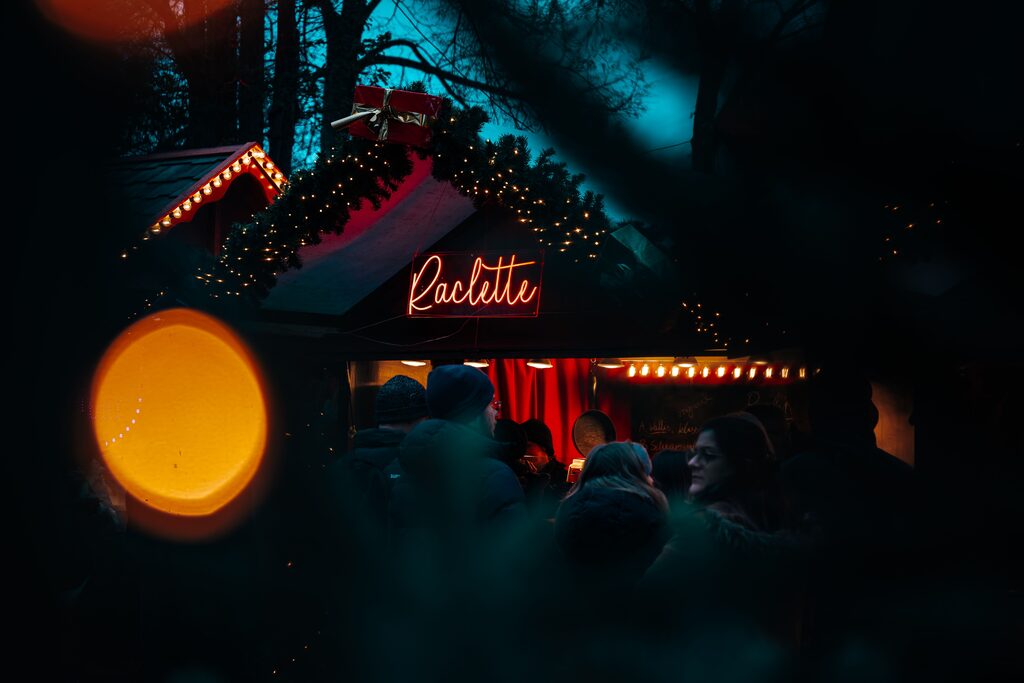
Why Raclette Wins the Big, Loud Holiday Party
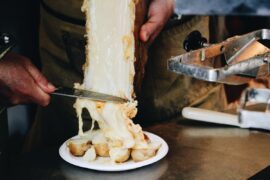
Raclette started as a simple mountain meal in the Swiss and French Alps, where herders would prop a half-wheel of cheese near a fire, let the surface soften, and scrape the melted layer onto a plate of boiled potatoes. That scraping motion is where the name comes from, and it’s still the point of the dish: cheese pushed to the edge of melting, then pulled off before it burns. Somewhere along the way the open fire became a tabletop grill with small individual pans, and the meal turned into something closer to a party than a family dinner. Everyone gets their own pan, loads it with cheese and whatever toppings are within reach, and slides it under the heating element while chatting and refilling wine glasses. Nobody is stuck cooking for the table, and nobody is left out because the pot is too small.
That’s the social trick of raclette: it scales, and it’s forgiving to host since there’s no single pot to babysit. Add two more folding chairs and a second grill, and you can comfortably feed twelve people the same way you’d feed four, since each guest runs their own tiny kitchen station and serves at their own pace. If you’re planning for a full house this year, it’s worth reading through our notes on hosting raclette for a large group before you shop for equipment, because grill wattage and pan count matter more than they seem to at first. The classic spread leans on boiled or roasted potatoes, tangy pickles like cornichons, a plate of cold cuts such as cured ham or salami, crusty bread for mopping up stray cheese, and a crisp white wine that cuts through the richness. None of it needs to be fancy. The appeal is in the assembly line of small decisions guests make themselves, plate after plate, and that loose structure is exactly what makes the meal stretch naturally across a Christmas Eve gathering or a New Year’s crowd drifting in and out of the kitchen anyway.
1. Swissmar Geneva Raclette Grill
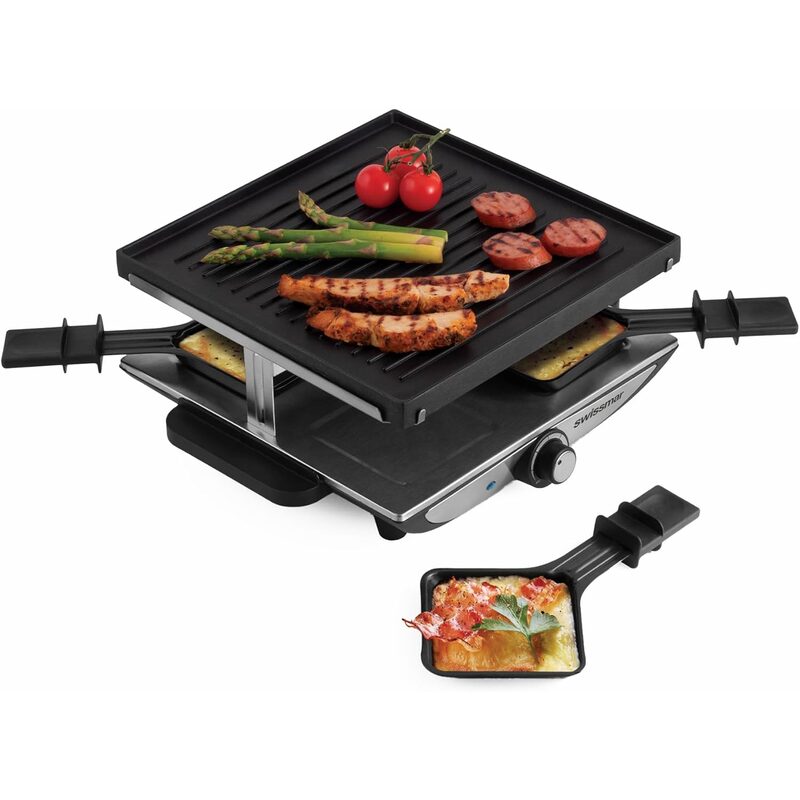
The Swissmar Geneva is built for a smaller holiday table, the kind of night where it’s you, your partner, and maybe two close friends around the kitchen counter. It comes with four individual pans and a reversible cast aluminum grill top, so you can melt cheese in the little pans below while grilling vegetables or thin cuts of meat on the surface above. That combination means you’re not limited to cheese alone if someone at the table wants a break from dairy. The nonstick coating wipes down easily, and the whole unit is compact enough to store in a cabinet rather than a garage shelf. For a first raclette grill, or a couple trying the tradition before committing to a bigger appliance, this is a sensible entry point that still delivers a real tabletop-grilling experience.
What we love
- Reversible grill top adds vegetables and meat to the cheese course without extra pans
- Compact footprint that doesn’t take over a small dining table
- Easy to clean and store between uses
Things to consider
- Four pans max, so it stalls out fast once you pass six guests
2. Swissmar Verso Raclette Grill
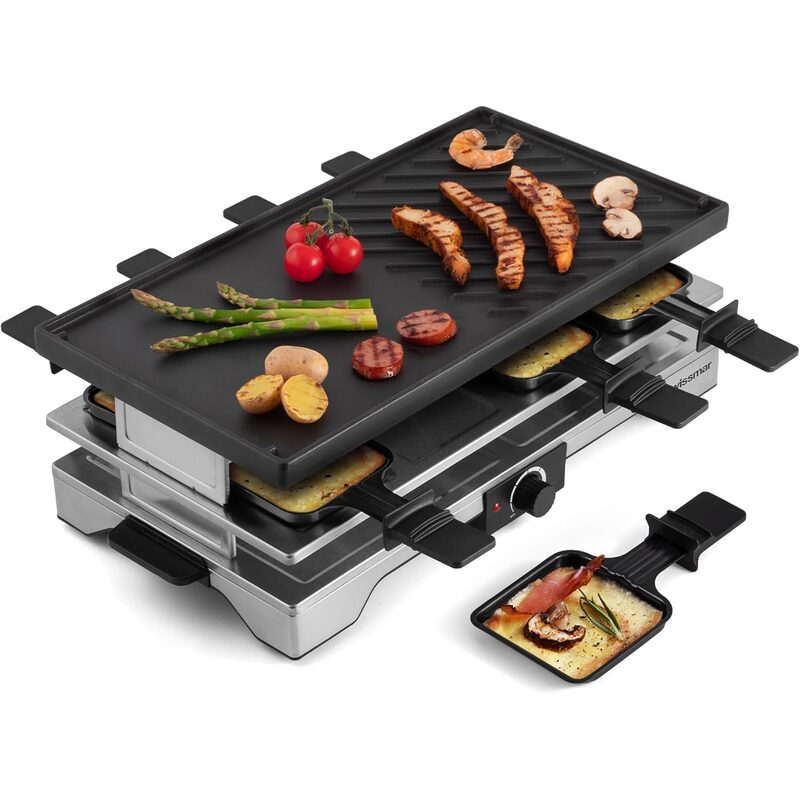
When the guest list stretches past eight, the Swissmar Verso is the appliance that keeps a raclette night from turning into a waiting line. It’s rated for eight people, runs on a 1700-watt element that heats back up quickly between rounds, and pairs a cast iron reversible griddle with eight individual pans so nobody is stuck watching someone else’s cheese melt. It’s also rated for outdoor use, which helps if your dining room can’t fit everyone and you’re willing to run an extension cord out to a covered porch. The larger footprint means you’ll want real counter or table space cleared before guests arrive. For a big family Christmas or a New Year’s Eve party where the invite list keeps growing, this is the grill that scales with you instead of forcing a second seating.
What we love
- Eight pans and 1700 watts handle a full holiday guest list without long waits
- Cast iron griddle works indoors or outside on a covered patio
- Reversible surface doubles as a grill for meats and vegetables
Things to consider
- Needs a genuinely large table or counter, and the cast iron top takes longer to cool before cleanup
Why Fondue Wins the Quiet, Romantic Holiday Dinner
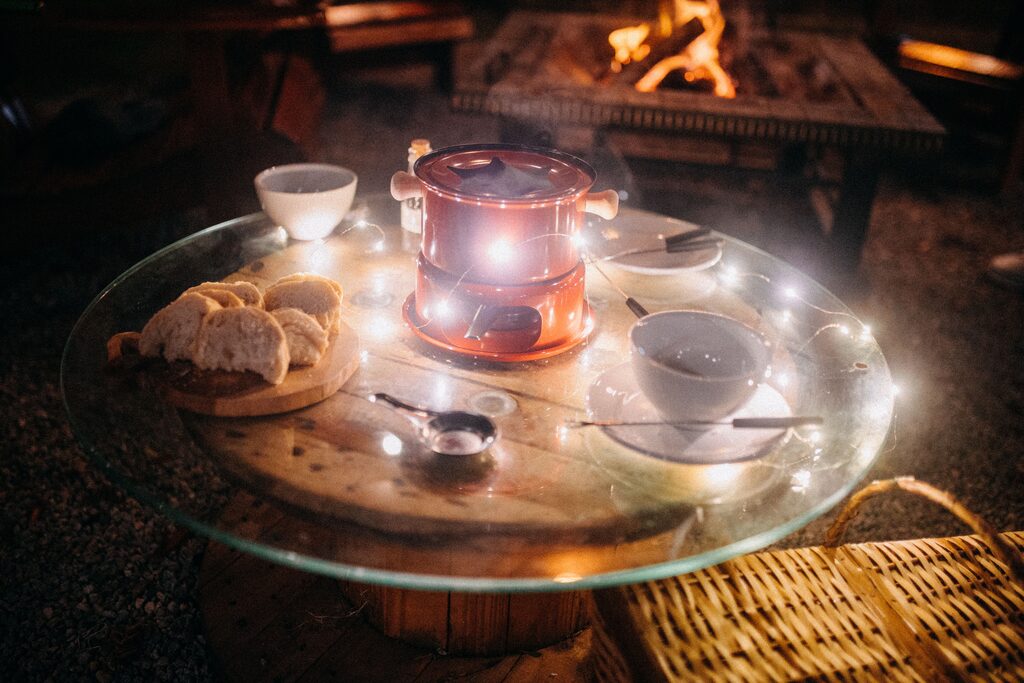
Fondue has its own mountain origin story, born from Swiss households stretching aging cheese and stale bread through the winter months when fresh food was scarce. A blend of cheeses, usually Gruyère and Emmental, gets melted with white wine and a touch of kirsch in a single shared pot called a caquelon, then kept warm over a small flame at the center of the table. Guests spear cubes of bread on long forks and dip them in together, so the whole meal happens around one shared vessel rather than individual stations. That single detail changes the mood of the evening. There’s no scraping or waiting your turn at a grill, just a slower rhythm of dipping, talking, and refilling glasses while the pot bubbles gently in the middle of the table.
Because everyone works from the same pot, fondue naturally caps itself at a smaller group, usually four to six people before forks start colliding. That’s what makes it suited to a quieter holiday dinner: a couple’s night in, a small family gathering, or a low-key evening with two or three close friends where conversation matters more than throughput. If you’re deciding between the two formats for your guest list, our full raclette versus fondue comparison breaks down the practical differences in more depth. The classic dipping spread mirrors raclette in some ways, with crusty bread, pickles, and cold cuts on the side, but fondue also welcomes boiled potatoes and a crisp white wine that matches whatever went into the pot.
The pace is the real draw. A fondue dinner rarely rushes, since the pot only holds so much and everyone eats at roughly the same speed, dip by dip. Candles on the table, a low flame under the pot, and a bottle of wine open nearby make it feel more like a date night than a party, even on a Tuesday during the last week of December. For hosts who want intimacy over spectacle this holiday season, that slower rhythm is worth building the evening around.
3. Artestia Cast Iron Cheese Fondue Pot Set
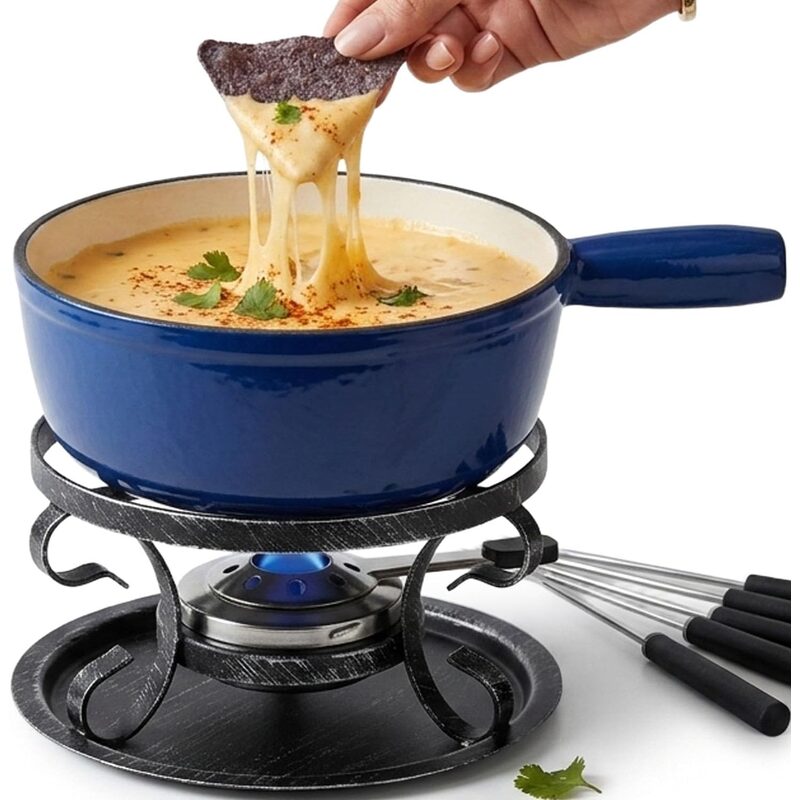
The Artestia set is the traditionalist’s choice, a ten-piece Swiss-style kit built around a 2.1-quart cast iron caquelon that sits over a real burner rather than an electric base. There’s something about an open flame under the pot that fits the holiday mood better than a plug and a dial, and cast iron holds heat evenly enough that the cheese stays smooth through a long dinner instead of separating halfway through. The set includes a stand and six color-coded forks so nobody loses track of whose bread cube is whose, with enough capacity to comfortably serve six people without refilling mid-meal. It’s a good match for anyone who associates fondue with a flame-lit table rather than an appliance, and it travels well since there’s no cord to worry about.
What we love
- Real flame burner gives an authentic tabletop fondue experience
- Cast iron caquelon holds heat evenly through a full meal
- Six color-coded forks keep things simple for a small group
Things to consider
- You’ll need to keep fuel gel or paste on hand, and the flame needs monitoring rather than a simple dial
4. Hamilton Beach Electric Fondue Pot Set
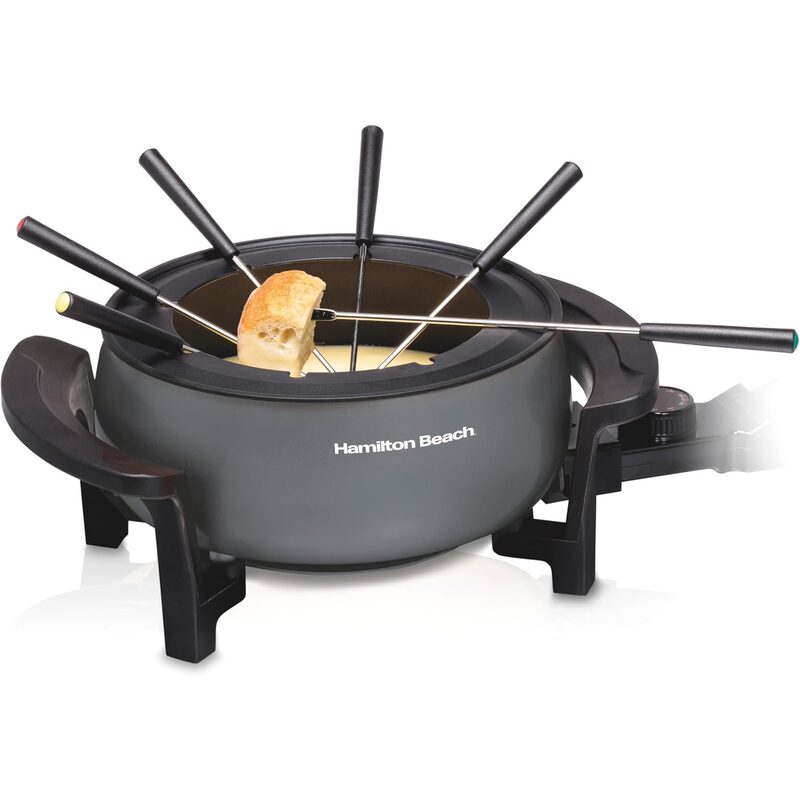
For a simpler night with less to manage, the Hamilton Beach electric set swaps the open flame for a plug-in base with a temperature dial, which takes the guesswork out of keeping cheese smooth without scorching it. The nonstick 3-quart pot is a bit roomier than a traditional caquelon, and it comes with six color-coded forks so guests can track their own. Because it’s electric, there’s no fuel to buy or store, and the dial lets you drop to a bare simmer once the cheese is melted and hold it steady for the rest of the meal without hovering nearby. It’s a practical pick for anyone who wants the romance of a shared pot without babysitting a flame on a night when you’d rather be at the table than managing equipment.
What we love
- Temperature dial removes the guesswork of managing an open flame
- No fuel gel or paste to buy and store between uses
- Nonstick pot makes post-dinner cleanup noticeably faster
Things to consider
- The power cord ties you to an outlet near the table, which can limit seating arrangement compared to a fuel-based pot
The best holiday cheese night isn’t the fanciest one, it’s the one that fits your table: a lively raclette grill for a full house, or a quiet fondue pot for two.
Which One Actually Fits Your Guest List This Year?
Strip away the history and the two dishes come down to a headcount question. If you already know eight or more people are coming through the door on Christmas Eve, raclette or fondue for the holidays stops being a coin flip, since a single fondue pot can’t keep pace with that many forks. Raclette’s individual pans mean the meal grows with your table instead of against it, and you can always borrow or buy a second small grill if the list creeps past what one appliance handles comfortably. Fondue, on the other hand, is at its best when the group is small enough that everyone can reach the pot without leaning across the table, which is why it shines at quieter dinners rather than full-blown parties.
Cheese quantity is the other piece hosts underestimate. A raclette night burns through more cheese per person than most people expect, since guests keep refilling their pans past the point they’d normally stop eating, and running short midway through a party is an easy way to deflate the mood. It’s worth checking our breakdown of how much raclette cheese per person before you shop, especially if this is your first time hosting a larger group. Fondue is more forgiving on that front, since the shared pot naturally rations itself and a well-planned batch tends to stretch further than a raclette spread with the same guest count.
There’s also the simple matter of what your dining room can hold. A raclette grill for eight needs real table space and enough outlets nearby, while a fondue pot for four fits comfortably on a small round table with candles to spare. Take an honest look at your space and your guest list together, and the right dish for this particular night usually becomes obvious.
Can You Actually Do Both in One Holiday Evening?
Plenty of hosts don’t pick one and skip the other, they just sequence them. A common approach is to open the evening with a small fondue course while everyone is still arriving and settling in, since it works well with a handful of guests standing around the kitchen island before the full group shows up. Once everyone’s seated and the table fills out, the raclette grill takes over as the main event, letting latecomers jump straight into the meal without feeling like they missed a shared pot. It’s a natural way to stretch a holiday dinner across a longer evening instead of rushing through one format.
This works best with a 2-in-1 appliance built to handle both formats rather than juggling two setups and two rounds of cleanup. Some raclette grills include a fondue pot attachment that sits on the same base, which cuts down on counter clutter and means you’re not storing two bulky appliances for the other eleven months of the year. It also simplifies shopping, since you’re buying one unit instead of pricing out a grill and a pot separately.
The tradeoff is capacity. A combo unit generally serves fewer people at once than a dedicated large raclette grill, so it suits a mid-sized gathering better than a big blowout party. If a two-course holiday dinner sounds appealing but you don’t want to store separate equipment, it’s worth browsing the best 2-in-1 raclette and fondue grills before committing to one appliance over two. For a lot of households, that combo purchase ends up getting more use across the year than either dish on its own.
How to choose
Once you strip away the folklore, deciding between raclette or fondue for the holidays comes down to three practical questions. Start with guest count and table space, since that alone rules out one option for a lot of nights: a dozen people won’t fit around a single fondue pot, and two people don’t need an eight-pan grill taking over the kitchen. Next, be honest about prep and cleanup time during a week already packed with other holiday obligations. Raclette means washing several small pans and a grill top, while a fondue pot is a single vessel to scrub, which matters more than people expect when it’s late and everyone wants to go to bed. Finally, factor in budget and whatever you already own, since a household with a raclette grill gathering dust in a cabinet might be better served buying a simple fondue pot to round out the collection instead. None of these criteria points to a universally better dish, they just help match the format to the specific night you’re hosting, whether that’s a packed house on the twenty-fourth or a quiet dinner for two on New Year’s Eve.
Is raclette or fondue better for a large holiday gathering?
Raclette scales more easily since each guest serves themselves individually, which makes it the stronger choice once the guest list passes eight or ten people.
Can I serve both raclette and fondue at the same holiday dinner?
Yes. Many hosts open with a fondue course and move on to raclette for the main event, especially when they’re using a 2-in-1 appliance that handles both without extra equipment.