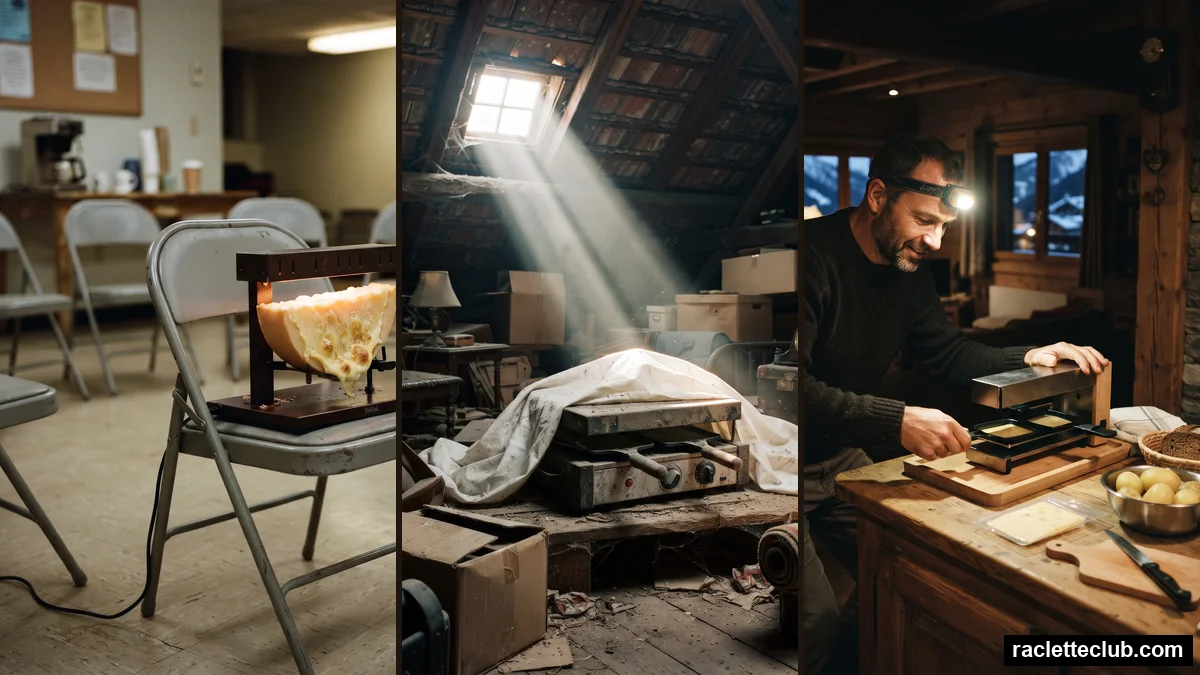
In short: no, there is no raclette rehab clinic. We looked, seriously. And no, cheese is not a drug, even if a 2015 headline compared it to crack. The withdrawal that hits every spring, when the machine goes back into the cupboard, is however something every club member knows.
It all started with a reader’s message: “Is there a rehab for raclette? Asking for a friend.” The friend in question had brought out the machine three times in one week, once on a Tuesday lunchtime. Time to investigate.
We looked for a real raclette rehab
Step one: find a detox clinic, a recovery program or at least a support group for melted cheese addicts. Result: nothing. No clinic, no program, no official “Raclette Anonymous”. The only results are about recipes, machines and cheese shops. In other words, the internet is full of dealers and empty of therapists.
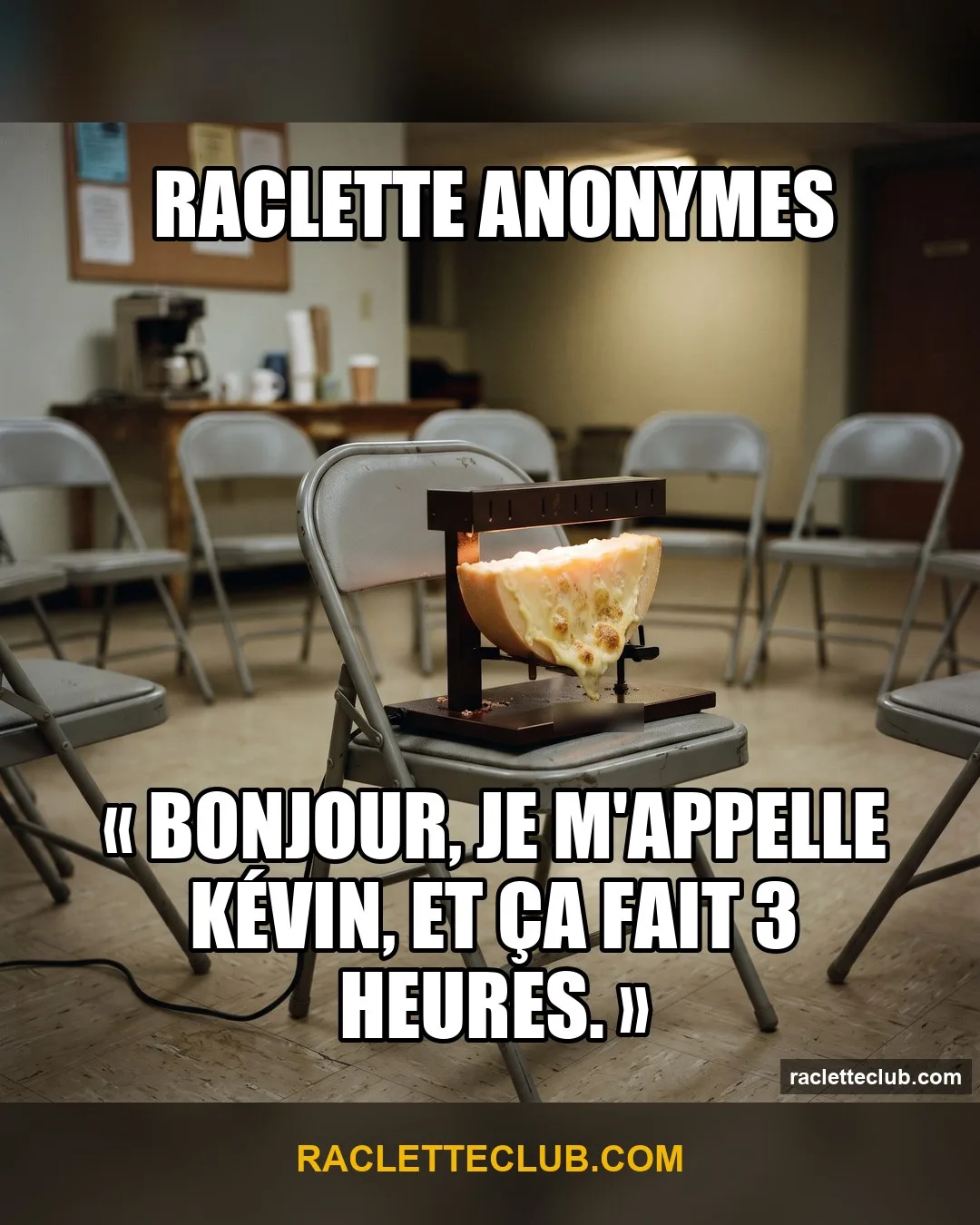
So we made our own support group, as a picture. It’s simple: you sit in a circle, introduce yourself and confess how long it’s been since your last scrape.
Is cheese really a drug?
In October 2015, headlines claimed cheese was “as addictive as crack”. They quoted a University of Michigan study published in PLOS ONE and led by researcher Ashley Gearhardt. It looked at 35 foods and at “addictive-like” eating behaviour.
The problem is that the study didn’t say that. Cheese came 16th out of 35 in one experiment and 10th in the other, far behind pizza, chocolate, crisps and fries. The most “problematic” foods were highly processed products, high in fast sugars, fat and salt at the same time. According to Science News, the researcher said she was “horrified” by the shortcuts, and stressed that cheese on its own was not particularly problematic.
And the famous casomorphins? They are small fragments of casein, the milk protein, which can bind to opioid receptors. But in 2009 the European Food Safety Authority noted it was unknown whether they reach the brain in significant amounts. In 2022, a spokesperson for the US National Institute on Drug Abuse (NIDA) told the fact-checking site Lead Stories: “Cheese is not addictive.”
Our conclusion: your love of raclette is not a chemical dependency. It’s worse: it’s a passion.
7 signs you’re addicted to raclette
- You call your cheesemonger by their first name, and they prepare your order as soon as they see you park.
- Your raclette machine has never seen the inside of a cupboard. It lives on the counter, next to the kettle.
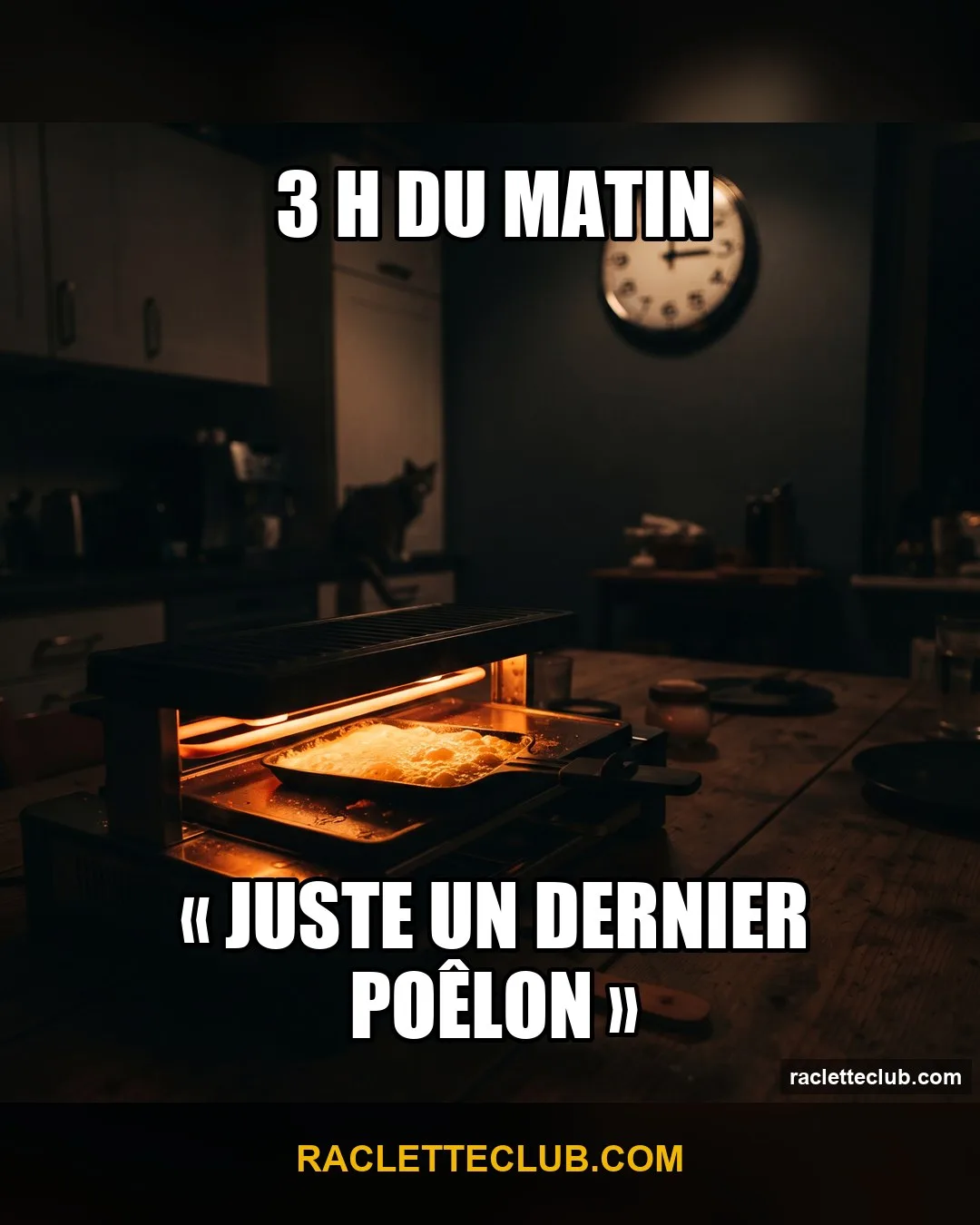
- You have said “just one last pan” at 3 a.m.
- You count the days to the first chilly evening of October and watch the forecast for the first drop below 10 °C (50 °F).
- You know the difference between Raclette de Savoie PGI and Raclette du Valais PDO, and you explain it without being asked.
- You once bought a half-wheel “to freeze it”. It never saw the freezer.
- You read this far while hungry.
Three signs or more? You’re one of us. Seven out of seven? The club is waiting for you, and so is your cheesemonger.

Our 5-step recovery plan (no guarantee)
Since no clinic exists, here is our home-made cure. Several club members tested it. None made it to the end.
Step 1: admit the problem
Say it out loud: “I can stop whenever I want.” Then notice that you added “but not before March”.
Step 2: cut ties with the dealer
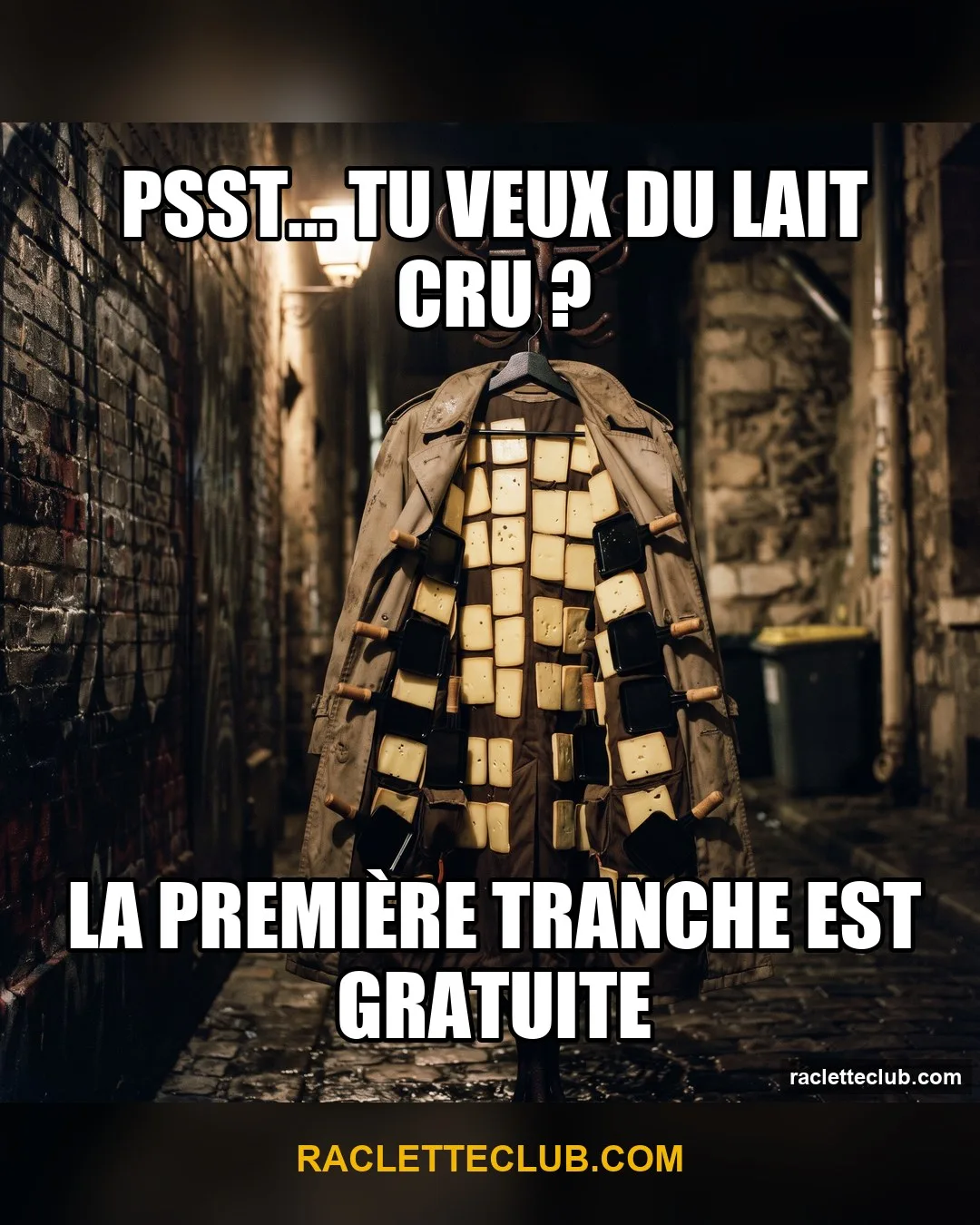
Avoid the cheese aisle and the alley behind the cheese shop. Beware of strangers in raincoats offering raw milk. The first slice is always free.
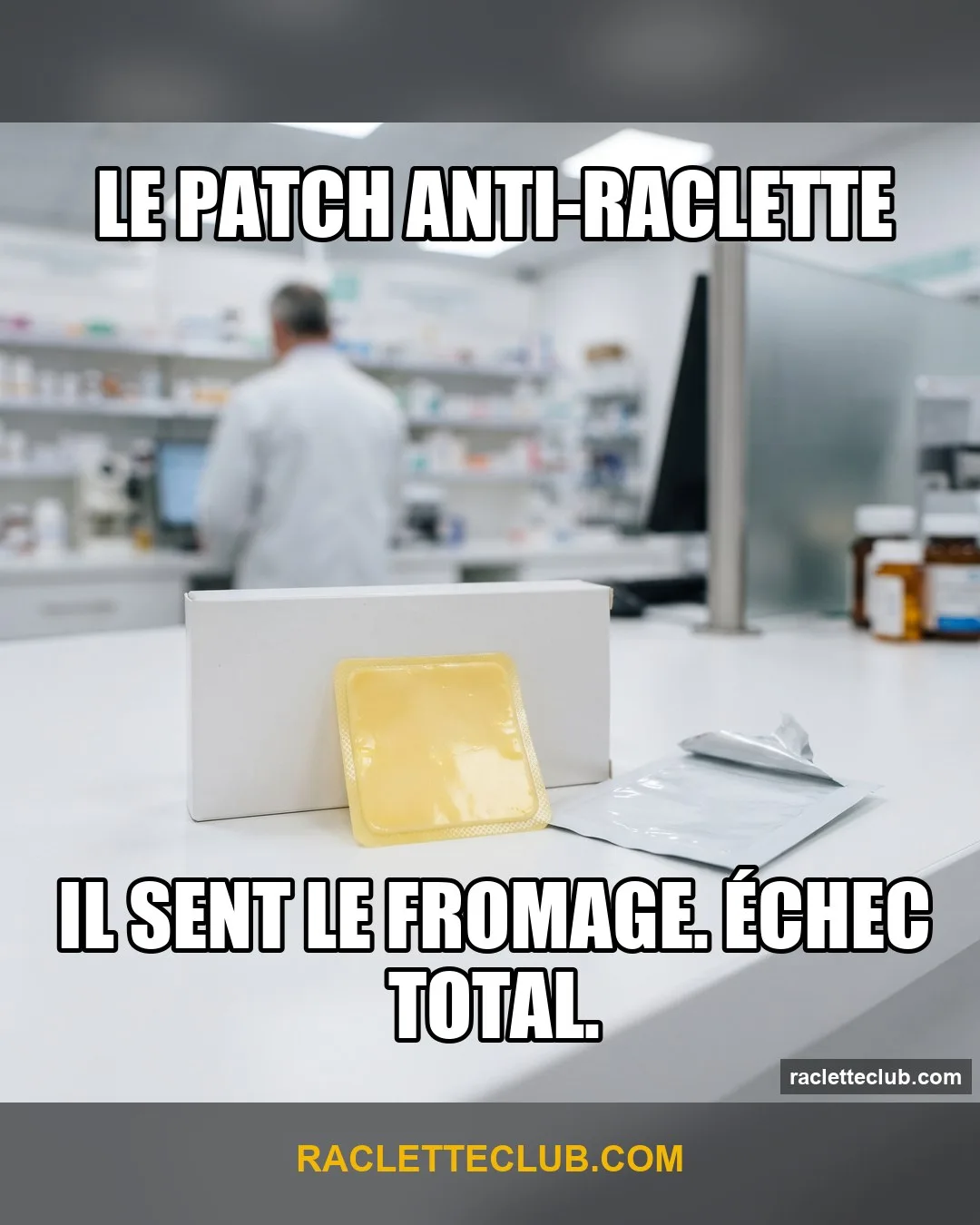
Step 3: the anti-raclette patch
On paper, it’s the miracle cure. In real life, it smells of cheese. Total failure.
Step 4: hide the machine
The attic, the cellar, your mother-in-law’s place: anything goes. Expect two days before you bring it back down “to check it still works”.
Step 5: the controlled relapse
It’s the only step that works. You don’t stop, you organise: one good raclette a week during the season, with good produce and a clear conscience.
The real cure: sensible raclette
Jokes aside, the best detox is moderation. Plan the right amount of cheese, usually 150 to 200 g (5 to 7 oz) per adult, so you don’t finish the wheel out of politeness. It’s all in our guide to raclette cheese per person.
Add vegetables next to the potatoes and charcuterie, drink water and take your time: raclette is meant to be eaten slowly. To end the evening well, our article on raclette and digestion gives the right habits after a rich meal.
And if food becomes a real everyday problem, beyond the joke, talk to your doctor. The club prefers healthy members who come back next winter.

The real withdrawal: March
If raclette causes withdrawal, it’s mostly seasonal. In France, raclette cheese sales are concentrated between October and February, according to FranceAgriMer. Then March arrives, with its first sunny days, its salads and friends talking about barbecues. It’s the hardest time for a fan.
Our advice: don’t fight it. Put the machine away clean, write down your best evenings and start your list of favourite raclette cheeses for the autumn. Withdrawal only lasts six months, and relapse is guaranteed.
Questions about raclette rehab
Is there a real raclette rehab?
No. We found no clinic, no program and no official group. “Raclette Anonymous” only exists in our memes.
Is cheese addictive like a drug?
No. The often-quoted 2015 study doesn’t say so: cheese ranked far behind pizza and chocolate, and in 2022 a spokesperson for the US NIDA said cheese is not addictive.
How many raclettes per season is sensible?
There is no official rule. One raclette a week during the season, with 150 to 200 g of cheese per adult and some vegetables, is a good common-sense benchmark.
So, how many days clean are you?
Tell us about your worst relapse in the comments. And if your recovery has already failed, you might as well do it properly: pick a good raclette machine and dig into our raclette recipes. The club judges no one. It just melts the cheese.
Sources: PLOS ONE, Schulte, Avena et Gearhardt (2015), Science News, « No, cheese is not just like crack » (2015), Lead Stories, fact check (2022), Réussir, Les Marchés (FranceAgriMer)