Table of Contents
How Much Raclette Cheese Per Person: The Short Answer
Plan on 200–250 g (7–9 oz) of raclette cheese per person for a standard dinner. That’s the number most Swiss and Savoyard households land on after years of hosting — enough to melt several generous portions without anyone leaving the table hungry. If your crowd includes big eaters, push to 300 g. If you’re pairing raclette with a heavy first course or dessert, 180 g can be plenty. The right amount depends on a handful of variables, and this guide walks through all of them so you don’t end up with a mountain of leftovers — or worse, an empty board before the night’s over.
From testing portions for intimate dinners of two to chalet gatherings of twenty, one thing holds true: raclette is a slow, convivial meal. People melt, chat, wait, and melt again. That rhythm naturally limits how much anyone eats in one sitting, which is part of why these quantities work so reliably.
Raclette Portions by Group Size — Quick Reference Table
Use this table as your baseline before adjusting for appetite and occasion:
| Guests | Raclette Cheese | Potatoes | Charcuterie |
|---|---|---|---|
| 2 | 400–500 g | 600 g | 150–200 g |
| 4 | 800 g – 1 kg | 1.2 kg | 300–400 g |
| 6 | 1.2–1.5 kg | 1.8 kg | 450–600 g |
| 8 | 1.6–2 kg | 2.4 kg | 600–800 g |
| 10 | 2–2.5 kg | 3 kg | 750 g – 1 kg |
| 15 | 3–3.75 kg | 4.5 kg | 1.1–1.5 kg |
| 20 | 4–5 kg | 6 kg | 1.5–2 kg |
Potatoes: medium-sized, waxy variety (Charlotte, Jersey Royal, Nicola). Charcuterie: combined total of cured ham, air-dried beef, and any other cold cuts.
Half-Wheel vs. Sliced Raclette Cheese: Does the Format Change the Quantity?
The portion size itself doesn’t change — 200–250 g per person is 200–250 g whether it comes from a wedge of half-wheel or a vacuum-packed stack of pre-sliced cheese. What changes is how you shop and how much you’ll use.
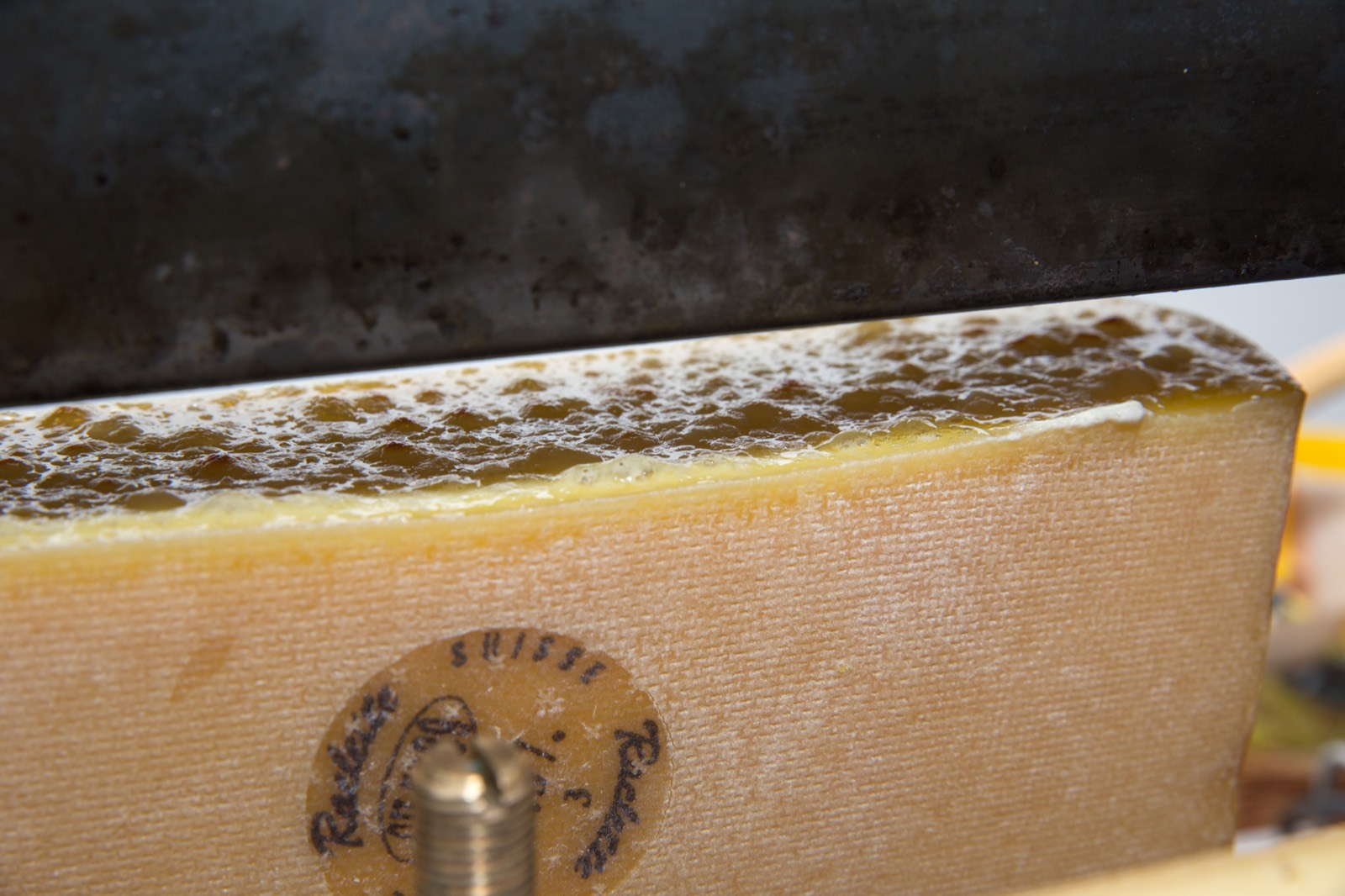
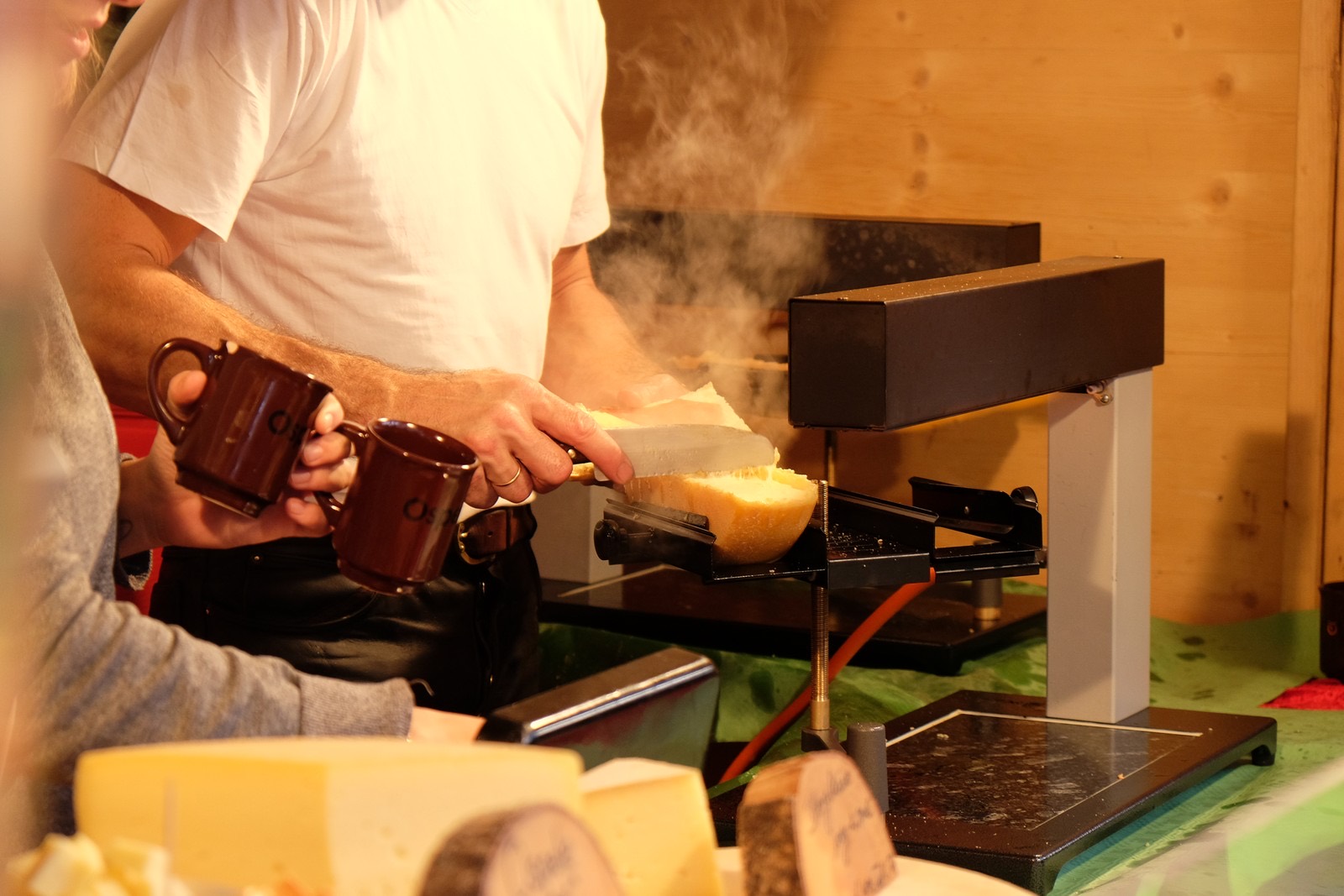
With a half-wheel or quarter-wheel (typically 2.5–3 kg), you scrape directly onto the plate using a traditional raclette melter. There’s some rind waste — usually 5–8% of total weight — so factor that in when buying. A 3 kg quarter-wheel comfortably serves 10–12 people at the standard 250 g rate after accounting for the rind.
With pre-sliced raclette cheese, every gram goes into the caquelons (the individual pans under a tabletop grill). No rind waste, easier portion control, and simpler shopping. The trade-off is flavour: most pre-sliced cheese is milder and younger than wheel-cut varieties. If you care about depth of taste, visit a proper affineur or specialty cheese counter to get slices cut fresh from a wheel.
For parties of 10 or more, a half-wheel melter setup is both more efficient and more theatrical — it becomes the centrepiece of the table. For 2–6 people, a tabletop electric grill with pre-sliced cheese is perfectly practical and far easier to manage.
Adjusting for Appetite: Light, Standard, and Hearty Eaters
Not every dinner table eats the same way. Here’s how to calibrate:
- Light appetites (children, small eaters, large multi-course meal): 150–180 g per person
- Standard adult dinner: 200–250 g per person
- Hearty eaters, sporty crowd, ski chalet après-ski: 280–320 g per person
- All-you-can-melt late-night raclette party: up to 350 g per person — budget generously
A good practical trick: count children under 12 as half a portion. Teenagers, on the other hand, often eat as much as adults or more — especially after a day outdoors. When you’re unsure about a mixed group, default to 250 g and keep a spare 200–300 g block in the fridge. Raclette cheese keeps well and reheats beautifully on a salad or pasta the next day.
What Else Goes on the Table? Potatoes, Charcuterie, and Accompaniments
Raclette is never just cheese. The full spread is what makes it a meal, and getting the side quantities right is just as important as the cheese itself.
Potatoes
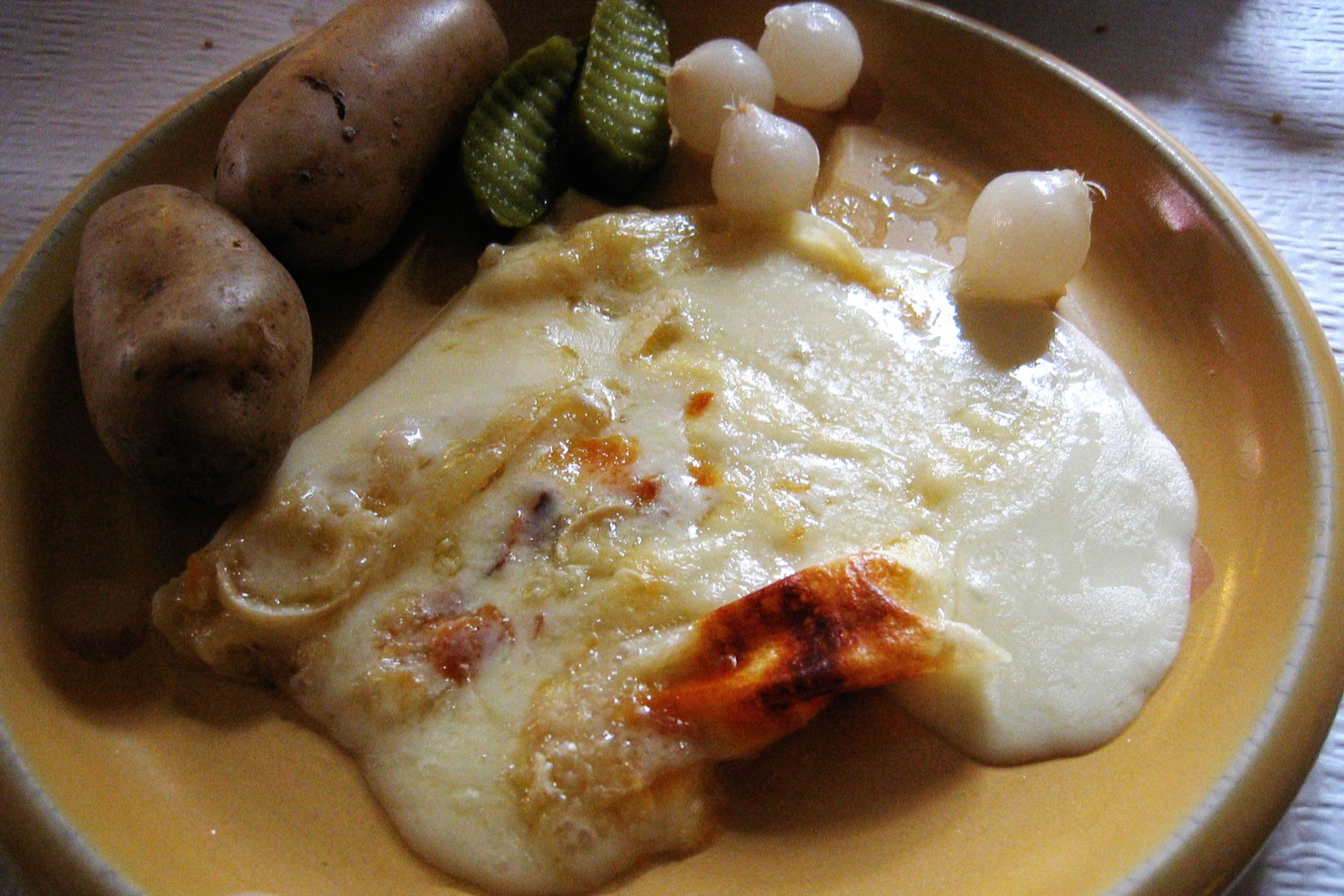
Plan 200–250 g of uncooked waxy potatoes per person — roughly 2–3 medium potatoes. Boil or steam them in their skins 20–30 minutes before serving and keep warm. Waxy varieties hold their shape and don’t go mushy under the cheese. If you’re in the UK, look for Charlotte or Jersey Royals; in France, Ratte or Belle de Fontenay work beautifully. Russets or floury potatoes will turn to mash — avoid them. For a wider range of vegetable accompaniments, roasted peppers, mushrooms, and courgette slices are popular additions that work well in the caquelons too.
Charcuterie and Cold Cuts
The classic pairing is 50–80 g of cured meats per person, mixing at least two varieties: air-dried beef (Bündnerfleisch or Grisons), Parma-style ham or Black Forest ham, and optionally a mild salami or smoked sausage. Arrange cold on a wooden board — the salt and acidity cut through the richness of melted cheese and cleanse the palate between rounds. For guidance on which specific cuts pair best, the best raclette meat selection covers the full range from traditional Swiss choices to modern alternatives.
Pickles and Other Condiments
Cornichons (small gherkins) and pickled silverskin onions are non-negotiable on a proper raclette table. Budget about 4–6 cornichons per person and a small ramekin of pickled onions to share. Freshly ground black pepper and sweet or hot paprika on the side let guests season their pans. Some tables add a thin baguette or rye bread, though with potatoes already in the mix, bread is strictly optional.
How to Avoid Waste (and What to Do with Leftovers)
Buying slightly too much cheese is always better than running short mid-evening. The good news: raclette cheese is extremely versatile once the dinner is done.
- Refrigerate unused slices wrapped in wax paper inside an airtight container. They keep for 1–2 weeks.
- Use leftover melted raclette as a topping for steamed vegetables, baked potatoes, or a pan of scrambled eggs the next morning.
- Grate dried-out ends over gratins or pasta — raclette melts just as smoothly as Gruyère in a gratin dauphinois.
- Freeze in slices if you won’t use it within two weeks. Texture changes slightly but flavour holds well for cooked applications.
For the cheese board itself, bring it out of the fridge 30–45 minutes before the meal. Cold cheese takes longer to melt and never develops those characteristic golden bubbles. Room-temperature cheese also releases more aroma — the slightly pungent, nutty smell that signals a good raclette is about to happen.
Hosting Larger Groups: 10, 15, or 20 People
Scaling up introduces a few logistics worth planning ahead. With 10 or more guests, a single tabletop grill with 8 pans won’t keep everyone fed without long waits. Either run two grills simultaneously or switch to a professional half-wheel melter, which can serve 8–12 people continuously from one large wheel placed under the heat source.
For 20 guests — a chalet party, a family reunion, or a raclette party at scale — consider two half-wheel setups at opposite ends of the table, or one large wheel melter plus a supplementary electric grill for anyone who wants to customise their pan. Buy cheese in 2.5–3 kg blocks and have a plan for where to keep them at the right temperature (cool but not cold, around 12–15°C) during the meal. At this scale, delegating one person to manage the cheese stations makes the evening run far more smoothly.
Professional caterers typically quote 220–230 g per person for buffet-style raclette events, slightly lower than a sit-down dinner because guests graze between other dishes. For a dedicated raclette dinner as the main event, 250 g remains the safe standard. Pairing the right raclette grill with your group size is equally important — output capacity varies considerably between models.
Frequently Asked Questions
How much raclette cheese do I need for 6 people?
For 6 people at a standard dinner, plan on 1.2–1.5 kg of raclette cheese. Pair it with around 1.8 kg of waxy potatoes and 450–600 g of mixed charcuterie. If your guests are particularly enthusiastic, 1.5 kg gives you comfortable breathing room.
Can I use any melting cheese instead of raclette?
You can — Gruyère, Comté, Fontina, and Morbier all melt well and make fine substitutes. That said, authentic raclette cheese has a specific fat and moisture content optimised for melting smoothly in a small pan. It also has a flavour profile — mild, slightly nutty, with a hint of mountain earthiness — that’s hard to replicate. The portions stay the same regardless of which cheese you choose. For a fuller comparison of varieties worth trying, the best raclette cheese guide covers traditional Swiss AOC options, smoked variants, and flavoured versions.
Is 200 g of raclette cheese per person enough for a main course?
Yes, 200 g is perfectly sufficient as a main course when served with the full complement of potatoes, pickles, and cold cuts. The complete spread is filling — people rarely eat cheese alone. If raclette is the only dish (no starter, no dessert, casual format), consider 230–250 g to be safe.
How far in advance can I slice raclette cheese?
If you’re slicing from a wheel, it’s best done on the day. Pre-sliced cheese can be taken out of its packaging the morning of the meal and layered between sheets of wax paper, then refrigerated until 30–45 minutes before serving. Avoid slicing more than 24 hours ahead — the edges dry out and the texture suffers.
Image credits: “Raclette 20040817 140816” © Ka23 13, CC BY-SA 4.0 · “Racletteessen bei WMAT 7620” © Hubertl, CC BY-SA 4.0 · “Raclette-Käse wird direkt abgeschabt” © Faldrian, CC BY 2.0 — via Wikimedia Commons.