The Authentic Swiss Raclette Experience, Brought Home
If you have ever sat around a table in a Swiss mountain chalet, watching a half-wheel of raclette cheese slowly bronze under an open flame, you already know what this is about. The traditional Swiss raclette recipe is less a cooking technique than a ritual: unhurried, generous, and centered on good company. At its core, it calls for just four things — quality cheese, waxy potatoes, cured meats, and time. This guide walks you through both the classic open-fire method and the modern electric-grill version, so you can bring that alpine atmosphere to any table.
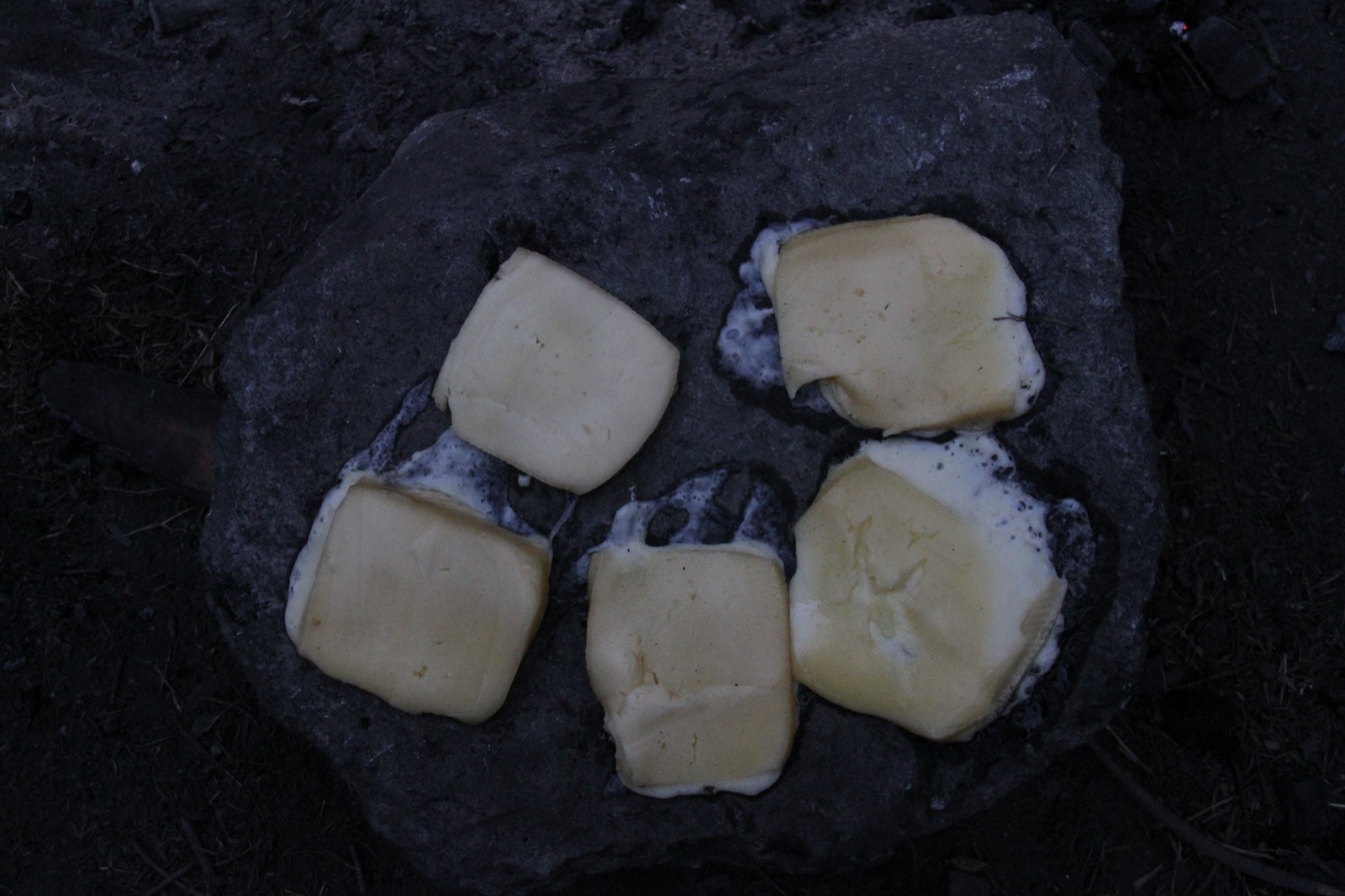
What Is Traditional Swiss Raclette?
Raclette (from the French racler, “to scrape”) originated in the Swiss canton of Valais, where shepherds would prop a cut wheel of cheese beside a campfire and scrape the melted surface onto bread or boiled potatoes. Today the dish is a staple of Swiss winter gatherings, yet the logic remains the same: melt, scrape, eat, repeat.
The cheese used is also called raclette — a semi-hard, washed-rind variety with a supple paste that melts into a smooth, silky pool without turning greasy or stringy. A genuine Swiss raclette cheese carries a mild, milky tang with earthy undertones that intensify as it caramelizes at the edges. Substitutes exist, but for an authentic result, seek out a certified Swiss or French AOP raclette.
Ingredients for 6 People
The Essentials
- 1.2 kg (2.6 lb) raclette cheese — half-wheel or pre-sliced (about 200 g per person)
- 1.5 kg (3.3 lb) small waxy potatoes — Charlotte, Ratte, or new potatoes
- 300 g (10 oz) cured ham — e.g. Jambon de la Forêt Noire or Prosciutto di Parma
- 200 g (7 oz) air-dried beef (Viande des Grisons / Bresaola)
- 150 g (5 oz) salami or dry sausage — thinly sliced
- 150 g (5 oz) cornichons (gherkins)
- 150 g (5 oz) pickled silverskin onions
Optional Accompaniments
- Sourdough or rye bread, sliced
- Whole-grain or Dijon mustard
- Freshly ground black pepper and paprika, for the table
- Mixed raclette vegetables (bell pepper, mushrooms, cherry tomatoes) for grilling in the individual trays
Equipment
- Half-wheel method: open fireplace or dedicated raclette stone/flame holder, a scraping board, and a sturdy knife
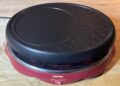
- Electric grill method: a raclette grill with individual coupelles (small trays), one per person — two trays per person is even better for continuous flow
- Large pot for boiling potatoes
- Serving platters and tongs for the charcuterie
“Raclette is not a recipe with a finish line — it is a table that stays warm for as long as people want to stay at it.”
Step-by-Step: Traditional Swiss Raclette Recipe
Preparation (30 minutes)
- Cook the potatoes. Scrub the potatoes but leave the skins on — this is non-negotiable in Switzerland. Place them in a large pot of cold, well-salted water, bring to a boil, and simmer for 18–22 minutes until a skewer slides in with no resistance. Drain and keep warm in a low oven (80 °C / 175 °F) or wrapped in a clean cloth.
- Arrange the charcuterie board. Fan the ham, air-dried beef, and salami on a wooden board or slate. Keep it at room temperature — cold cuts straight from the fridge dull the flavors. Set out cornichons, pickled onions, mustard, and bread.
- Prepare the cheese. If using pre-sliced cheese, fan out the slices on a board. If working with a half-wheel, cut a clean face across the wheel with a sharp knife so the paste is fully exposed.
Cooking & Serving (45–90 minutes, self-paced)
Half-wheel by the fire
- Position the half-wheel, cut side facing the heat source, about 15–20 cm (6–8 in) from the flames or heating element. Use a purpose-built stand if you have one.
- Wait 2–3 minutes until the surface is bubbling and lightly golden in places. Do not rush this stage — a gentle, even melt is the goal.
- Hold a warmed plate just below the cheese face and scrape decisively with a wide, flat knife or the dedicated raclette scraper. Aim for a thick, uneven layer — the slight crust at the edges is the best part.
- The guest tops their plate with potatoes, a curl of ham, a few cornichons, and a grind of black pepper. Eating begins immediately, while a new layer builds.
Electric raclette grill
- Preheat the grill to its highest setting for 5 minutes, then reduce to medium-high.
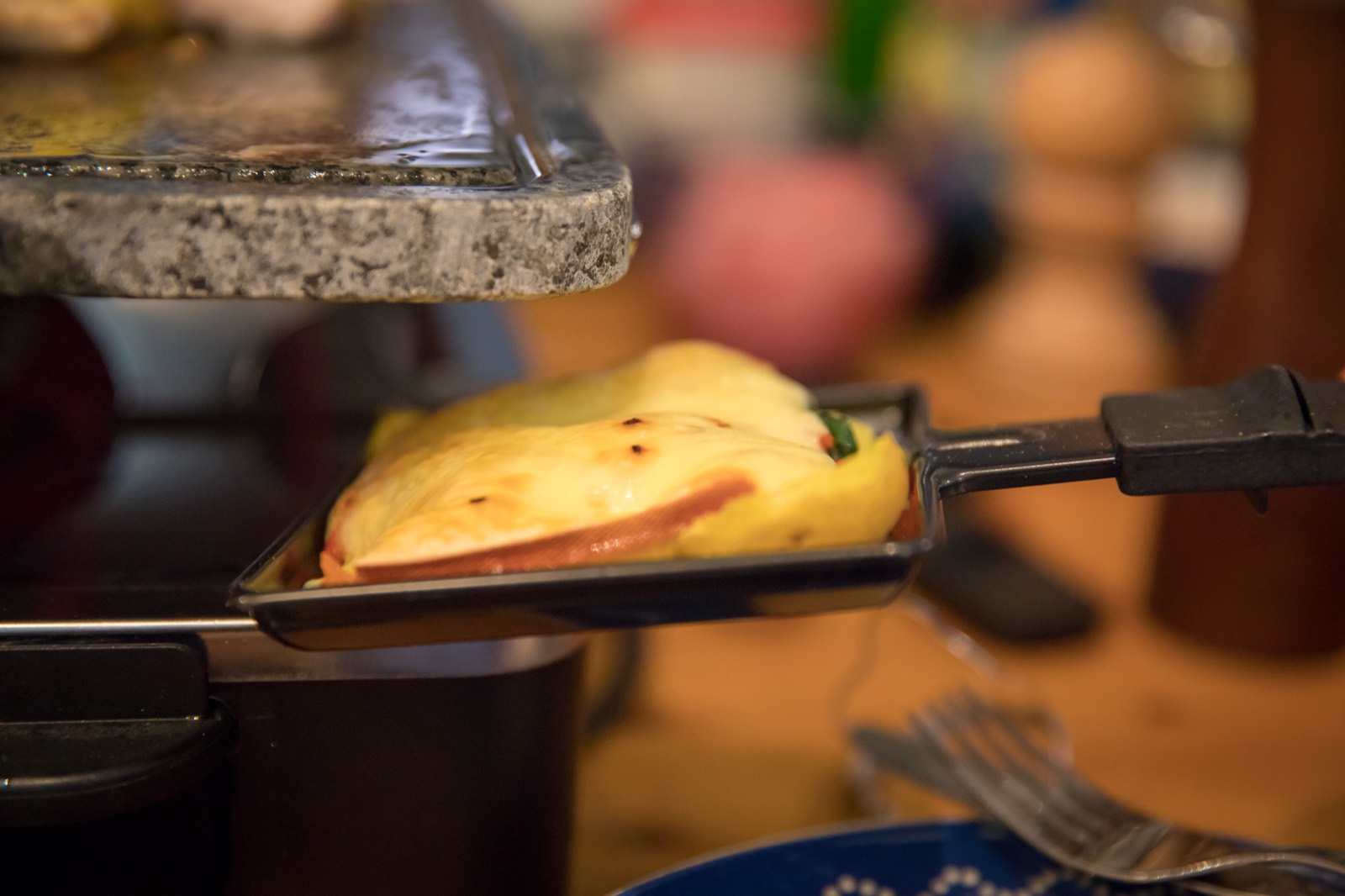
- Each guest places one or two slices of raclette cheese (about 40–50 g each) in their individual coupelle and slides it under the heating element.
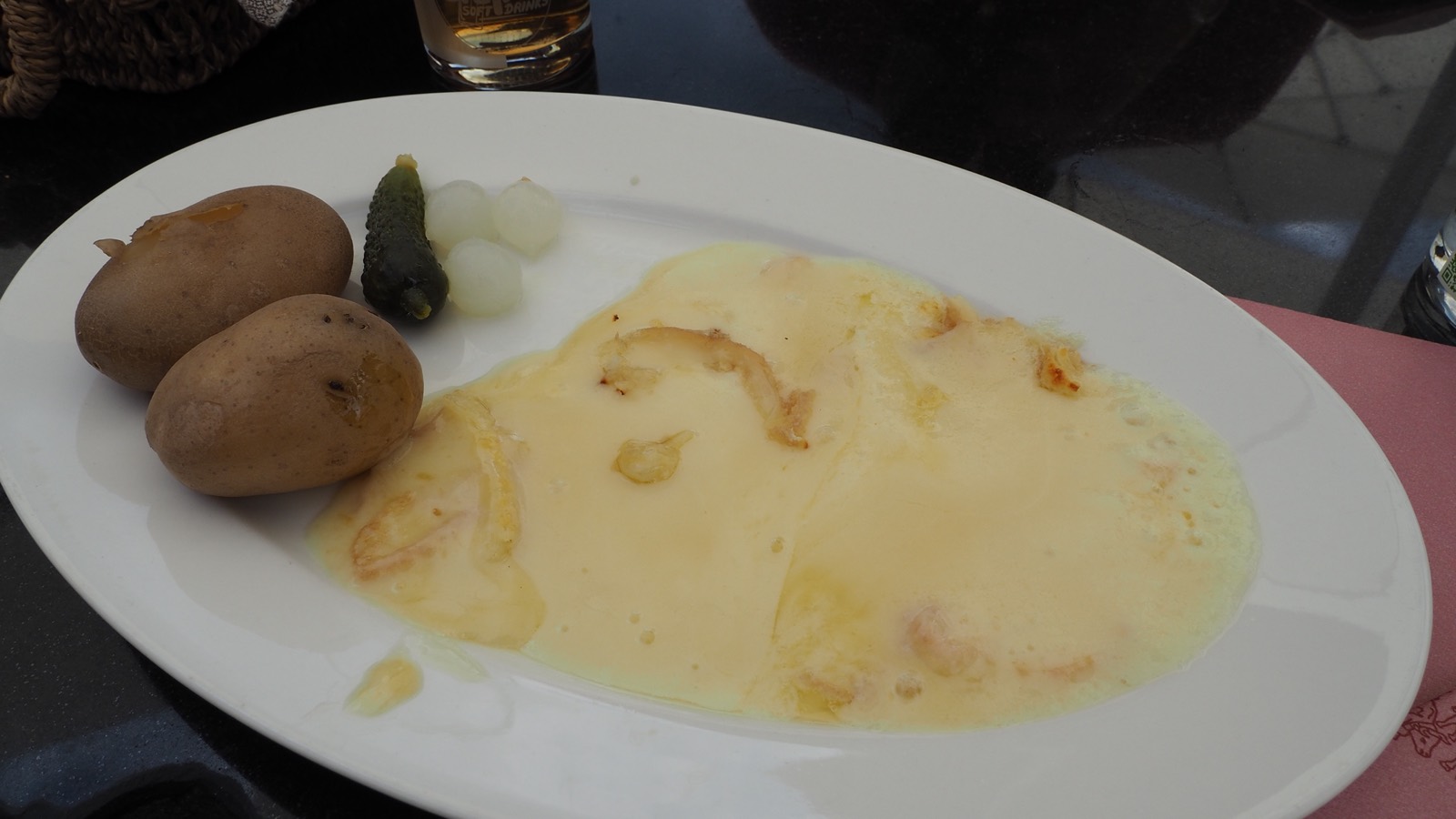
- After 3–4 minutes the cheese is melted, smooth, and beginning to brown at the edges. Pour it directly over a potato on your plate.
- While that round melts, load the next coupelle immediately — the rhythm keeps things moving without anyone sitting idle.
- Grill vegetables (mushrooms, peppers, cherry tomatoes) on the upper griddle at the same time, turning once.
Timing, Portions & Practical Notes
- Prep time: 30 minutes
- Cooking / table time: 60–90 minutes (self-paced, typically 2–3 rounds per person)
- Total time: ~2 hours
- Portions: 6 servings (scale cheese at 180–220 g per person)
- Estimated calories: roughly 650–800 kcal per person (generous serving with potatoes, cheese, and charcuterie)
Tips for the Best Result
- Temperature is everything. Cold cheese melts unevenly and can turn rubbery. Take the cheese out of the fridge 30–40 minutes before the meal.
- Choose the right potato variety. Floury potatoes fall apart under cheese; waxy types hold their shape and absorb the melted fat without going greasy.
- Mind the wine. A dry Swiss Fendant (Chasselas), a light Pinot Gris, or a crisp Alsatian Riesling are the classic raclette wine pairings. Avoid ice-cold water during the meal — tradition holds that it hampers digestion of the melted cheese.
- Don’t over-fill the coupelles. One or two slices per round keeps the pace lively; too much cheese in one go gets gummy before it reaches the plate.
- Scrape boldly. The thin caramelized crust that forms on the half-wheel is called the religieuse (“the nun”) in Swiss-French — it is considered the prize, so do not leave it behind.
Frequently Asked Questions
What kind of cheese is used in a traditional Swiss raclette recipe?
Authentic Swiss raclette uses a semi-hard, washed-rind cow’s milk cheese produced in the canton of Valais (AOP designation). It has a supple paste, a mild milky and slightly earthy flavor, and melts smoothly without separating. French raclette de Savoie is the most common substitute and works very well. Pre-sliced supermarket “raclette” is convenient for the electric-grill method, though a fresh-cut block or half-wheel delivers noticeably better flavor.
Do I need a special grill, or can I use a regular oven?
A dedicated raclette grill (electric, with individual coupelles) is the standard home setup and costs very little relative to the enjoyment it provides. In a pinch, you can use your oven’s broiler: place slices on a baking tray lined with foil and broil for 3–4 minutes, then pour over potatoes. It works, but you lose the convivial, each-person-at-their-own-pace dynamic that defines the dish.
Can I prepare raclette for a crowd of more than 6?
Yes — scale up at roughly 200 g of cheese and 250 g of potatoes per person. For groups over 8, consider two electric grills running simultaneously, or the half-wheel method, which serves a table continuously without requiring individual trays. Make sure you have enough coupelles: ideally two per person so one batch melts while the previous is being eaten.
What is the “religieuse” and should I eat it?
In the half-wheel method, the scraped face of the cheese sometimes develops a thin, lacy, slightly browned crust between rounds. Swiss tradition considers this the best morsel — the person who scrapes it gets to eat it straight away. It is crisp on the outside, molten inside, and intensely flavored. Absolutely eat it.
Image credits: “2018-01-11 Raclette Lokal” © Superbass, CC BY-SA 4.0 · “Raclette feu” © Raph.zufferey, CC BY-SA 3.0 · “Raclette service” © Ka23 13, CC BY-SA 4.0 — via Wikimedia Commons.